Osaka City GuideAn Independent City Guide Map
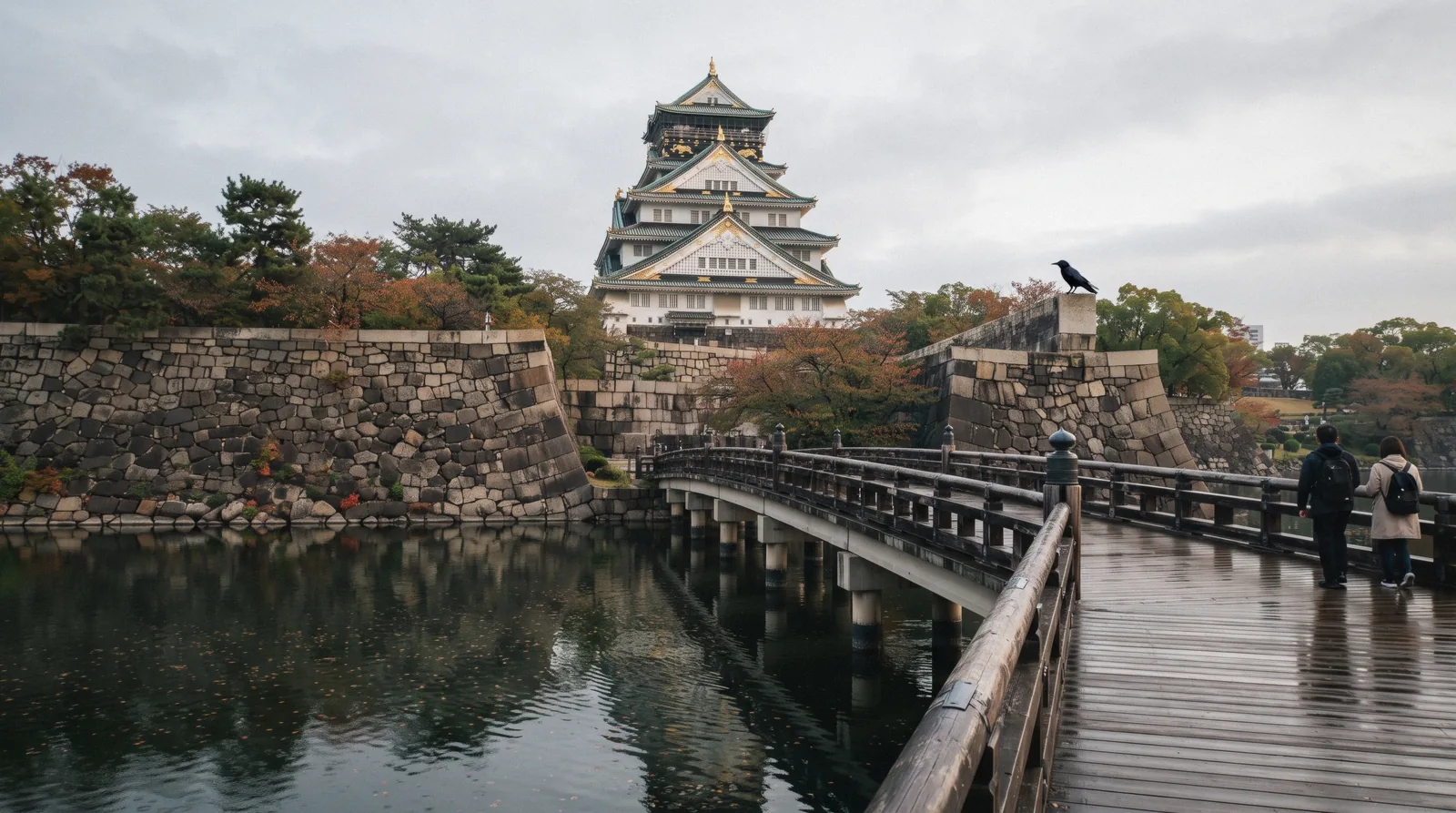
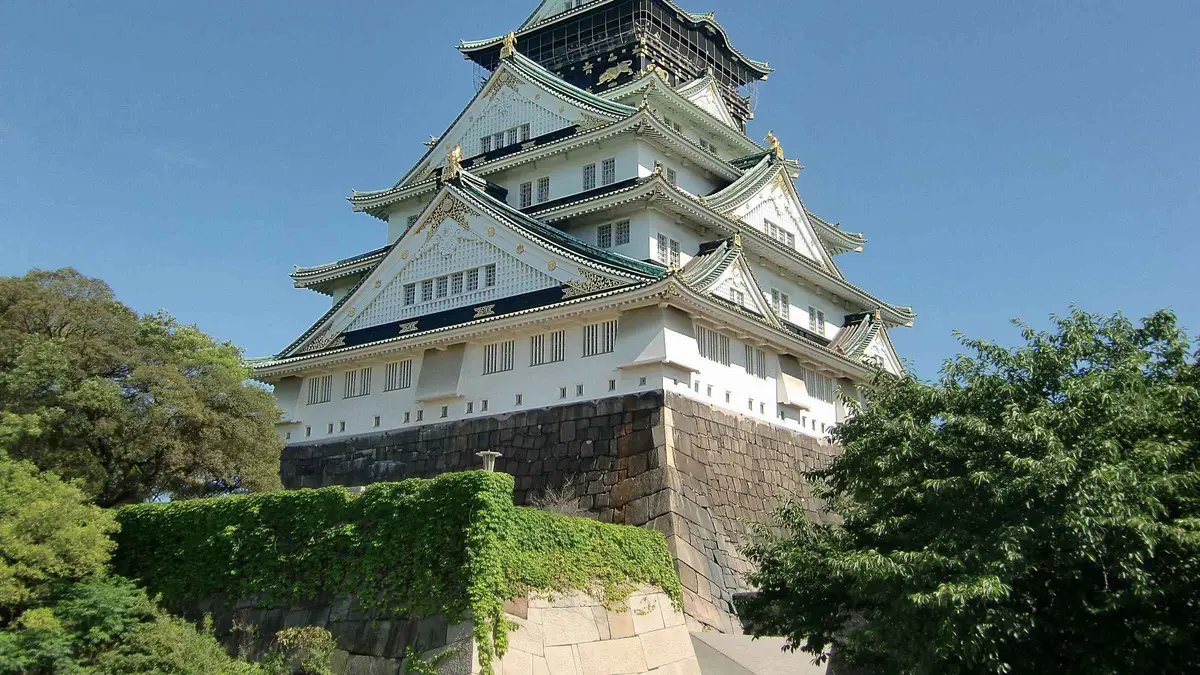
Osaka Castle's keep above the moat and stone rampart at the end of golden hour, Osaka, Japan

Osaka, Japan: An Independent City Guide

Osaka, Japan charges for very little and books almost nothing — until it does. The castle keep takes no reservation at all, the aquarium changes its adult price with the date you pick, and the tower in Shinsekai now admits nobody without a time slot. This guide prints each of those figures with the date it was read off the venue's own page.

Quick answer What it costs, how many days, what actually needs booking — in five lines

Osaka's headline sights are cheap: $7.52 (¥1,200) at Osaka Castle, $12.54 (¥2,000) at the Umeda Sky Building, $9.41 (¥1,500) at Tsutenkaku, and nothing at all on the Dotonbori canal or in Kuromon Ichiba Market. All of those were read on the venues' own pages in Q3 2026. Two full days cover the city; a third buys you Nara, Kyoto or Himeji.

Key takeaways

Osaka in five decisions: what to see, what to book, where to sleep

The five hubs of this guide, each with the three facts that decide it.

What to see

Osaka's list is short and unusually flat: one castle, one aquarium, two observation decks, a theme park, and a set of streets that cost nothing. The order matters more than the ranking, because half of it closes at 17:00 and half of it only starts at 18:00.

The castle takes about two hours; Kaiyukan about two and a half

What to book, and what not to

Very little in Osaka is a timed ticket, which is exactly why the exceptions catch people out. The castle sells online and still queues; the tower sells nothing without a slot.

Gate prices run $3.14–$52.70 (¥500–¥8,400)

Where to base yourself

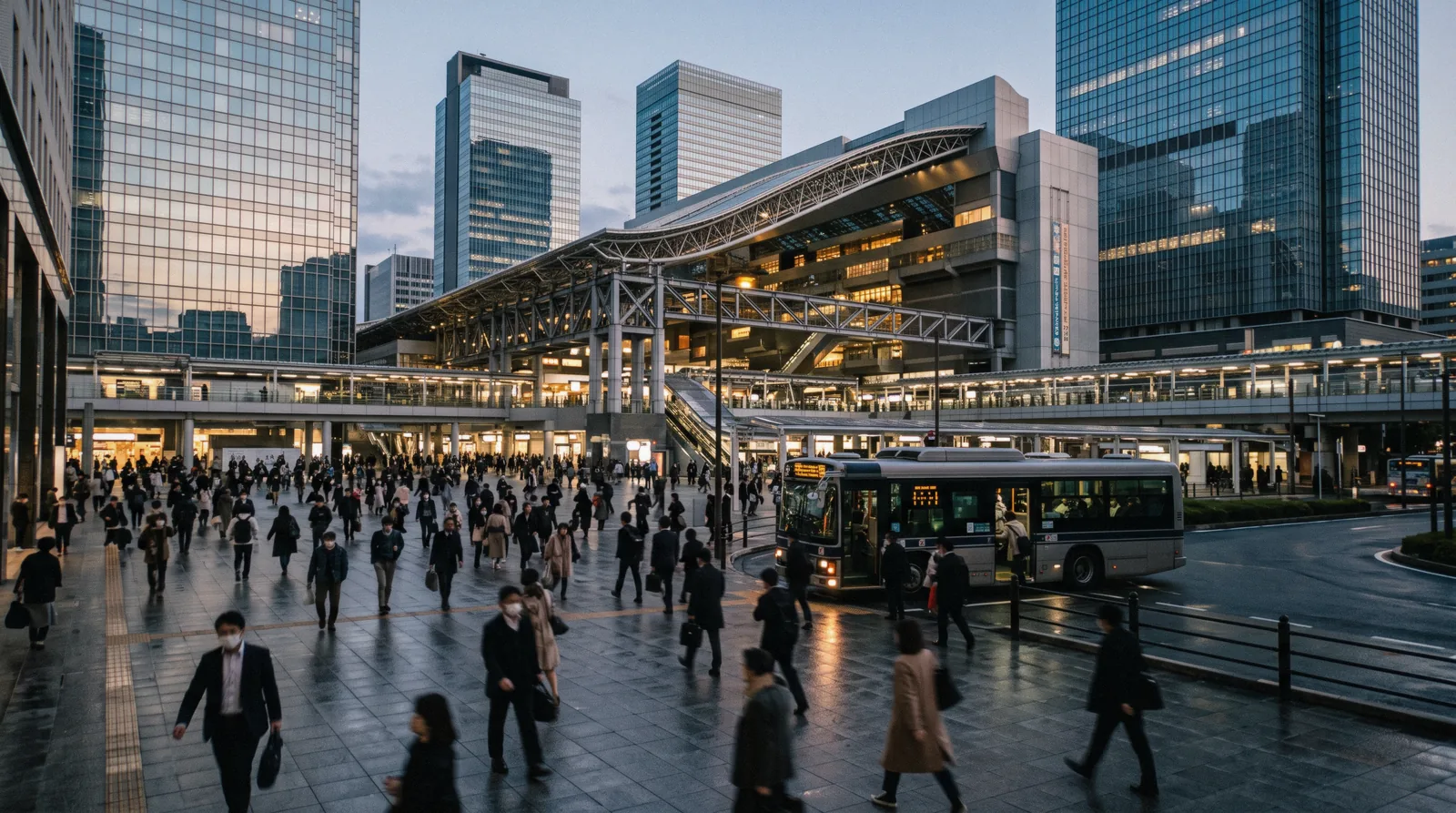
Osaka splits into Kita around Umeda Station and Minami around Namba. Kita is the transport city, Minami is the eating city, and the walk between them is a twenty-minute subway ride you will make daily.

Umeda to Namba: 9 minutes on the Midosuji Line, ¥240

Where to go for a day

Osaka is the best base in Kansai and it is not close: Kyoto is 29 minutes, Kobe 21, Nara 45, Himeji an hour. The mistake is giving a whole city an afternoon.

Kyoto ¥580 by JR, Kobe ¥420, Nara ¥840

What goes wrong

Nothing dramatic — a Monday, a Tuesday, a sold-out slot, a pass that covered less than it looked like. All of it is avoidable a day ahead.

Closed days split: the zoo shuts Mondays, the museums Tuesdays
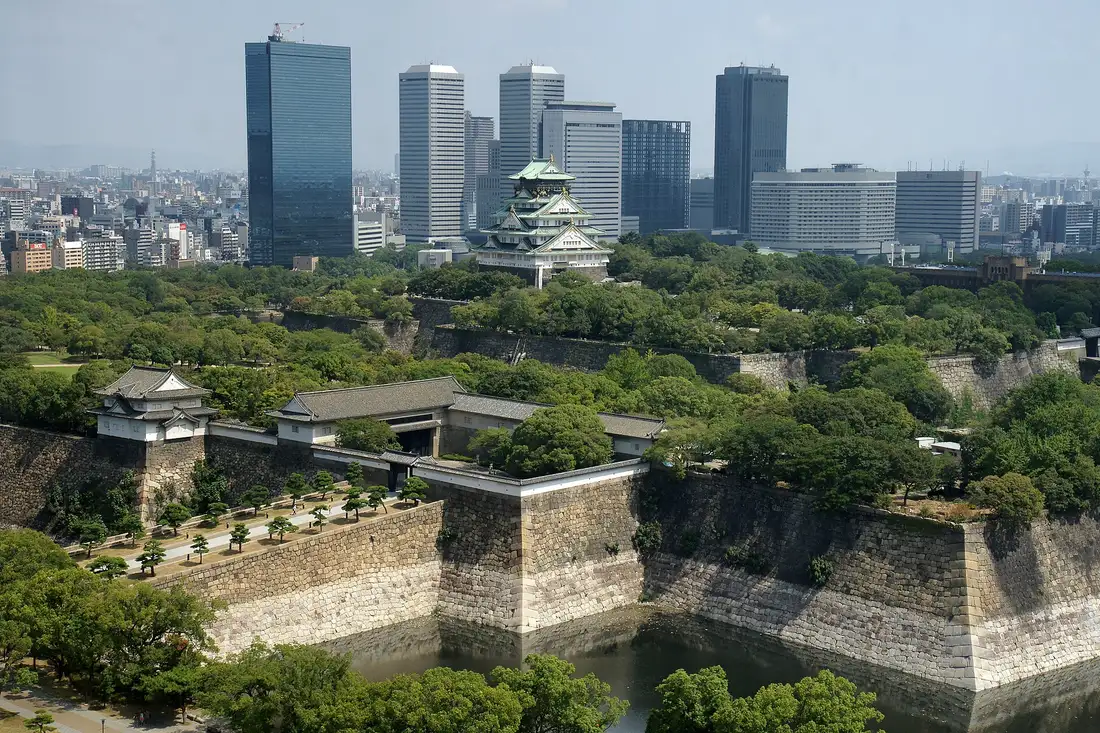
Osaka Castle's keep above its stone base seen across the inner moat, Osaka, Japan
Photo: 663highland, CC BY 2.5, via Wikimedia Commons
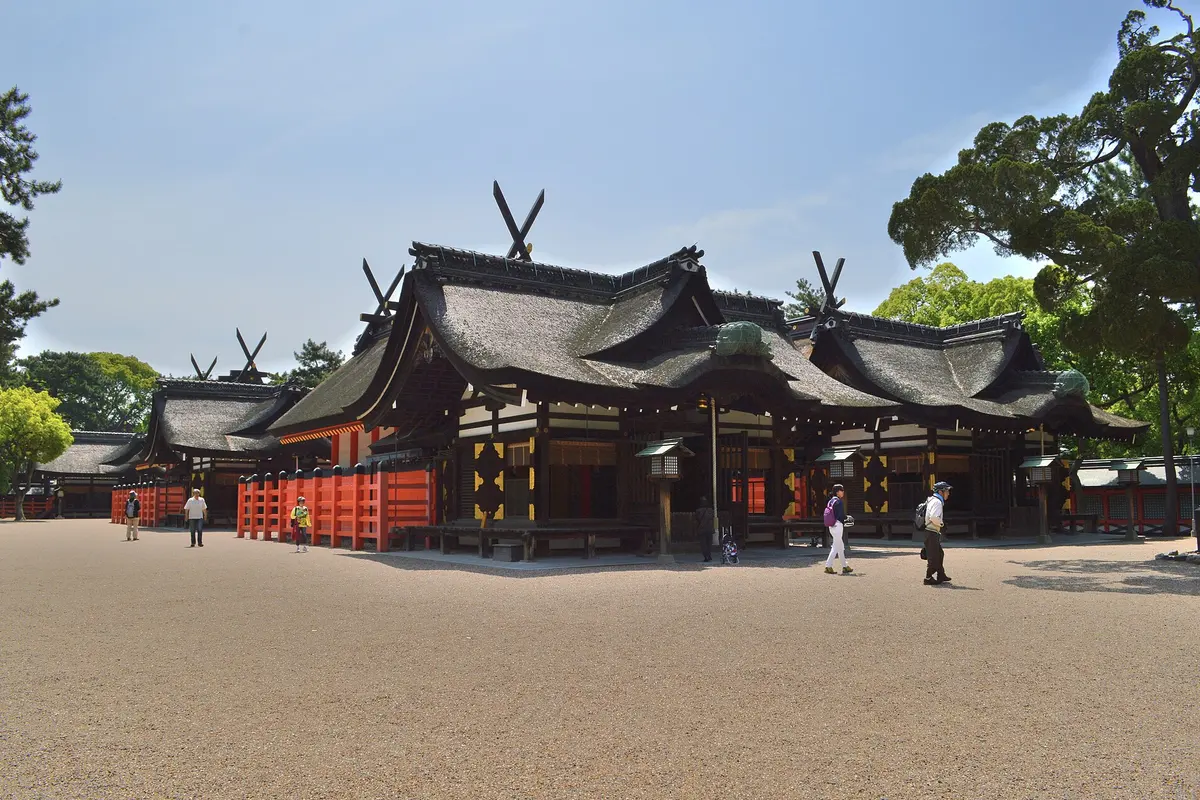
The Sumiyoshi-zukuri halls inside the precinct of Sumiyoshi Taisha, Osaka, Japan
Photo: Saigen Jiro, CC0, via Wikimedia Commons

The short list, in the order the city gives it to you

Osaka is compact, and the sights sort themselves by clock rather than by map: the castle and the museums in the morning, the markets at midday, the towers and the canal after dark. Prices and hours below were read on the venues' own pages in Q3 2026.

Morning: the castle, and what stands beside it

Osaka Castle opens at 09:00 with last admission at 17:30, and the $7.52 (¥1,200) ticket buys the eight-floor museum inside the keep rather than a historic interior — the building is a 1931 reconstruction and says so. The castle takes no reservations of any kind, so the only queue tactic is the hour. Nishinomaru Garden beside it went from ¥200 to ¥300 on 1 April 2026, and stays ¥350 for the cherry-blossom evenings. Across the plaza, the Osaka Museum of History charges ¥600, closes on Tuesdays, and runs a free twenty-place tour of the Naniwa Palace ruins under the building at 14:00 and 15:00.

Midday: the two markets and the arcades

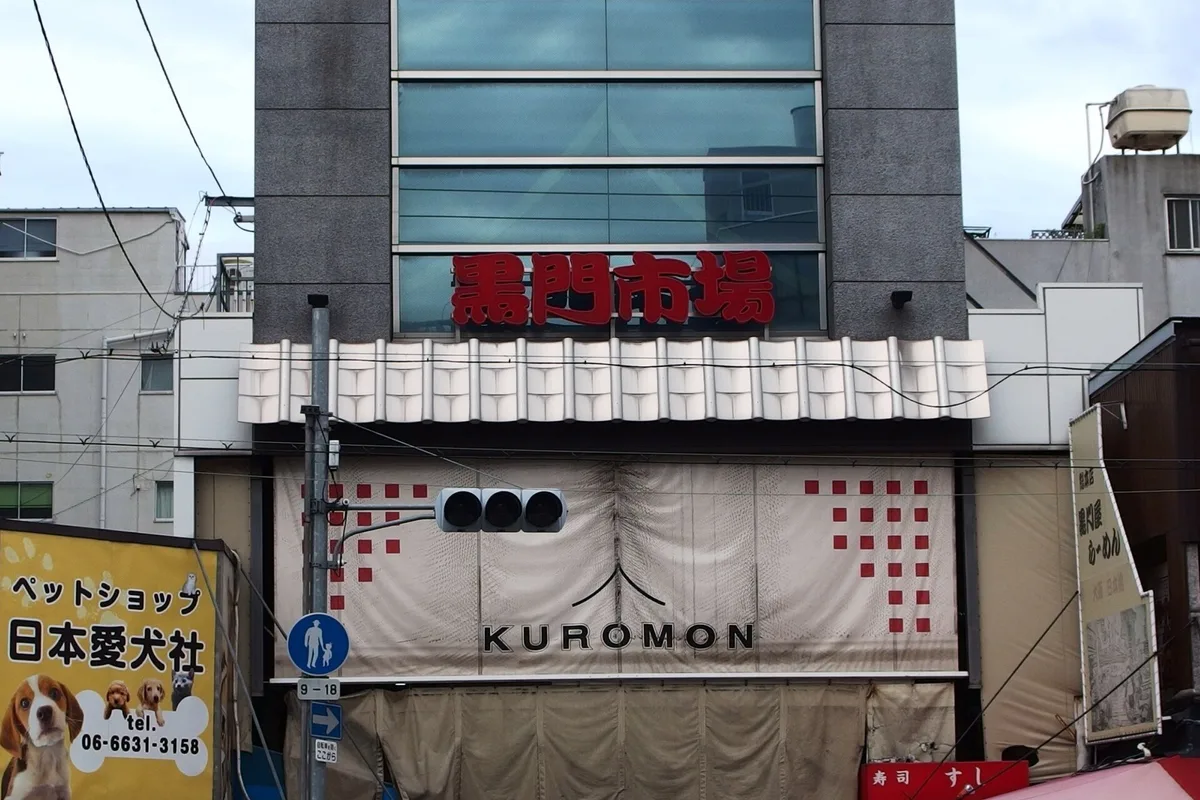
Kuromon Ichiba is the market people mean when they say Osaka's kitchen, and it is a morning thing — stalls open early and the aisles are a scrum by mid-afternoon. Neither the market association nor the city publishes its opening hours, which is the honest answer to a question every guide answers confidently. From there Shinsaibashi-suji runs 580 metres of roofed arcade north, and Amerikamura sits one street west of it.

Afternoon: water, fish and a garden that only opens at dusk

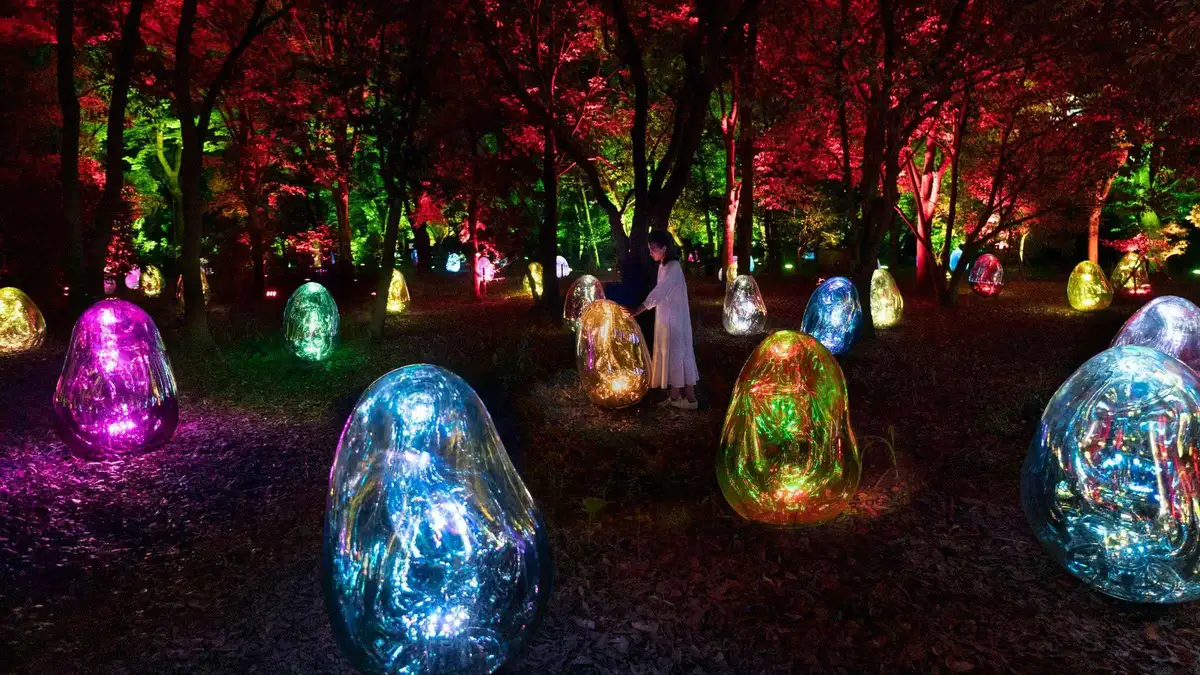
Osaka Aquarium Kaiyukan is the one big ticket that changes price by the day — $17.56, $18.18, $20.10 or $21.90 (¥2,800, ¥2,900, ¥3,200 or ¥3,500), published roughly two months ahead, with opening between 08:00 and 10:30 and closing between 20:00 and 21:00. teamLab Botanical Garden does the opposite: it only exists after dark, on a dated ticket from ¥1,800, and shuts on irregular Mondays that are published one season at a time.

Evening: two towers and a canal

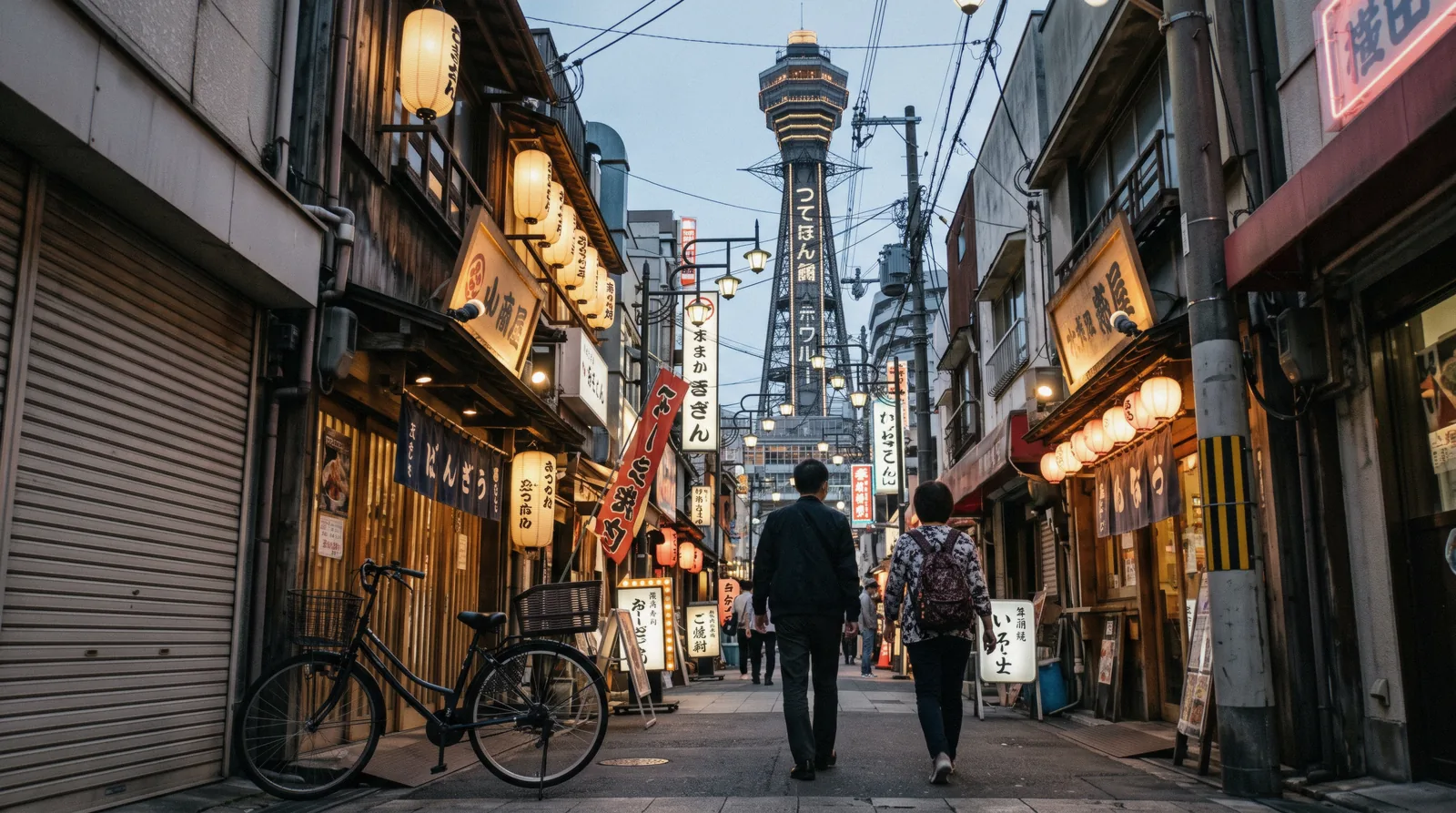
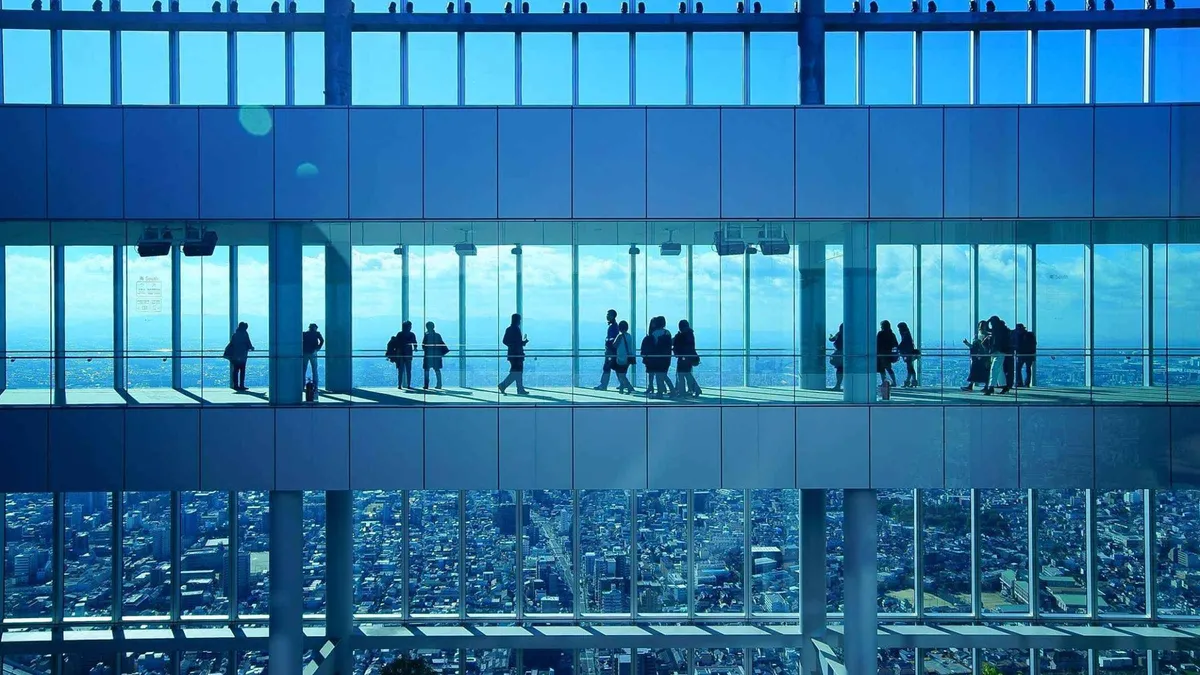
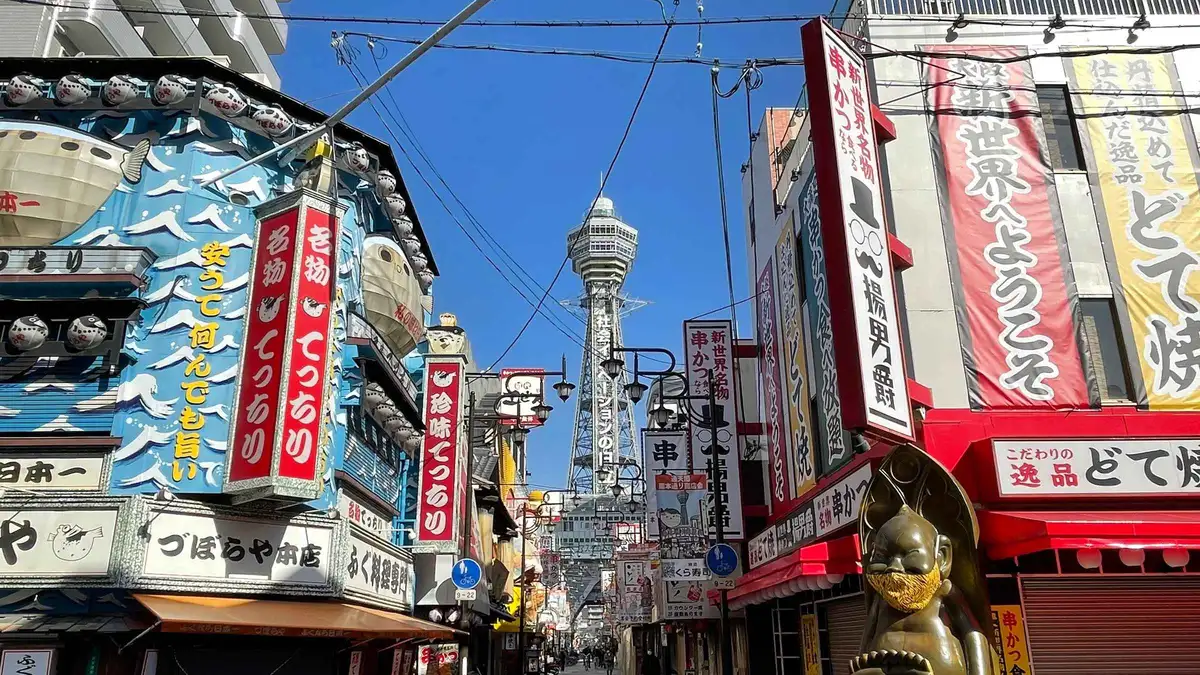
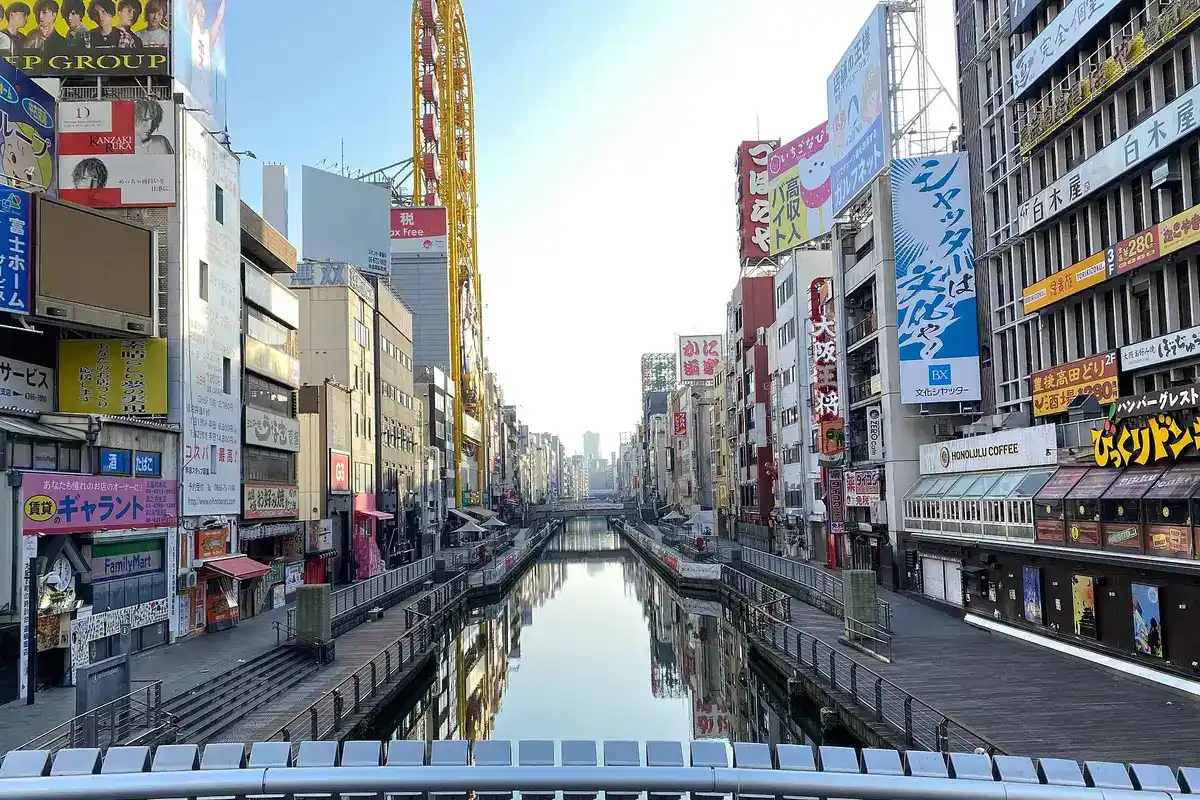
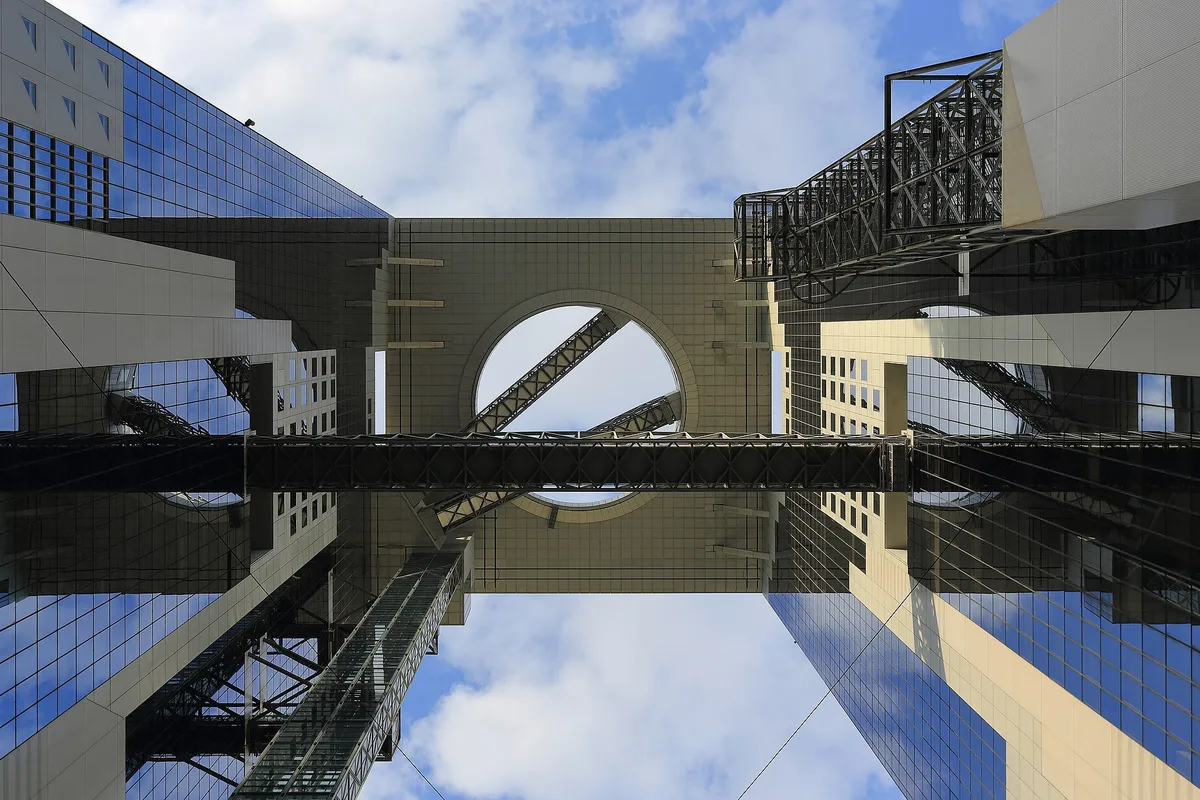
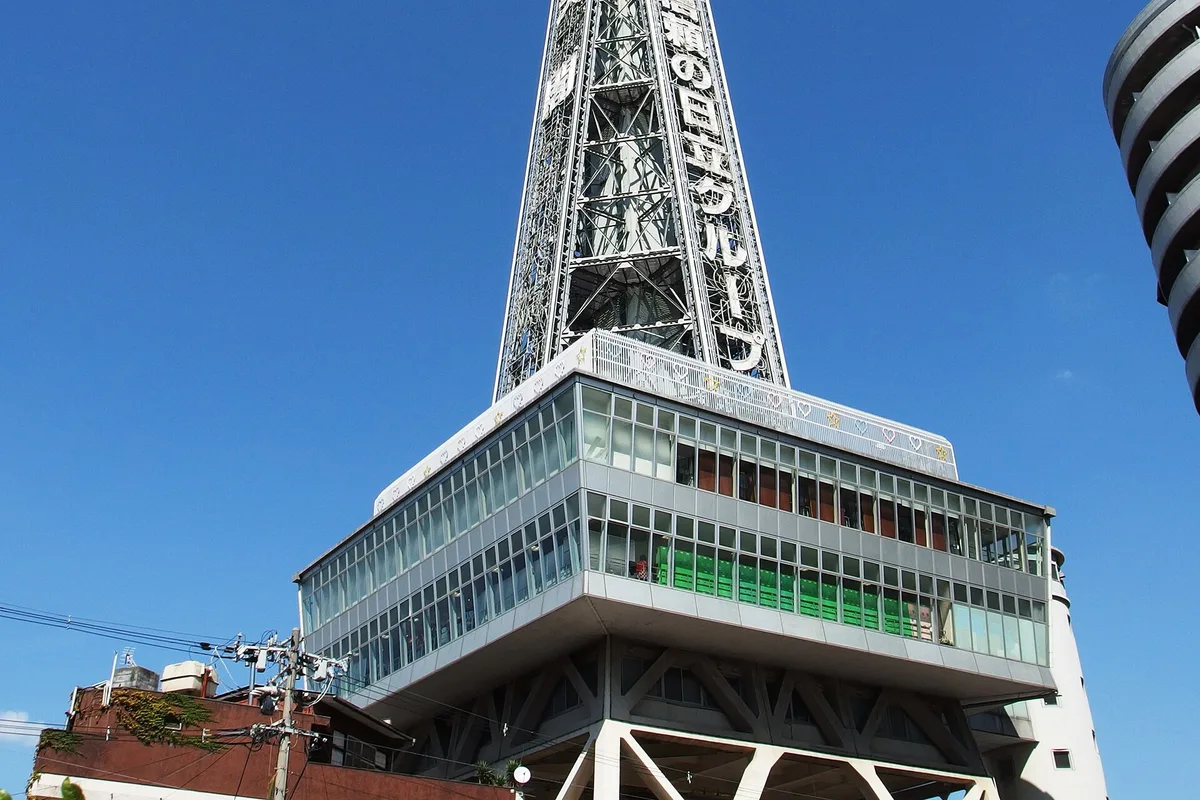
The Umeda Sky Building charges ¥2,000 for the open-air roof ring and stays open to 22:30, last admission 22:00 — the only observation deck in the city where you stand outside. Abeno Harukas 300 is higher, glassed in, and revised its fee on 23 July 2026 to ¥2,200 at the counter or ¥1,980 booked online the day before. Tsutenkaku is neither the highest nor the newest at ¥1,500, and it is the one that now requires a booked time slot. Then Dotonbori, which costs nothing and is best an hour after the crowds thin.

Which Osaka pass, if any

The three products a visitor is offered, priced from the operators' own pages in Q3 2026, with what each one actually covers. The tourism bureau's own comparison table still prints the Amazing Pass at ¥2,800; the pass's own site, which carries this year's sales window, sells a standard pass at ¥3,500 and an Osaka Itami Airport version at ¥3,800. The standard figure is the one used here.

Pass Price Transport Entries Pays back when
Osaka Amazing Pass, 1 day $21.90 (¥3,500) All Metro and city buses, plus private lines inside the city 41 listed attractions, once each — 39 of them on the standard pass You do three paid sights and ride four times in one day
Osaka Amazing Pass, 2 days $31.40 (¥5,000) Same, on two consecutive days Same list, once each across the two days Two dense days, not two gentle ones
Osaka e-Pass, 1 day $12.54 (¥2,000) None — you pay every fare yourself More than 25 facilities, once each You stay in one district and enter two or three places
Enjoy Eco Card $5.14 weekday / $3.89 weekend (¥820 / ¥620) All Metro and city buses for the calendar day None You ride four times or more and pay your own entries
No pass at all $1.19–$2.45 a ride (¥190–¥390) Pay as you go with an IC card Pay at each gate One or two sights a day, which is most people's Osaka

Neither the Amazing Pass nor the e-Pass includes Universal Studios Japan or Osaka Aquarium Kaiyukan, and neither is valid to or from Kansai Airport. The seller lists two versions: the standard pass at ¥3,500 / ¥5,000 and an Osaka Itami Airport (ITM) version at ¥3,800 / ¥5,400 that adds the monorail from the airport — the figures here are the standard one. A pass "day" runs 03:00 to 02:59, not 24 hours from activation. One venue on the Amazing Pass free list — the Osaka Museum of Housing and Living — is closed from 1 September 2026 to 5 January 2027. The full arithmetic is on the Osaka Amazing Pass page.

The tickets people book first

One card per money sight, priced in US dollars as GetYourGuide listed them in Q3 2026; the official price in yen is on each attraction's own page, and on several of these the two are the same money.

Visitors passing under the revolving globe at the park entrance on a Universal Studios Japan entry ticket, Osaka Japan from $61.80 Official ticket

Osaka: Universal Studios Japan Entry Ticket

★★★★★ ★★★★★ 4.5(1,497 reviews)

The park's own 1-day Studio Pass, delivered as a QR code so you walk past the ticket booth. USJ prices by date from ¥8,400, and the platform's A–F categories mirror those tiers — check your date before assuming it beats the counter.

Check Availability
Reserved-entry queue at the Osaka Castle keep on a castle museum and tower entry ticket, Osaka Japan from $7.49 Cheapest way in

Osaka Castle: Museum and Tower Entry Ticket

★★★★★ ★★★★★ 4.5(3,740 reviews)

The keep's own admission plus the Toyotomi Ishigaki Museum on one QR code, for roughly what the keep alone costs at the gate (¥1,200). The castle takes no reservations, so this saves the booth queue rather than securing a time slot.

Check Availability
Glowing ovoid lights among the trees at teamLab Botanical Garden on an entry ticket, Osaka Japan from $11.86

Osaka: teamLab Botanical Garden Entry Ticket

★★★★★ ★★★★★ 4.5(2,107 reviews)

A date-and-time ticket for the night-only art walk through Nagai Botanical Garden. The venue prices by date, ¥1,800–¥2,400, so this sits mid-range; closing times shift by season and re-entry is not allowed.

Check Availability
Glass observation deck 300 metres above the city at Abeno Harukas on a panoramic observatory e-ticket, Osaka Japan from $9.89 Cheapest way in

Osaka: Panoramic Observatory Abeno Harukas 300 E-Ticket

★★★★★ ★★★★★ 4.4(281 reviews)

Admission to the 300-metre deck on Japan's tallest building, at roughly ¥1,580 against the venue's ¥1,980 web-advance rate and ¥2,200 walk-up. There is no timed slot, and the 16F counter can cap walk-up sales on busy days.

Check Availability
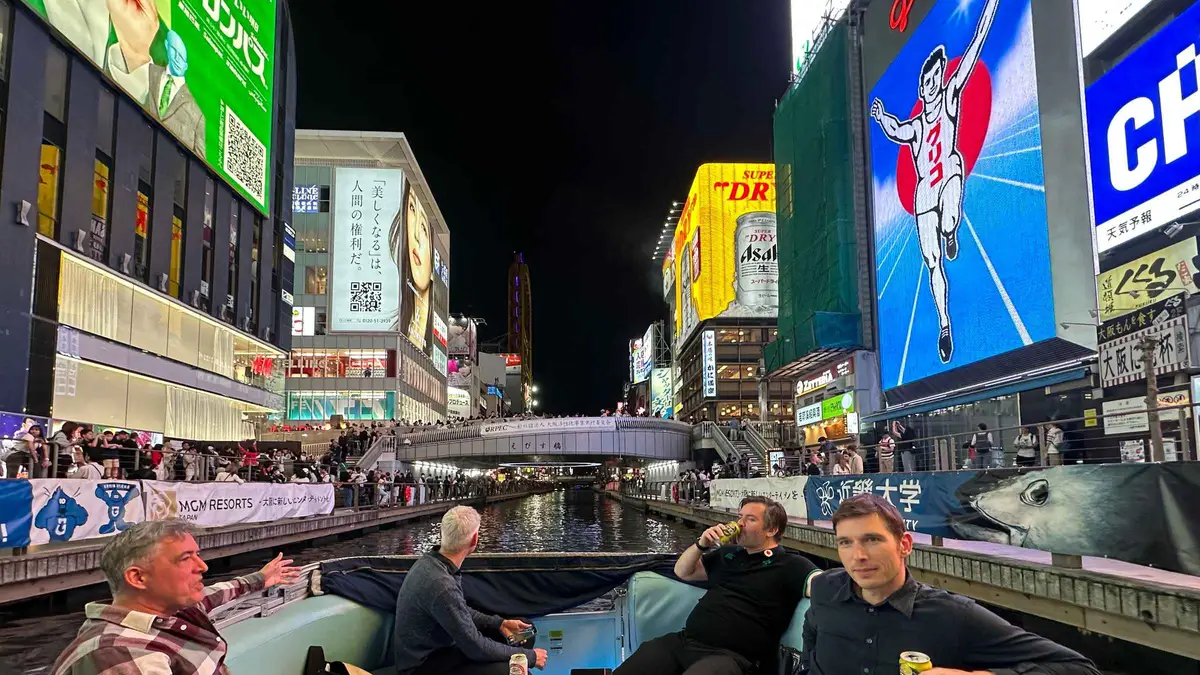
Neon signs reflected in the canal on a Dotonbori river cruise past the Glico sign, Osaka Japan from $12.49

Osaka: Dotonbori River Cruise with Glico Sign & Neon Views

★★★★★ ★★★★★ 4.6(1,997 reviews)· 20 minutes

Twenty minutes on the water past the Glico sign, boarding at Minatomachi Pier rather than the Tombori River Walk, and you may bring your own drinks. The rival Tombori River Cruise is free with the Osaka Amazing Pass; this boat is not.

Check Availability
Tsutenkaku Tower lit above the Shinsekai streets on a Tsutenkaku Tower experience ticket, Osaka Japan from $6.87 Official ticket

Osaka: Tsutenkaku Tower Experience Ticket

★★★★★ ★★★★★ 4.3(136 reviews)· 1 hour

Options run from the 87.5-metre general deck up to the all-in ticket with the outdoor deck, the Tower Slider and Dive & Walk. The tower now requires a timed reservation for every ticket, pass holders included, so booking a slot is the point.

Check Availability

Prices, ratings and details are the platform's own, checked in Q3 2026; dollar figures are the listed prices — the platform bills in your account's currency.

How many days Osaka needs

What each length of stay actually buys, built from the opening hours and the journey times on this site rather than from a wish list. Journey times are the operators' own.

Length What fits What is left out Where it goes wrong
One day Castle in the morning, Kuromon at midday, Dotonbori after dark The aquarium, both towers, every day trip Trying to add Universal — it is a full day on its own
Two days The above, plus Kaiyukan or Universal, plus one observation deck Nara, Kyoto, Himeji Booking the theme park for the arrival day, when jet lag wins
Three days The city, plus one day trip of your choosing The second day trip; Koyasan, which wants two days Spending day three on two day trips and seeing neither
Four days or more City, two day trips, and an evening that is not a schedule Little — this is where Koyasan or Ise fits Nothing much; this is the comfortable length

Day-trip journey times, one way from central Osaka: Kobe 21 minutes, Kyoto 29, Nara 45, Himeji about an hour, Koyasan about two. Fares and routes are on the day trips page.

Or take the days already routed

Three itineraries, each built around the hours the venues actually keep.

Osaka in one day

Castle at opening, Kuromon before the coaches, Shinsekai for lunch, Dotonbori at dusk. About six kilometres on foot.

Roughly ¥2,000 in entries and ¥600 in fares

Osaka in two days

Day one as above; day two is the bay, the aquarium and an observation deck, or the whole day at Universal.

The aquarium day costs about ¥3,000 more

Osaka in three days

The city in two, then the day trip that suits you — deer, temples, a castle or a harbour.

Add ¥1,200–¥5,000 depending on where you go
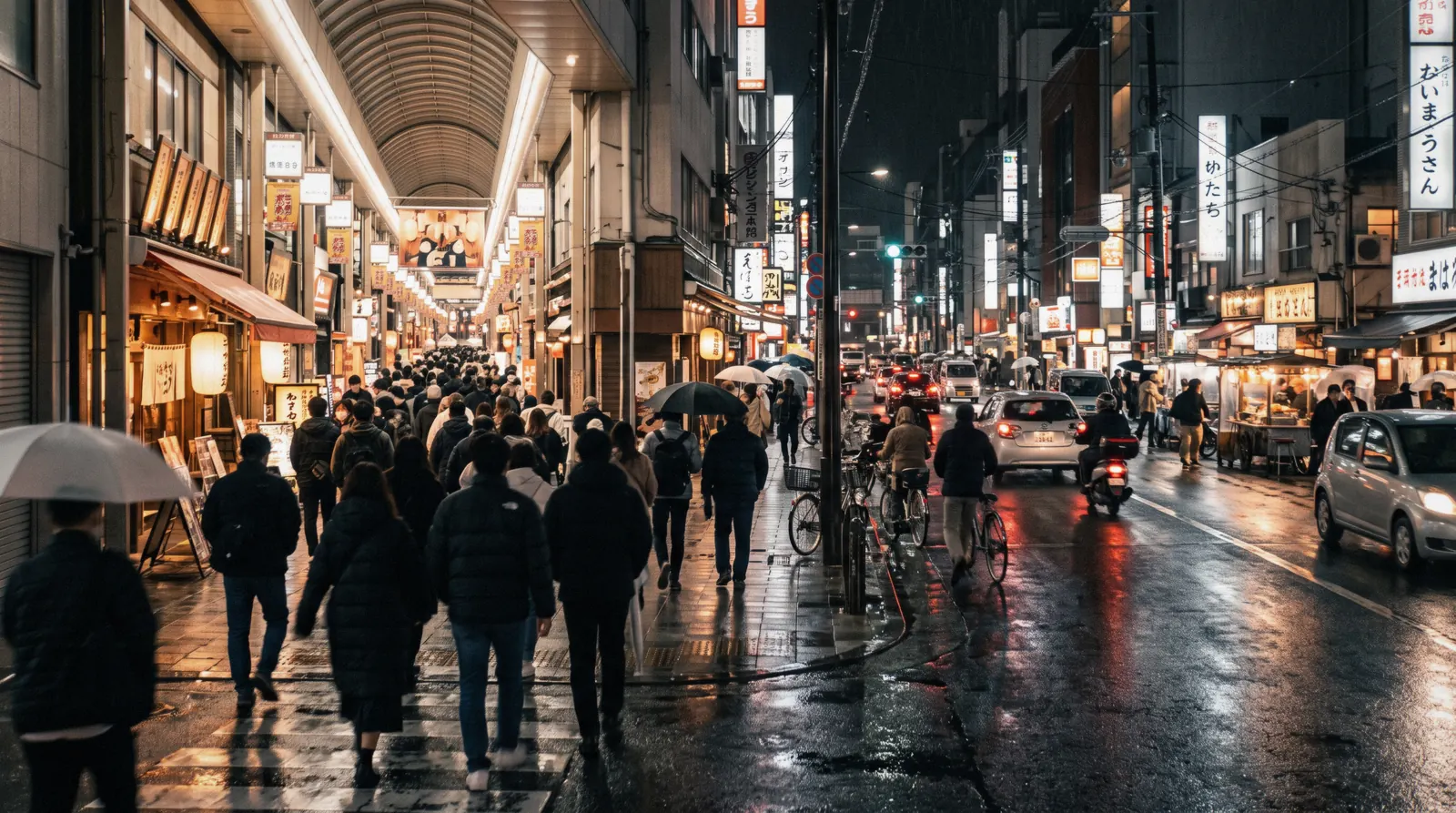
The Dotonbori canal and its illuminated signage at night, Osaka, Japan
Photo: 32linesky, CC BY-SA 4.0, via Wikimedia Commons
Stalls and shoppers in the covered aisle of Kuromon Ichiba Market, Osaka, Japan
Photo: Mc681, CC BY-SA 4.0, via Wikimedia Commons

Eating in Osaka: what the city is famous for, and what nobody will certify

Osaka's food reputation rests on two dishes that no published guide will attach to a shop. The MICHELIN Guide's 2026 selection for Osaka and its surroundings runs to 67 Bib Gourmand addresses — kushiage, tonkatsu, udon, soba, ramen, izakaya, sushi — and not one takoyaki or okonomiyaki counter among them.

That gap is the honest answer to "where is the best takoyaki". This site names a restaurant only when a citable published guide names it first, and prints which guide and which year on the card, so for the two dishes Osaka is known for you get the street and the method instead of a shop we cannot source. The tourism bureau's own history is equally careful: it says takoyaki stalls "only began to pop up in the 1950s", that accounts of who invented the dish vary, and that the idea of a takoyaki pan in every Osaka kitchen is an urban legend.

Where to go looking is a different question, and one this site can answer: Kuromon Ichiba for the market version at midday, Dotonbori for the theatre of it after dark, and the alleys of Shinsekai for kushikatsu, which comes with the one rule everybody enforces — no second dip in the communal sauce.

The named places, and where the names come from

The eating page carries the Bib Gourmand addresses with the guide and year printed on each card, plus La Cime, which sits at number 13 on Asia's 50 Best Restaurants 2026 and is the highest-ranked restaurant in Japan on that list. MICHELIN publishes no opening hours and no closed day for any of them, so every card here says "not stated" rather than inventing one. If you want the guided version instead, a small-group food walk through Dotonbori and Shinsekai runs about three hours with fifteen tastings.

One rule that costs money

Smoking on Osaka's streets has been an offence city-wide since 27 January 2025, with a ¥1,000 fine, and heated tobacco counts. There is no equivalent rule about eating as you walk — no district in Osaka publishes one, whatever you may have read — but the markets ask you to eat at the stall you bought from, which is a courtesy rather than a law.

The dates that change the trip

Four fixed points in the Osaka year, each from the organiser's own notice, read on in Q3 2026. Two of them fill every hotel in the city.

Tenjin Matsuri, 24–25 July 2026. One of Japan's three great festivals, run by Osaka Tenmangu since the tenth century, with a river procession on the second evening. The shrine publishes the dates and the rite names and nothing else — no clock times, no fireworks locations, no shell count — so anything more specific you read has been reconstructed by someone else.

Kishiwada Danjiri, 19–20 September and 10–11 October 2026. Wooden shrine carts run at speed through the streets of Kishiwada, half an hour south. The full hours are published, and the trial runs too.

Naniwa Yodogawa fireworks, Saturday 17 October 2026, 19:00–20:00. Moved out of its usual August slot this year, which catches out anyone planning around last year's calendar.

Cherry blossom, late March into early April. The Japan Meteorological Agency's Osaka normals are flowering on 27 March and full bloom on 4 April, calculated over 1991–2020. Nishinomaru Garden at the castle runs a blossom-evening season at ¥350; the operator says its hours change for it but does not publish how.

WhenWhatWhereSource
24–25 July 2026Tenjin MatsuriOsaka Tenmangu and the Okawa riverOsaka Tenmangu
19–20 September, 10–11 October 2026Kishiwada DanjiriKishiwada, 30 minutes southFestival organisers
17 October 2026, 19:00–20:00Naniwa Yodogawa fireworksYodogawa riverbankOrganiser's notice
Around 27 March – 4 AprilCherry blossom, on the 1991–2020 normalsOsaka Castle Park, Kema SakuranomiyaJapan Meteorological Agency
6 June – 19 JulyRainy season, on the Kinki normalsCity-wideJapan Meteorological Agency

And the ones that close things

Osaka's closed days do not agree with each other. Tennoji Zoo, the Science Museum and the National Museum of Art shut on Mondays; the Museum of History and the Cup Noodles Museum shut on Tuesdays; Osaka Castle closes only from 28 December to 1 January, and Kaiyukan's only published closure is 13–14 January 2027. The plan hub sorts them by day so a Monday or a Tuesday does not cost you a sight.

What actually goes wrong in Osaka

None of these is dramatic. All of them cost either money or an afternoon, and every one comes from a source that publishes the answer plainly.

  • Buying the pass before doing the sums. The Osaka Amazing Pass covers 39 of its 41 listed entries on the standard version, but not the aquarium, not Universal and not the airport line. On a two-sight day it loses.
  • Assuming the tower is a walk-up. Tsutenkaku now requires a booked time for every ticket, and pass holders have to take a slot at the counter on the day.
  • Planning around the old Kansai Thru Pass. It became the digital Kansai Railway Pass Lite on 1 April 2026 and no longer covers buses at all — the feature it was bought for.
  • Counting on station wi-fi. Osaka Free Wi-Fi was withdrawn from every station on 31 March 2023. The tourism bureau's own visitor page still says otherwise.
  • Booking a hotel on last year's tax. The prefecture rebanded the lodging tax on 1 September 2025: nothing under ¥5,000, then ¥200, ¥400 or ¥500 a person a night.
  • Turning up at Himeji with ¥1,000. The gate has charged ¥2,500 since 1 March 2026, with under-18s free.
  • Looking for the Osaka Castle combined tickets. The Museum of History set ended on 27 December 2024 and the Aqua-bus set on 24 March 2025. Guides still recommend both.

Osaka month by month

Average daily high temperature by month in Celsius, with the Fahrenheit reading underneath, computed from the Open-Meteo ERA5 reanalysis for 34.69 N, 135.50 E over 1995–2024. August is the month that decides Osaka trips: an average high of 31.8 °C with the humidity of a river delta.

Temperatures and rainfall are computed from ERA5 for the city centre; the cherry-blossom and rainy-season dates are the Japan Meteorological Agency's own normals. Rainfall by month is in the table below.

What each month costs you in weather and crowds

Thirty-year ERA5 normals for the city centre, 1 January 1995 to 31 December 2024, computed in Q3 2026; a rainy day is one with 1 mm or more.

Month Average high Average low Rain Rainy days
January 8.4°C (47°F) 1.0°C (34°F) 57 mm 6.3
February 9.5°C (49°F) 1.2°C (34°F) 66 mm 7.3
March 13.2°C (56°F) 3.9°C (39°F) 112 mm 10.8
April 18.4°C (65°F) 9.0°C (48°F) 126 mm 10.4
May 23.1°C (74°F) 14.2°C (58°F) 160 mm 11.1
June 26.4°C (80°F) 18.9°C (66°F) 193 mm 13.4
July 29.9°C (86°F) 23.4°C (74°F) 197 mm 15.0
August 31.8°C (89°F) 24.7°C (76°F) 126 mm 12.4
September 28.1°C (83°F) 20.9°C (70°F) 169 mm 12.3
October 22.2°C (72°F) 14.5°C (58°F) 156 mm 9.6
November 16.4°C (62°F) 8.5°C (47°F) 86 mm 7.4
December 10.8°C (51°F) 3.3°C (38°F) 60 mm 6.7

July and June are the wet months at about 195 mm each, and August is the hot one at 31.8 °C. Typhoon season overlaps September, when 169 mm falls across roughly 12 days. What that means for a specific week is on the best time to visit page.

The twin towers and roof ring of the Umeda Sky Building, Osaka, Japan
Photo: Martin Falbisoner, CC BY-SA 4.0, via Wikimedia Commons
The steel frame of Tsutenkaku tower above the Shinsekai streets, Osaka, Japan
Photo: Mc681, CC BY-SA 4.0, via Wikimedia Commons

Getting around, what a day costs, and the closed-day trap

Three practical answers, each from the operator or the authority that sets it, read on in Q3 2026.

Getting around

Osaka Metro charges by zone: $1.19 up to 3 km, then $1.50, $1.82, $2.13 and $2.45 over 19 km (¥190 · ¥240 · ¥290 · ¥340 · ¥390). One IC card — ICOCA, or whatever you already carry from another Japanese city — works on the Metro, the buses and every private railway on this site. An ICOCA costs ¥2,000 including a ¥500 deposit and is sold for cash only; iPhone users can skip the plastic entirely, because ICOCA in Apple Wallet accepts an overseas-issued card, while Android needs a Japanese handset.

The full fare picture, including which day pass is worth it, is on getting around Osaka.

RideFareNote
Metro, up to 3 km$1.19 (¥190)The barrier-free surcharge is already inside the fare
Metro, over 19 km$2.45 (¥390)Five zone bands in all
Enjoy Eco Card, weekday$5.14 (¥820)Metro and city buses; excludes the through-running private lines
Enjoy Eco Card, weekend or holiday$3.89 (¥620)Priced by the calendar, not the timetable
KIX to Namba, Nankai Airport ExpressBase fare, about 44 minutesNo surcharge, no reservation
KIX to Umeda, limousine bus$11.29 (¥1,800), about 60 minutes¥1,400 to Namba in 50 minutes

What a day costs

A day of walking, two market meals and one paid sight lands around ¥4,500–¥6,000 a person before your room; add the aquarium or a theme-park day and it doubles. The prefecture's lodging tax is charged per person per night on the room rate: nothing under ¥5,000, ¥200 up to ¥15,000, ¥400 up to ¥20,000 and ¥500 above that, in force since 1 September 2025. What Osaka costs breaks it down with a live currency panel.

The closed-day trap

There is no single closing day here. Mondays take Tennoji Zoo, the Science Museum and the National Museum of Art; Tuesdays take the Museum of History and the Cup Noodles Museum; teamLab closes on irregular Mondays announced a season ahead. The castle, the aquarium, the towers and the markets stay open through both.

If your trip has a fixed Monday or Tuesday, the plan hub is the page to read before you route the day.

Day trips, if you would rather not work out the trains

Coach and rail day trips out of Osaka, priced in US dollars as GetYourGuide listed them in Q3 2026. Doing the same trips independently is usually cheaper — the fares are on the day trips page — and these exist for the days when the arithmetic is not worth it.

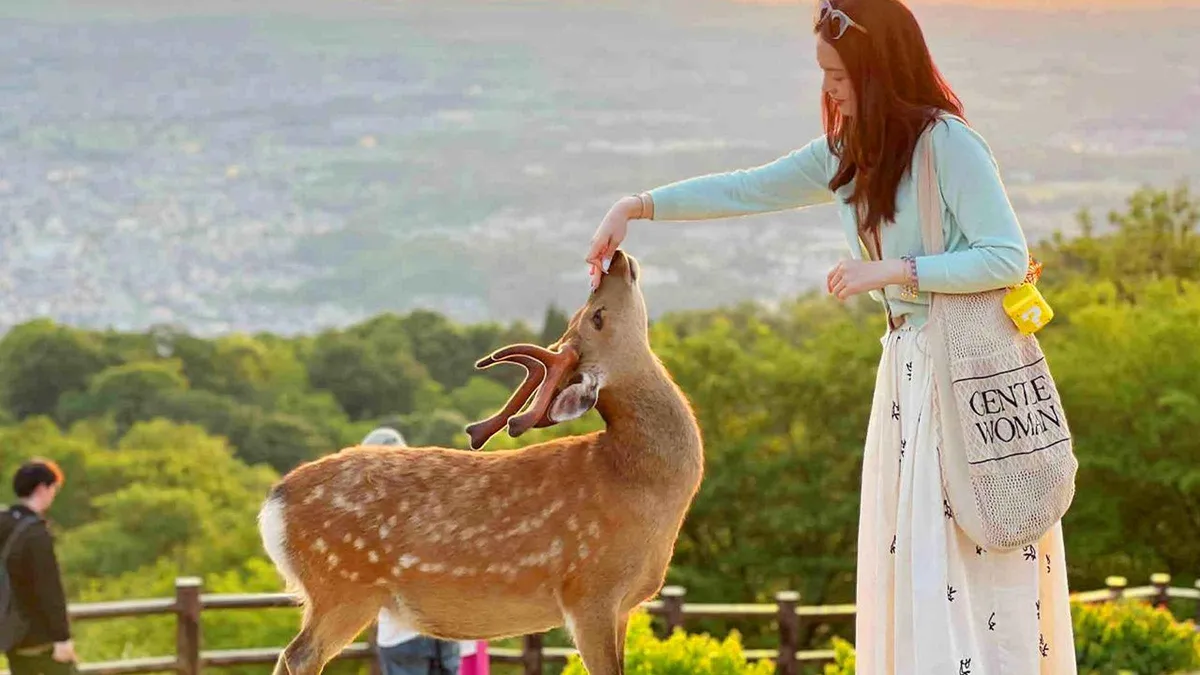
Deer on the lawns of Nara Park on a full-day bus tour from Osaka, Osaka Japan from $50.72 Most booked

Kyoto/Osaka: Nara, Fushimi Inari Taisha, Arashiyama Bus Tour

★★★★★ ★★★★★ 4.7(3,086 reviews)· 9 - 10 hours

A nine- to ten-hour coach loop to Nara's deer, the Fushimi Inari torii and the Arashiyama bamboo, with an English- and Chinese-speaking guide. No admissions and no lunch are included, and deer crackers are cash on the day.

Check Availability
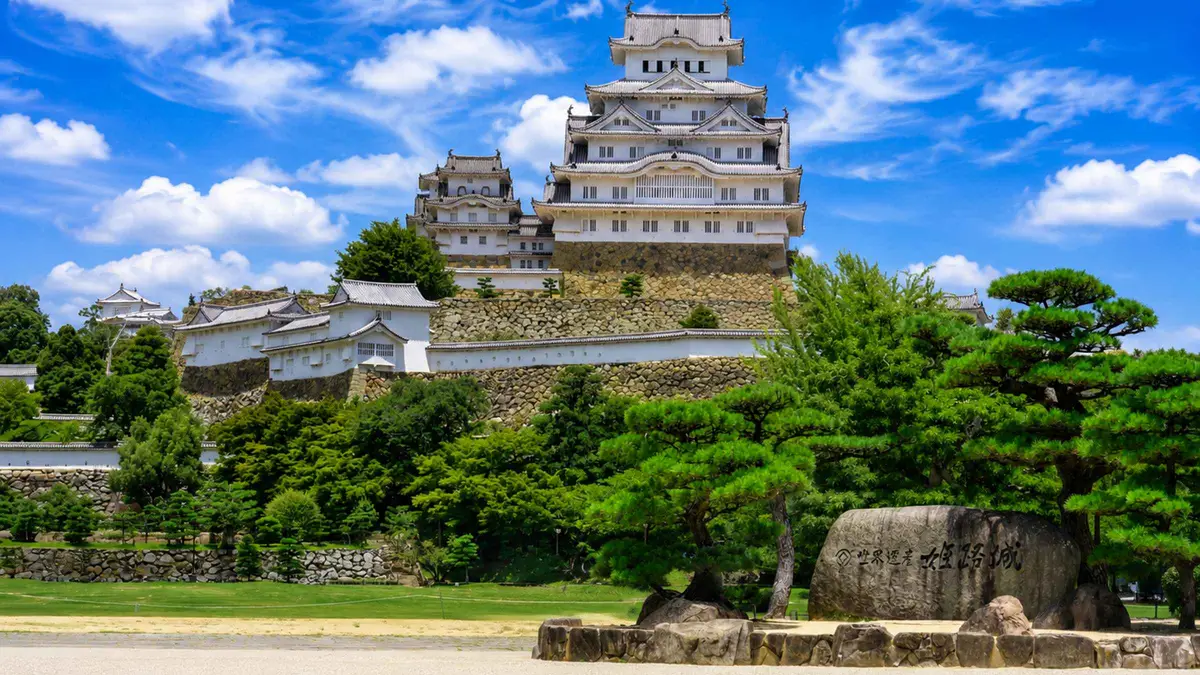
The white keep of Himeji Castle above its stone walls on a day tour from Osaka, Osaka Japan from $51.81

From Osaka: Himeji Castle, Arima Onsen & Mt. Rokko Day Tour

★★★★★ ★★★★★ 4.6(613 reviews)· 10 hours

Ten hours to Himeji Castle, Arima Onsen and the Rokko summit. Read the exclusions: castle and Koko-en entry are not included, and Himeji's adult ticket rose to ¥2,500 on 1 March 2026, so budget for it.

Check Availability
The Phoenix Hall of Byodo-in reflected in its pond on a Nara and Uji day trip from Osaka, Osaka Japan from $57.10

Osaka: Nara and Uji Day Trip with Deer Park and Hot Spring

★★★★★ ★★★★★ 4.3(422 reviews)· 1 day

Nara's Great Buddha and Kasuga Taisha in the morning, then Uji for matcha, Byodo-in and a soak at Genji no Yu. Admission to both temples is included, which the cheaper Nara coaches leave you to pay at each gate.

Check Availability
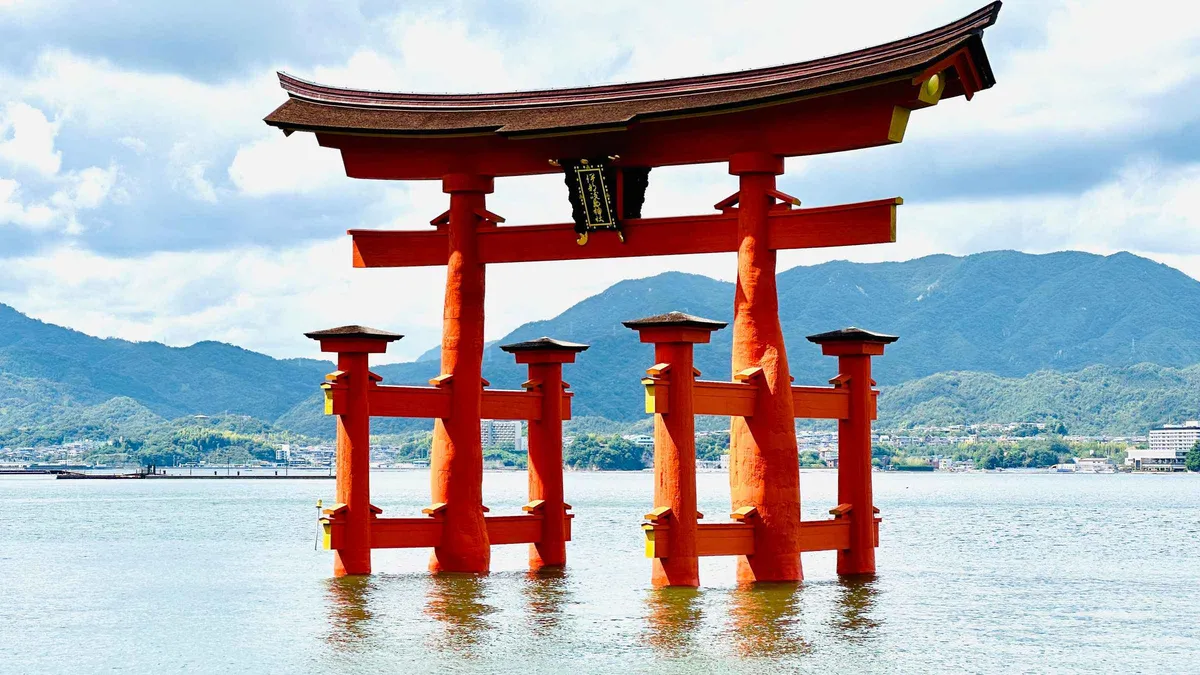
The floating torii of Itsukushima Shrine at Miyajima on a bullet-train day trip from Osaka, Osaka Japan from $95.20

From Osaka: Hiroshima and Miyajima Day Trip by Bullet Train

★★★★★ ★★★★★ 4.8(339 reviews)· 8 - 11.5 hours

Round-trip Shinkansen, the Miyajima ferry, Itsukushima Shrine admission and lunch, with a guide working in Spanish and English. Eight to eleven and a half hours depending on the option, at about a third of what the H.I.S. version costs.

Check Availability
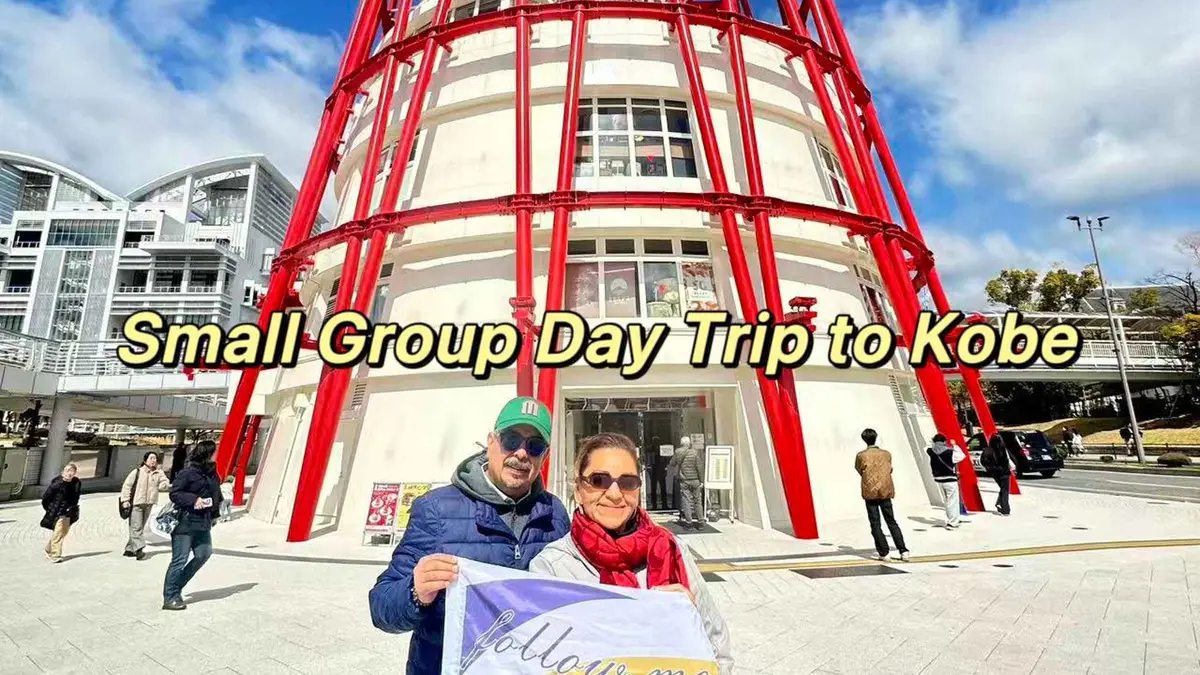
Red brick warehouses and the port tower at Kobe Harborland on a private day trip from Osaka, Osaka Japan from $76.71

Private Kobe Day Trip – Harbor, Chinatown & Scenic Views

★★★★★ ★★★★★ 4.9(26 reviews)· 9.5 hours

Nine and a half hours in Kobe by private vehicle: Maiko Park, Harborland, Nankin-machi, Sorakuen with its ticket and the Kitano villas, with hotel pickup. Meals are on you, and the train to Kobe costs ¥330 if you would rather go alone.

Check Availability

Prices, ratings and details are the platform's own, checked in Q3 2026; dollar figures are the listed prices — the platform bills in your account's currency.

Pick a district before you pick a hotel

In Osaka the choice is really Kita or Minami, and it decides how your evenings go rather than how far you walk.

Kita, around Umeda and Osaka Station, is where the trains are: the airport buses, the Kyoto and Kobe lines, the Shinkansen one stop away at Shin-Osaka. It eats and drinks well underground, in the arcades below the station, and it empties after the offices close. Minami, around Namba and Shinsaibashi, is the opposite — the food streets, Dotonbori, the markets and the noise, with the airport train from Nankai Namba on your doorstep.

The practical difference is the ride: nine minutes and ¥240 between them on the Midosuji Line, which you will make daily whichever you choose. Where to stay in Osaka compares the districts with what a room actually costs in each, and adds the prefecture's lodging tax to the figure, because the booking page will not.

Osaka questions

Is Osaka worth visiting, or is it just a base for Kyoto?

It is a base for Kyoto — 29 minutes and ¥580 by JR — and it is also the only city in Kansai with this much eating, an intact castle park and a night that runs late. Two days here is not a compromise. The longer answer, with what people who did not enjoy it say, is on is Osaka worth visiting, and how many days Osaka needs sets the length.

What is Osaka famous for?

Food, first: takoyaki and okonomiyaki are Osaka dishes, though no published guide will point you at a shop for either — the reason is on where to eat. Then Osaka Castle, Universal Studios Japan, the signage and canal of Dotonbori, and a merchant history that shows up in how directly people speak to you.

How many days do you need in Osaka?

Two full days cover the city core — castle, markets, one big ticket and the canal at night. A third day buys one day trip: Nara at 45 minutes, Kyoto at 29, Himeji at about an hour. Four is comfortable. The routed versions are one day, two days and three days.

Is English spoken in Osaka?

Enough for a trip. Station signage, ticket machines and the three tourist information centres run in English, Chinese and Korean, and the city's call centre answers on +81 6-6131-4550 daily 09:00–17:30. Restaurants outside the tourist streets are hit and miss, and a translation app earns its place at market stalls.

Is Osaka expensive?

Less than Tokyo and less than Kyoto for a bed. A day of walking, market food and one paid sight runs about ¥4,500–¥6,000 a person before the room, because the headline sights are cheap: ¥1,200 at the castle, ¥2,000 for the Umeda roof, nothing at all for Dotonbori or Kuromon. What Osaka costs has the breakdown, including the lodging tax the booking page leaves off.

When is the best time to visit Osaka?

Late March to May and October to November, on the ERA5 normals — highs of 13–23 °C and the driest stretch of the shoulder seasons. August averages 31.8 °C, and June and July bring about 195 mm of rain each inside the Kinki rainy season, which normally runs 6 June to 19 July. Best time to visit Osaka has it month by month.

Do I need an Osaka pass?

Only on a dense day. The Osaka Amazing Pass is ¥3,500 and covers transport plus 39 of the 41 listed entries, but not Kaiyukan, not Universal and not the airport line; the e-Pass is ¥2,000 for entries alone. On a two-sight day, single fares and gate tickets win. The arithmetic is on the Osaka Amazing Pass page.

Start with the ticket that actually needs a date

Universal Studios Japan, teamLab and Tsutenkaku are the three in Osaka that sell out or refuse walk-ups. Everything else you can decide on the morning.

Prices and availability are set by the operator and confirmed at checkout; official ticket offices are linked plainly on every page.

See the tickets compared

Osaka, Japan at a glance

Second office
Tourist Information NAMBA, Nankai Namba Station 1F, 5-1-60 Namba, Chuo-ku, Osaka 542-0076 (daily 09:00-20:00)
City info line
+81 6-6131-4550
Coordinates
34.7025, 135.4959
Time zone
JST (UTC+9, no daylight saving)
Currency
Japanese yen (JPY)

The office, phone and email above belong to the city's own visitor service, published on the official tourism site and checked on 2026-09-02 — they are not this site's contact details. To reach us, use the contact page.