 Osaka City Guide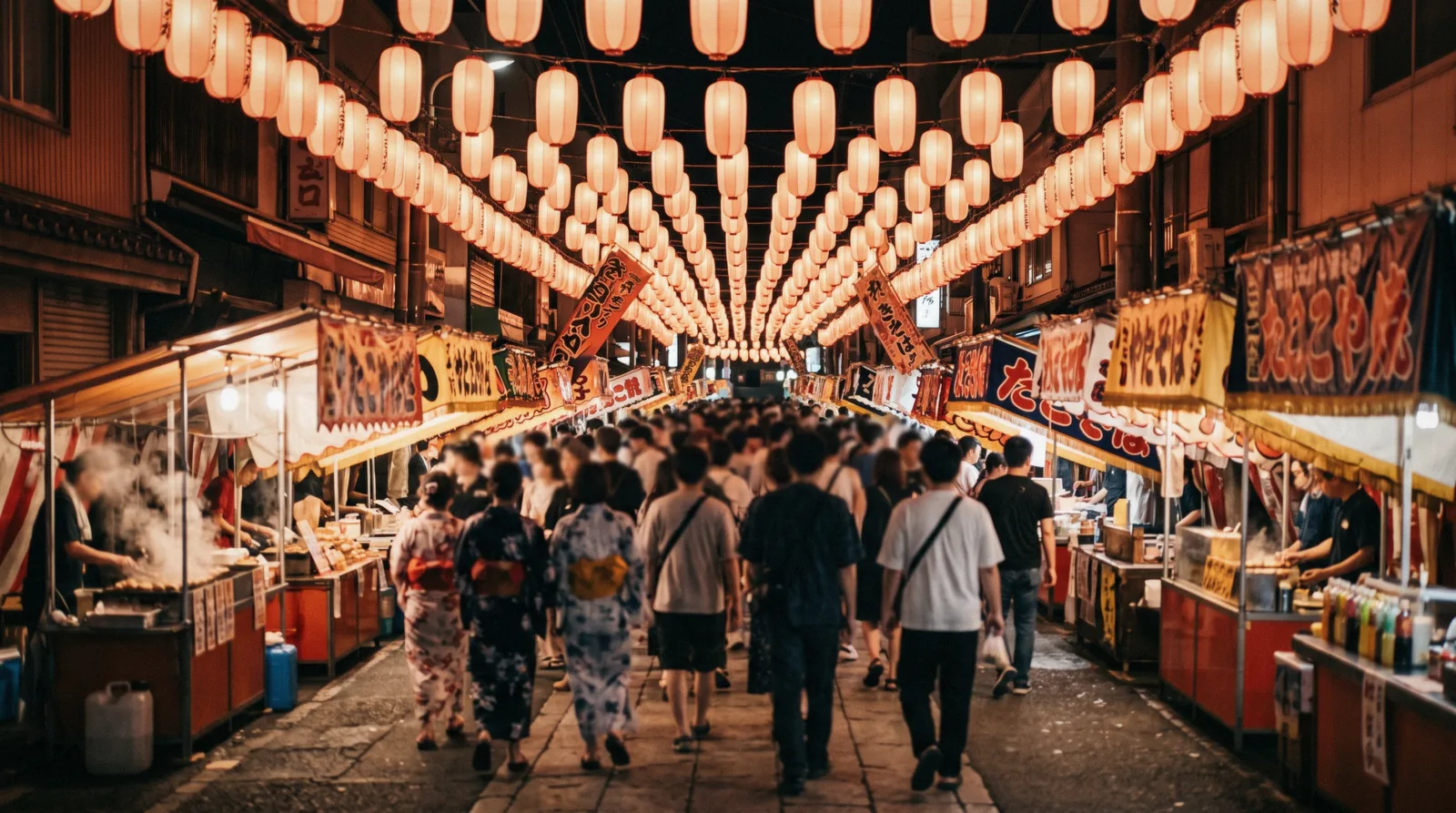
Osaka Festivals and Events, 2026
Osaka festivals are dense, loud and — unusually — mostly documented by the bodies that run them, which is why this page reads differently from the listicles. Every date below comes from the shrine, the city office or the organising committee that owns the event, and where those bodies publish nothing we say so instead of borrowing a figure from a tour operator. That matters more here than anywhere: the single most quoted set of numbers about the city's biggest festival — start times, firework launch sites, shell counts — appears nowhere in the shrine's own notice. Prices, where they exist, are in yen first with a dollar gloss at ¥1,000 ≈ $6.27 (European Central Bank reference rate via frankfurter.dev). For the weather and crowd side of choosing dates, see the best time to visit; for the city as a whole, things to do in Osaka on the homepage.
Quick answer The four dates worth planning around, and what is not yet announced
Osaka's four fixed points in 2026 are Tenjin Matsuri on 24 and 25 July, Sumiyoshi Matsuri from 20 July to 1 August, the Kishiwada danjiri on 19–20 September and again on 10–11 October, and the Naniwa Yodogawa fireworks, which have moved out of August to Saturday 17 October 2026, 19:00–20:00. All four are free to watch from the street. Every date here is taken from the shrine, the city or the organising committee itself.
Key takeaways
- Tenjin Matsuri's dates are certain and its clock is not — Osaka Tenmangu publishes the rite names and nothing else, so the times, firework sites and shell counts you have read elsewhere are unsourced
- The Kishiwada danjiri is the one with published hours: 06:00 to 22:00 on the Saturday, and trial runs on 6 and 18 September you can watch with almost nobody there
- Two of Osaka's biggest winter draws — the Midosuji Illumination and OSAKA Hikari Renaissance — have no 2026 dates yet; only the 2025 editions are published
- Festival weeks fill central hotels: check where to stay early, and use a guided evening walk if you want the backstreets on a night the main routes are closed
The 2026 Osaka Festival Calendar
Every row was read on in Q3 2026 from the body that runs the event — Osaka Tenmangu, Sumiyoshi Taisha, Kishiwada City, the Naniwa Yodogawa fireworks committee and the Osaka Marathon Foundation. Where a cell says “not published”, that is the organiser's own silence and not a gap in our research.
| Event | 2026 dates | Times | Where | Cost to watch |
|---|---|---|---|---|
| Sumiyoshi Matsuri | 20 July – 1 August | Published per rite, 15:40 to 19:20 starts | Sumiyoshi Taisha and Shukuin Tongu | Free |
| Tenjin Matsuri | 24–25 July | Not published by the shrine | Osaka Tenmangu, the streets around it and the Okawa river | Free |
| Kishiwada danjiri, September | 19–20 September (trial runs 6 and 18 September) | 06:00–22:00 Saturday, 09:00–22:00 Sunday | Kishiwada and Haruki districts | Free |
| Kishiwada danjiri, October | 10–11 October (trial run 4 October) | 06:00–22:00 Saturday, 07:00–22:00 Sunday | Kishiwada, timings vary by district | Free |
| Naniwa Yodogawa fireworks | Saturday 17 October | 19:00–20:00 | Yodo River bed, Yodogawa-ku | Free from the banks; seat prices not published |
| Midosuji Illumination | 2026 dates not announced | 2025 edition ran to about 25:00 | 4 km of Midosuji | Free |
| OSAKA Hikari Renaissance | 2026 dates not announced | 2025 edition 17:00–21:00 | Nakanoshima | No admission stated |
| Osaka Marathon | 28 February 2027 | Not published on the homepage | Course not published on the homepage | Free to watch; entries closed |
Two patterns are worth reading off this table. First, the summer half of the calendar is shrine-run and therefore fixed to the same dates every year, while the autumn half is committee-run and moves — which is exactly why the fireworks left August in 2026. Second, the winter illuminations are the least reliably documented events in the city, and anyone selling you a December 2026 date today is guessing.
Tenjin Matsuri, 24–25 July 2026
One of the three great festivals of Japan, and the clearest example on this site of a famous event whose published record is much thinner than its reputation.
Osaka Tenmangu's own notice for 2026 — 「令和8年度の天神祭について」 — sets out two days and the rites on each. On Friday 24 July there is the Yoimiya rite at the main hall, the hoko-nagashi rite at the former Wakamatsu shore, in which a sacred halberd is floated on the water to divine the course of the procession, and an evening rite at the temporary shrine in Chiyozaki, Nishi-ku. On Saturday 25 July comes the Honmiya rite, the transfer of the deity's spirit, the land procession (陸渡御), the boat procession (船渡御) on the Okawa, the votive fireworks (奉納花火) and finally the return procession and closing rite.
The shrine also states, in as many words, who may watch what: 「本殿での神事はすべて神職及び関係者のみで斎行いたします。区域内順路での陸渡御は見学可能です。」 — the rites inside the main hall are conducted by clergy and officials only, while the land procession is open to spectators along the marked route. That is the practical instruction for a visitor: you are not getting into the hall, and you do not need to.
What the Shrine Does Not Publish
Here is the part that separates this page from every other one you will read. Osaka Tenmangu publishes no clock times, no fireworks launch sites and no boat route for 2026. The familiar numbers — a 19:30 to 21:00 fireworks window, launches from Kawasaki Park and Sakuranomiya Park, three thousand shells, a hundred boats — come from tour operators and blogs, not from the shrine. We are not repeating them, because we cannot source them, and because a visitor who plans a journey around an unsourced start time is the person who ends up on the wrong bank.
What you can rely on: the dates, 24 and 25 July, which are fixed annually rather than moved to a weekend; the sequence of rites above; and the fact that the land procession is the viewable one. Arrive in the afternoon of the 25th, walk the route while it is still light, and be near the river by early evening.
One further warning, because it catches researchers as well as visitors: tenjinmatsuri.com is not the shrine's site. It is run by a private company under the shrine's patronage and its most recent festival post is for 2022. The shrine's own domain is osakatemmangu.or.jp, and that is where the 2026 notice sits.
Watching It Without a Plan Going Wrong
Three practical things. The festival is in the last week of July, which on our thirty-year climate series is the hottest and wettest stretch of the Osaka year — 29.9 °C average high, 197 mm across the month — so the crowd is standing in heat and humidity for hours; the best time to visit page has the full picture. Bring water rather than buy it at the stalls at eight in the evening.
Second, transport. Osaka Tenmangu sits by Minamimorimachi and Osaka Tenmangu stations, both on the subway, and the Metro network is the way in and out — road closures around the procession route make taxis useless for hours. Fares run $1.19 to $2.45 (¥190 to ¥390) by zone band.
Third, if the crowd is not for you: the same two days are excellent everywhere else in the city, because a great deal of Osaka is at the festival. That is the day to be at the castle at opening, or in Kuromon Ichiba before eleven.
Sumiyoshi Matsuri, 20 July to 1 August 2026
The other great summer festival, at the shrine that is the reason the district exists — and this one publishes its whole programme, times included.
Sumiyoshi Taisha published its 2026 notice, 「令和8年 住吉祭(夏祭)について」, on 1 July 2026. It is a two-week sequence rather than a single night, and the shrine gives a start time for each rite — the sort of document Osaka Tenmangu does not produce.
| Date, 2026 | Rite | Start | Where |
|---|---|---|---|
| 20 July | Mikoshi-arai — the portable shrine is washed | 19:20 | Sumiyoshi Park |
| 26 July | Mikoshi togyo — the portable shrine procession | 15:40 | Not stated |
| 30 July | Yoimiya-sai — the eve rite | 16:00 | The shrine |
| 31 July | Nagoshi-no-harae purification, then the grand rite | 17:00 | The shrine |
| 1 August | Tongu-sai, then the Iigai-bori purification rite | 18:30 | Shukuin Tongu |
The shrine also publishes what closes and when, which is the detail that saves a wasted journey. Gates close at 20:00 on 20 July, 19:00 on 26 July, 17:00 on 30 July, and 19:00 on 31 July and 1 August; the amulet office keeps the same hours, and prayer reception ends at 15:50 on 20 and 26 July and at 18:00 on 31 July and 1 August. Food stalls run on 31 July and 1 August, 14:00 to 19:30 — that is the answer to the question everyone actually asks about a Japanese summer festival.
The pick of the programme for a visitor is the Nagoshi-no-harae on 31 July, in which participants pass through a great ring of woven reeds to be purified for the second half of the year, on a site whose four main halls are national treasures and whose arched Sorihashi bridge is the most photographed object in south Osaka. It is also, being at the end of the Nankai line rather than in the centre, considerably less crushed than Tenjin Matsuri.
One standing note about this shrine, which applies on festival days too: Sumiyoshi Taisha publishes no admission fee at all. Not a zero — no fee statement of any kind. We write that as “no fee published” rather than “free”, and the shrine's own page explains why the distinction matters.
Kishiwada Danjiri, 19–20 September and 10–11 October 2026
Wooden floats weighing several tonnes, run at a sprint and turned at street corners by teams pulling ropes. The city publishes the hours, which almost nothing else in this calendar does.
Kishiwada is a separate city on the Nankai line south of Osaka, about forty minutes out, and it runs two danjiri festivals a year, not one. The September festival is the famous one and covers two districts, Kishiwada and Haruki; the October festival covers the rest of the city and its timings vary by district. Both are on the city's own festival pages.
| 2026 | Trial run (試験曳き) | Yoimiya (eve) | Honmiya (main day) |
|---|---|---|---|
| September festival | Sunday 6 September and Friday 18 September, 14:00–16:00 | Saturday 19 September, 06:00–22:00 | Sunday 20 September, 09:00–22:00 |
| October festival | Sunday 4 October, 13:00–17:00 | Saturday 10 October, 06:00–22:00 | Sunday 11 October, 07:00–22:00 |
The trial runs are the tip most guides miss. They are exactly what the name says — the teams practising the route and the corners — and they happen in daylight, on the same streets, with a fraction of the crowd. If you want to see how a four-tonne float is turned at speed without standing in a two-deep crowd from six in the morning, the trial run on Sunday 6 September is the better ticket, and it costs nothing.
The famous manoeuvre is the yarimawashi, the corner turn taken at full running speed, and it is genuinely dangerous — this is a festival with a long injury record, run by pullers who train for it. Spectators are kept behind barriers on the sharp corners. Stand where the stewards tell you to, and do not step into the street to photograph a float that is moving towards you.
One research note: the old city domain city.kishiwada.osaka.jp no longer resolves, so any link you find to it is dead. The live site is city.kishiwada.lg.jp, and that is where the table above comes from.
Getting There, and Whether It Is Worth the Day
Kishiwada is on the Nankai Main Line from Namba, and it is the one event in this calendar that takes a real trip out of the city rather than a subway ride. Trains run from the same Namba concourse used by the airport services, so if you are arriving or leaving on a festival weekend the timing can be made to work.
Our reading: worth it for the September Saturday if you are in Osaka anyway and can be on an early train, and worth it without qualification for the 6 September trial run if your dates cover it. If they do not, the September weekend still matters to your plans for a different reason — it is one of the dates that fills central hotel rooms, along with the July festival week and the October fireworks.
What to Book Around a Festival
Nothing in this calendar is ticketed, so the useful bookings are the things that work on a festival day: an evening on the water, a guided walk through streets you would not find alone, and the food that a festival crowd otherwise queues an hour for. Prices are GetYourGuide's own listings in US dollars.
 from $12.49
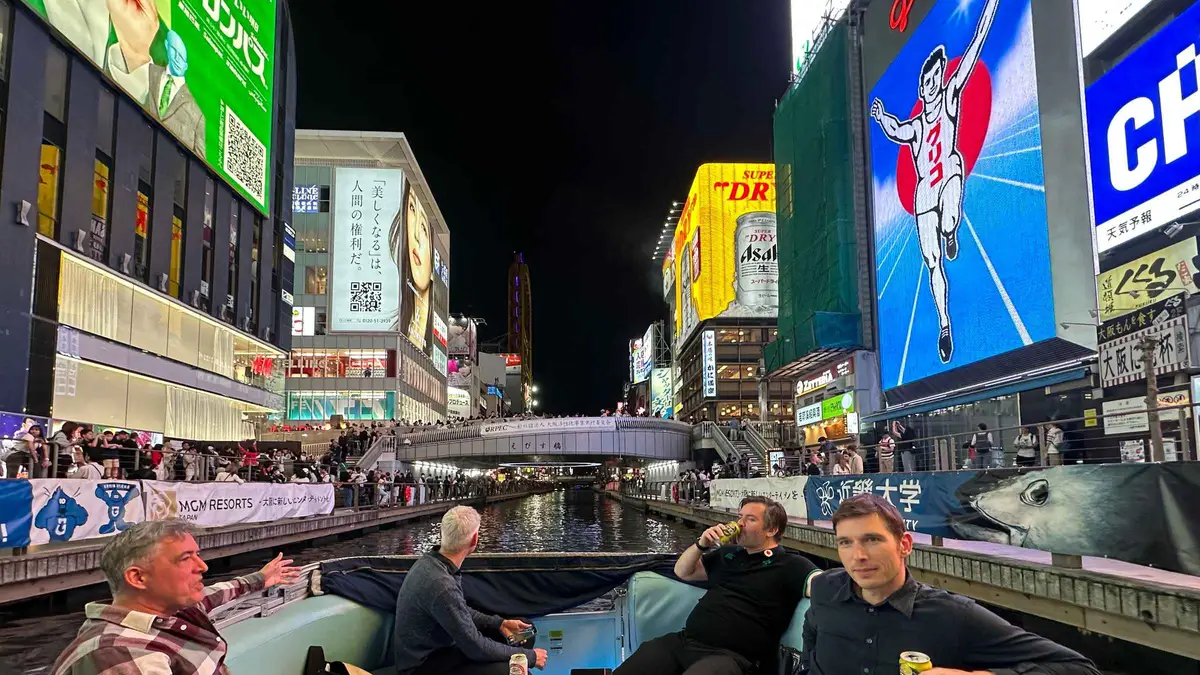
Osaka: Dotonbori River Cruise with Glico Sign & Neon Views
Twenty minutes on the water past the Glico sign, boarding at Minatomachi Pier rather than the Tombori River Walk, and you may bring your own drinks. The rival Tombori River Cruise is free with the Osaka Amazing Pass; this boat is not.
Check Availability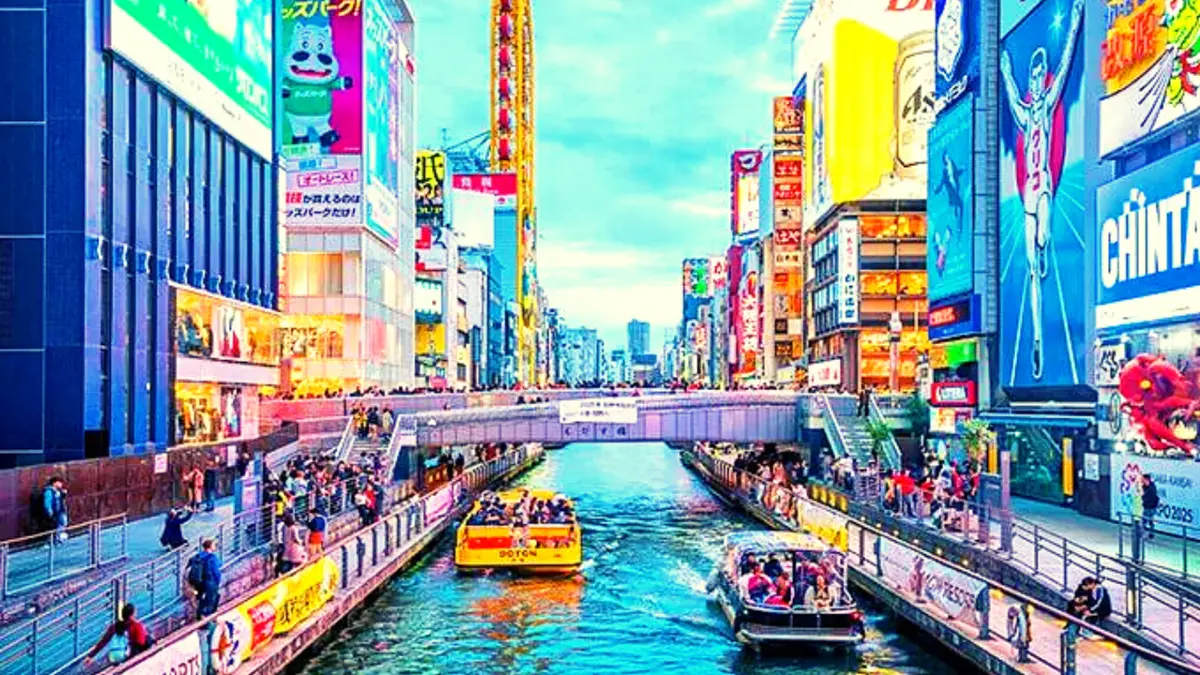 from $35.71
Osaka: Private or Group Hotspots & Hidden Gems Walking Tour
A three-hour walk that stretches to seven if you want it to, private or shared, with a takoyaki and a retro vending-machine drink included. The longer options use trains, which you pay for — usually under ¥1,000 a head.
Check Availability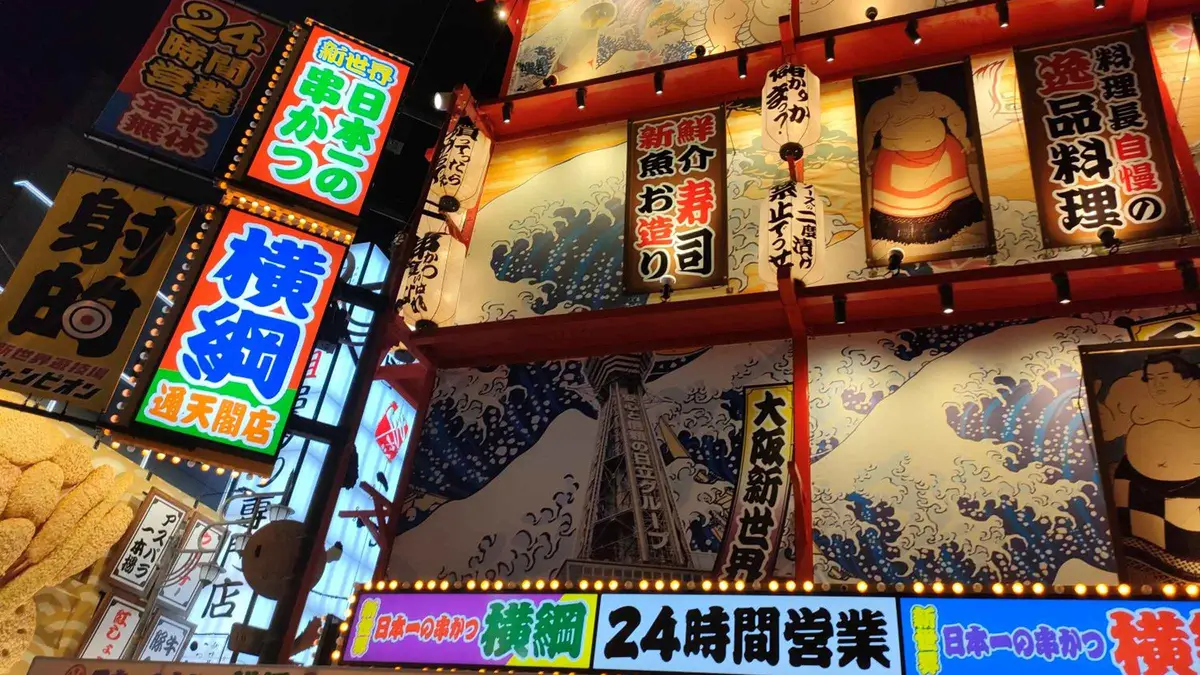 from $69.79
Hungry Osaka Street Food Tour Shinsekai: 15 Tastings 3 Drinks
Fifteen tastings and three drinks across an izakaya, a stall, a standing bar and two restaurants in Shinsekai, over three hours. The best rated of the big evening food walks; getting there and home afterwards is your own affair.
Check Availability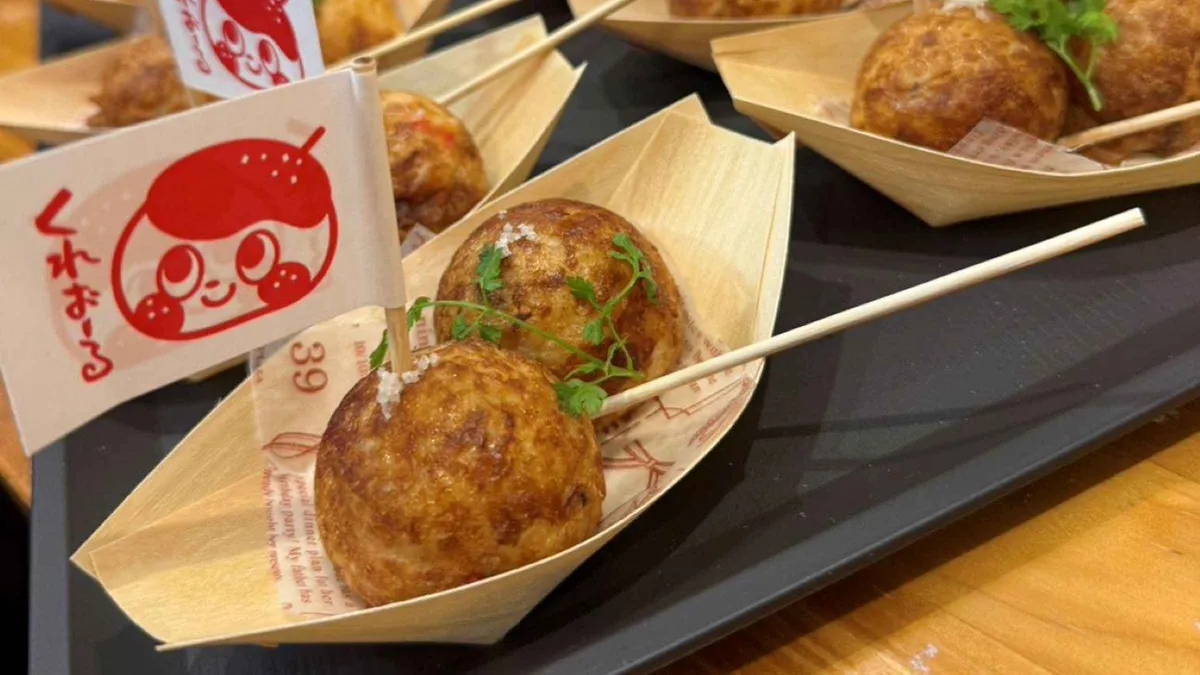 from $49.94
Osaka Dotonbori: 6-shop Takoyaki Tasting Tour
Two hours comparing takoyaki across five Dotonbori shops — about ten pieces in all — with a tasting booklet and a local guide, capped at ten people. Narrow by design: one dish judged batter by batter, not a general food tour.
Check Availability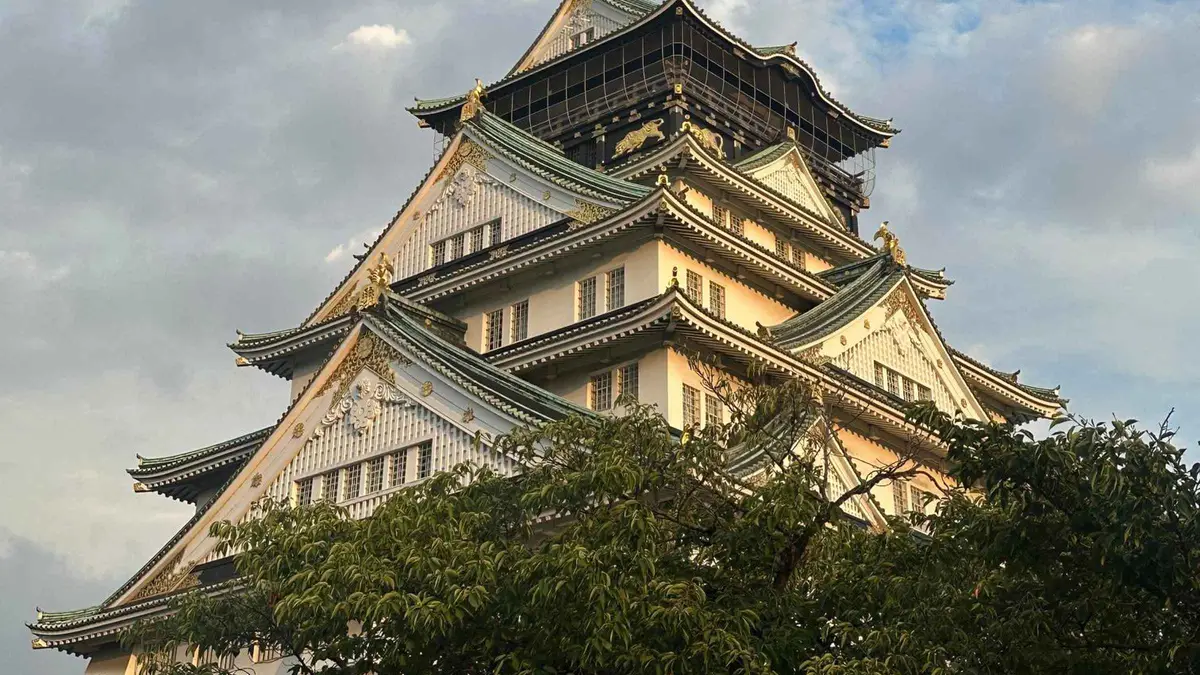 from $49.74
Osaka: Essential City Loop Tour with Local Guide
Five hours in a group of eight covering the castle, the Showa-era backstreets and the neon strip in one loop, with food bought stop by stop instead of a sit-down lunch. Only four people have rated it so far.
Check Availability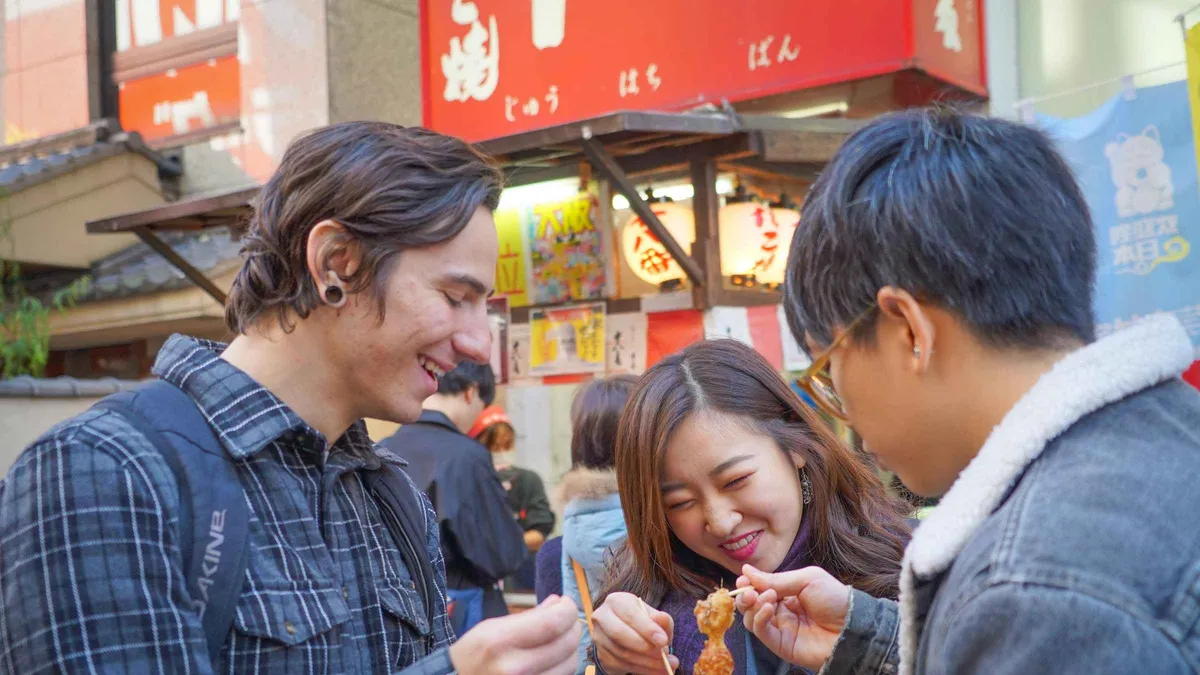 from $104.87
Osaka: Local Foodie Tour in Dotonbori and Shinsekai
Three hours across Shinsekai and Dotonbori taking in kushikatsu, takoyaki and an okonomiyaki you cook yourself, with two drinks. The dearest food walk here, and the ¥190 train fare between the two districts is on you.
Check AvailabilityPrices, ratings and details are the platform's own. Dollar figures are the listed prices. The platform bills in your account's currency.
The Fireworks, the Marathon and the Illuminations
Three events that are not shrine festivals, and each of which publishes a different amount about itself.
The 38th Naniwa Yodogawa Fireworks fall on Saturday 17 October 2026, 19:00 to 20:00 — out of their usual August slot for this edition, which is the single most likely thing on this page to catch out a visitor working from an older guide. The venue is the Yodo River bed in Yodogawa-ku, from the Shin-Midosuji and Shin-Yodogawa bridges downstream to the National Route 2 Yodogawa bridge. The committee states 雨天決行・荒天中止: it goes ahead in rain and is cancelled only in severe weather.
The organiser sells reserved seating in several named categories — Premium, Exciting, Stage, a cooling ship, and Panorama Left 1 to 4 and Right 1 to 3 — and prints no prices for any of them on its outline page. It also publishes neither a shell count nor an attendance figure, both of which circulate widely. If you want a seat, go to the committee's own site for the sale; if you want it free, the banks are free, and an hour before eight on a Saturday evening in October is not a comfortable time to be arriving.
The Osaka Marathon: February 2027, and Entries Are Closed
The next Osaka Marathon is 28 February 2027, run by the Osaka Marathon Foundation, with a field of about 34,000 runners — the foundation's own phrasing is that ten thousand volunteers support thirty-four thousand runners. It is a World Athletics Gold Label road race and an Abbott World Marathon Majors age-group qualifier.
If you were planning to run it: entries for general runners, para runners and the 720 Naniwa Marathon closed on 28 August 2026. As a spectator you need nothing. We cannot tell you the entry fee or the start and finish points, because neither appears on the foundation's homepage — both sit behind documents we have not read, and we would rather say that than reproduce last year's course.
For a February visitor the marathon is a genuine reason to check dates before booking: it is our cheapest recommended month, and a marathon Sunday is the one day in that month when central rooms are not cheap.
The Illuminations Have No 2026 Dates Yet
Osaka's winter light programmes are run by a single committee, and it has published no 2026 dates for either of them. What it publishes is the last completed edition, and we print those only to show what the events are:
- Midosuji Illumination, 2025 edition: 9 April to 31 December 2025, along four kilometres of Midosuji, lit from about 18:00 to 25:00 in October and about 17:00 to 25:00 from November.
- OSAKA Hikari Renaissance, 2025 edition: 14 to 25 December 2025 on Nakanoshima, from the city hall surroundings to Nakanoshima Park, with projection mapping on the Central Public Hall running 17:00 to 21:00 as a roughly seven-minute show every twelve minutes.
- No admission is stated for either, and — despite what several guides claim — no Guinness record is claimed on either official page.
How to Actually Watch One, and What This Calendar Leaves Out
The mechanics of standing in a Japanese festival crowd, and an honest account of the events we could not put a date on.
A Japanese festival procession is a slow-moving object watched by a stationary crowd, and the whole experience turns on where you stand and when you got there. Three rules carry most of it.
Pick a point on the route rather than the centre. The pressure is worst where a procession starts, ends or turns; a straight stretch two or three hundred metres along is the same floats with room to breathe. At Tenjin Matsuri that means walking out from Osaka Tenmangu rather than towards it; at Kishiwada it means avoiding the corners everybody films.
Arrive before the crowd sets, or after it breaks. Barriers go up hours ahead and once a line is three deep it does not thin until the event ends. The trial-run principle applies more widely than Kishiwada: the quiet hours of a festival — the morning rites, the setting-up, the streets an hour after the last float — are frequently better than the peak and are where the photographs are.
Eat before or eat late. Stall queues at a Japanese festival are long and slow, and prices at them are not published anywhere. If food is the point of the evening for you, Osaka's food scene is open every other night of the year, and a guided food walk on a non-festival evening gets you more than an hour in a yakisoba queue will.
Etiquette and Two City Rules
Nothing on this page requires a ticket, a dress code or a reservation, and no shrine on it asks a visitor to do anything beyond the ordinary courtesies: stay behind the barriers, do not step into the path of a moving float or a procession, do not photograph inside a hall where photography is signed against, and do not block a route the stewards are keeping clear.
Two city rules do apply, and both catch visitors on festival nights. Street smoking has carried a $6.27 fine (¥1,000) across the whole of Osaka City since 27 January 2025, heated tobacco included — the designated smoking areas are the only legal option and they are marked. And the free public Wi-Fi that the tourism literature still refers to was withdrawn from every station on 31 March 2023, so a plan that depends on looking up a procession route on station Wi-Fi at nine in the evening is a plan that fails. Screenshot what you need before you leave the hotel; the getting around page has the connectivity and fare detail.
The Events We Cannot Date, and Why
Three categories are missing from this calendar on purpose.
Music festivals and one-off concerts. Osaka hosts a large number, and none of them has a stable annual date published by a body we can cite twelve months out. Rather than list last year's line-ups as if they were 2026 events, we leave them off — the venues themselves are the source to check when your dates are fixed.
Neighbourhood shrine festivals. Almost every shrine in the city runs a summer rite, and most publish nothing at all in writing, in any language. If you are here in July and you hear drums, follow them; that is genuinely the best method available.
The 2026 illumination dates, which the organising committee has not announced, as the section above sets out.
The underlying position on this site is that a negative finding is content. Knowing that Osaka Tenmangu publishes no start time is more useful than a confident 19:30 that came from nowhere, because it tells you what kind of plan to make — a flexible afternoon rather than a timed rendezvous. Where an organiser does publish, as Sumiyoshi Taisha and Kishiwada City both do, we print the times to the minute.
Where to Go Next
Three pages that turn a festival date into a trip.
The best time to visit Osaka
Thirty years of temperature and rainfall, the weather agency's sakura and rainy-season normals, and what the festival months feel like on foot.
The datesThings to do in Osaka
What to build the rest of a festival week around, ranked by what each place actually publishes about itself.
The sightsWhere to stay in Osaka
The area decision — and on the four festival dates above, the booking-early decision matters more than the area one.
The roomOsaka Festivals: The Questions
What are the biggest festivals in Osaka?
Tenjin Matsuri on 24–25 July, counted among the three great festivals of Japan; Sumiyoshi Matsuri from 20 July to 1 August at Sumiyoshi Taisha; and the Kishiwada danjiri, which runs twice — 19–20 September and 10–11 October 2026. All three are free to watch from the street.
What time does Tenjin Matsuri start?
Osaka Tenmangu does not publish a time. Its 2026 notice gives the two dates, 24 and 25 July, and the sequence of rites, but no clock times, no fireworks launch sites and no boat route. Every schedule you find elsewhere is an operator's or blogger's reconstruction. Plan to be walking the land procession route on the afternoon of the 25th and near the river by early evening.
Are the Kishiwada danjiri trial runs worth watching?
They are the best-value part of the whole calendar. On Sunday 6 September and Friday 18 September 2026, 14:00–16:00, the teams practise the route and the corners in daylight with a small fraction of the weekend crowd. The city publishes those times itself, which is more than most events in Osaka manage.
When are the Naniwa Yodogawa fireworks in 2026?
Saturday 17 October 2026, 19:00 to 20:00, on the Yodo River bed in Yodogawa-ku — moved out of the usual August slot for this edition, so an older guide will send you on the wrong date. It runs in rain and is cancelled only in severe weather. The banks are free; the organiser's reserved seating exists but its prices are not published.
Is there an Osaka festival in December?
The winter draw is the illuminations along Midosuji and at Nakanoshima, and the organising committee has published no 2026 dates for either. Only the 2025 editions are on its site. We re-check from October rather than print a date nobody has announced.
Do Osaka festivals cost anything to attend?
No. Every event on this page is free to watch from the street or the riverbank. The only paid layers are reserved fireworks seating, whose prices the organiser does not publish, and the hotel rooms, which are the real cost of a festival date — see where to stay.
How do I get to the festivals from central Osaka?
Tenjin Matsuri and the illuminations are subway rides at $1.19 to $2.45 (¥190 to ¥390) by zone; Sumiyoshi Taisha is on the Nankai and Hankai lines to the south; Kishiwada is a Nankai Main Line trip of about forty minutes from Namba. Road closures make taxis useless around the procession routes — the getting around page has the fare bands and passes.
Osaka's Festivals on Film
Three videos whose ids we verified against YouTube's own record. Watching one is the fastest way to judge whether you want to be in that crowd; they load only when you press play.
【天神祭】Tenjin Matsuri Osaka's Biggest Festival Experience!
The land and boat processions at street level, which is the part the shrine says you may watch.
Video: Samurai ChroniclesTenjin Matsuri 2025: Osaka's Biggest Festival & One of Japan's Top 3 | Walking Tour | 4K | HDR
An unedited walk through the festival streets, useful for judging the density of the crowd.
Video: THE JAPAN WALKOsaka in Summer: Eating Through Japan's Biggest Festival
The food-stall side of a summer festival night, and what the queues look like.
Video: Tokyo CreativeVideos load from YouTube only when you press play.
Prices, hours and terms are set by the venue or operator and confirmed at checkout.
We may earn a commission if you book through one of our links, at no extra cost to you. Full affiliate disclosure