 Osaka City Guide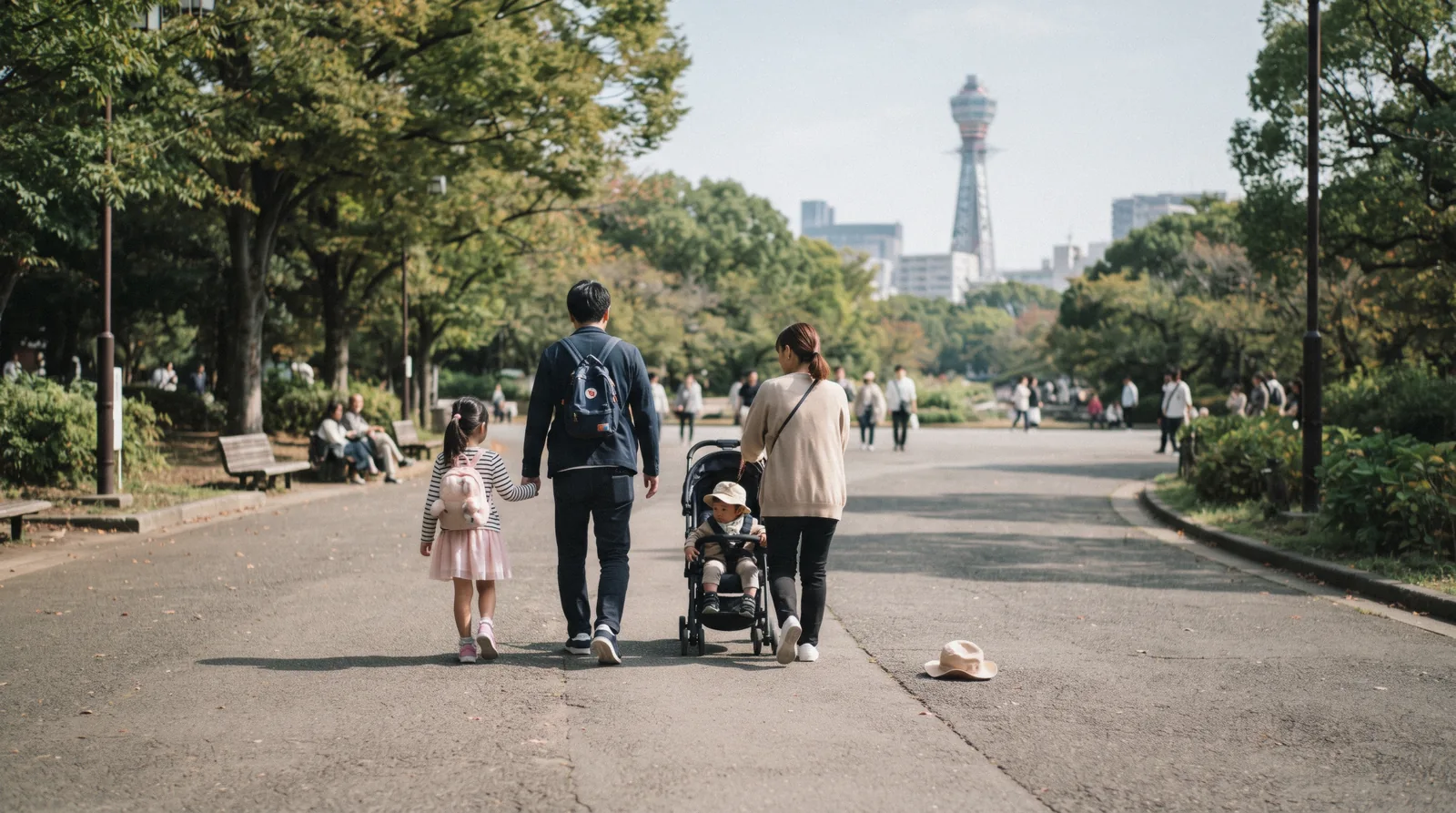
Osaka With Kids
Travelling in Osaka with kids is easier than in most Japanese cities, and the reason is structural rather than sentimental: the sights are indoors and concentrated, the transport is step-free at every station, and almost every venue publishes a child price and an age at which it stops charging. What the city does not do is publish those things in one place, and the ages do not agree with each other — one venue's child starts at four, another's at three, a third counts junior-high pupils as adults. This page collects what each venue states on its own site, along with the ages that go free, the closed days that ruin a family plan, and the practical layer of lifts, prams and nappy tables. Yen first throughout with a dollar gloss at ¥1,000 ≈ $6.27 (European Central Bank reference rate via frankfurter.dev). The rest of the planning layer is on the plan hub and the city itself in our Osaka city guide (see top places to visit in Osaka).
Quick answer Which sights, what a child pays, what goes free — in four lines
The four family days that work in Osaka are the aquarium at Tempozan, where a 7–15 child pays $8.78 to $11.29 (¥1,400 to ¥1,800) depending on the date and under-3s are free; Universal Studios Japan, where a child pass starts from $34.50 (¥5,500) and 3-and-under go free; Tennoji Zoo at $5.02 (¥800) for an adult with free entry for children who live or go to school in Osaka City; and the Cup Noodles Museum, which charges nothing at all to walk in. Every figure here comes from the venue's own site.
Key takeaways
- Preschoolers are the cheapest travellers in Osaka: free at teamLab's night garden with no ticket at all, free under 4 at Umeda Sky, free under 3 at the aquarium and at USJ
- Check the closed day before you leave the hotel — Mondays shut Tennoji Zoo and the Science Museum, Tuesdays shut the Cup Noodles Museum and the Museum of History
- Every one of the Metro's 134 stations has a lift, a step-free route from street to platform and an accessible toilet with a nappy table — the pram question in Osaka has a good answer
- The castle keep is the exception: it discourages prams, takes them at the gate, and its lift runs up only as far as floor 5
What Each Family Sight Charges a Child
Every figure is what the venue publishes on its own Japanese-language site, read on in Q3 2026, converted at ¥1,000 ≈ $6.27. Where a venue prices by date rather than by ticket, the range is the range it publishes — there is no single price to quote, and we do not invent an average.
| Place | Adult | Child | Free for | Closed |
|---|---|---|---|---|
| Osaka Aquarium Kaiyukan | $17.56 (¥2,800)–$21.90 (¥3,500) by date | ¥1,400–¥1,800 age 7–15; ¥700–¥900 age 3–6 | 2 and under | 13–14 January 2027 only |
| Universal Studios Japan | from $52.70 (¥8,400) | from ¥5,500, age 4–11 | 3 and under | None published |
| Tennoji Zoo | $5.02 (¥800) | ¥200 primary and junior-high from outside the city | Children living or schooled in Osaka City | Mondays, 29 December – 1 January |
| Cup Noodles Museum | Free | Free | Everyone — entry is free | Tuesdays and the New Year period |
| teamLab Botanical Garden | $11.29 (¥1,800)–$15.05 (¥2,400) by date | ¥600 primary and junior-high | Preschool age, with no ticket needed | Irregular Mondays |
| Spa World | $12.54 (¥2,000) weekday / $16.93 (¥2,700) weekend | ¥1,200 / ¥1,700 primary and under, from age 0 | Nobody — babies are charged | Not stated |
| NIFREL | $15.05 (¥2,400) | ¥1,200 primary and junior-high; ¥700 age 3–5 | 2 and under | None published for autumn 2026 |
| Umeda Sky Building | $12.54 (¥2,000) | ¥500, age 4 to primary school | Under 4 | None published |
| HEP Five ferris wheel | $6.27 (¥1,000) | ¥1,000 | 5 and under | 17 September and 15 October 2026 |
| Osaka Science Museum planetarium | $3.76 (¥600) | ¥300 junior-high and under | Nobody, but the halls are free for them | Mondays and 28 December – 4 January |
| Osaka Castle keep | $7.52 (¥1,200) | ¥600 high-school and university with ID | Junior-high age and under | 28 December – 1 January |
| Shitennoji central precinct | $3.14 (¥500) | ¥300 high school | Primary, junior-high and kindergarten | Not stated |
The pattern to read off this table: Osaka's age thresholds are all over the place, and the money is in the gap between them. A six-year-old is free at the botanical garden, ¥700 to ¥900 at the aquarium, ¥500 at Umeda Sky and ¥1,200 at Spa World. Before you buy anything, check the age band rather than the word “child”.
The Four Days That Work
Ranked by what they actually deliver for a family, with the traps each one sets.
Osaka Aquarium Kaiyukan is the strongest single family day in the city and the one to book first. Its structure — a spiral descent past one enormous central tank holding whale sharks — means the route is one-way, pram-friendly and legible to a three-year-old, and there are no stairs to fight. What catches people out is the pricing and the hours, neither of which is fixed: the adult band runs ¥2,800, ¥2,900, ¥3,200 or ¥3,500 by date, the child bands move with it, and the aquarium opens anywhere between 08:00 and 10:30 and closes between 20:00 and 21:00, with last admission an hour before close. The calendar is published about two months ahead, which is also as far ahead as you can buy. Buy the dated e-ticket rather than queue: the aquarium says plainly that a counter ticket may not admit you at your chosen hour. The ticket page has the bands in full.
Universal Studios Japan is the big-ticket day and the one that needs the most arithmetic. A 1-Day Studio Pass runs from ¥8,400 for an adult, from ¥5,500 for a child aged 4 to 11 and from ¥7,600 for a senior, with 3 and under free; every one of those is a “from” price because USJ prices every date separately and states that prices move with stock. A Twilight Pass from 15:00 is from ¥5,900 adult and ¥3,900 child, which for a family with young children is often the better shape of day — the park is at its best after dark and a four-year-old is not. Express Passes are ¥11,800 to ¥21,800, sold separately, capped in number, and they do not admit you to the park: you need a Studio Pass as well. The tickets page works the numbers through. Once the aquarium and USJ days are locked in, the remaining hours fill easily from a shortlist of guided tours in Osaka.
The Free One, and the Zoo
The Cup Noodles Museum in Ikeda charges nothing to enter, which makes it the best-value family morning in the Osaka area, and its two workshops are the reason to go rather than an add-on. My CUPNOODLES Factory costs $3.14 (¥500) a cup — you design the cup, choose the soup and four toppings, and take it home — and it runs on same-day numbered tickets, first come, in limited numbers, so it is a morning activity or it is nothing. The Chicken Ramen Factory, where you make noodles from scratch, is $7.52 (¥1,200) for junior-high and over and $3.76 (¥600) for primary age and is booked separately in advance. The museum opens 09:30–16:30 with last admission at 15:30 and closes on Tuesdays, the next day when the Tuesday is a public holiday.
Tennoji Zoo is the cheap-and-central option: $5.02 (¥800) for an adult, ¥1,000 with the optional donation, and ¥200 for a primary or junior-high pupil from outside the city — but free for any child who lives in or goes to school in Osaka City, which is a genuinely unusual policy and one worth knowing if you are visiting family here. It runs 09:30–17:00 with last admission at 16:00 and closes every Monday, and the summer 18:00 closing on May and September weekends ended from September 2026, so an evening zoo plan copied from an older guide will find the gates shut. Show a same-day Tsutenkaku ticket and the zoo charges ¥720 adult and ¥180 child instead.
Planning by Age, Not by Attraction
The same city is three different trips depending on how old your children are.
Under Fives
This is the age Osaka is cheapest for, because the free thresholds cluster here. teamLab Botanical Garden admits preschool children free and does not even issue them a ticket; Umeda Sky is free under 4; the aquarium and NIFREL are free at 2 and under; USJ at 3 and under; the HEP Five ferris wheel at 5 and under.
The shape of day that works: one indoor anchor in the morning, a long lunch, and something with water or animals in the afternoon. The aquarium is the obvious anchor. The awkward one is teamLab, which is beautiful for small children and runs only in the evening — 19:00 to 21:30 in early September, sliding earlier through the autumn to 18:00 by late October — with a dated time slot, no re-entry and no limit on how long you stay. Whether that fits a bedtime is the whole question.
What to skip at this age: the observation decks, which small children get very little from at ¥2,000 to ¥2,200 a head; and the castle keep, which is eight floors of museum reached partly by stairs, with prams discouraged.
Primary Age
The best age for Osaka, and the one the city seems designed around. Spa World becomes the wildcard: a multi-floor bath complex where admission with the pool is $12.54 (¥2,000) on weekdays and $16.93 (¥2,700) at weekends for junior-high age and over, ¥1,200 / ¥1,700 for primary age and under, charged from age 0, and the water slides are extra — ¥800 for a kids' slider pass, ¥500 for a single ride, ¥1,500 for an all-day pass. The pool runs 10:00 to 22:00 on the dates published for late 2026. One flag we will not bury: Spa World's own website was, when we read it, serving injected spam links on some pages. The price and hours pages themselves were intact and are what we quote, but treat the site with care and re-check before you go.
The Osaka Science Museum is the underrated one: exhibition halls are $2.51 (¥400) for an adult and free for junior-high and under — you collect a free ticket at the counter — while the planetarium is ¥600 adult and ¥300 junior-high and under for a show that the museum states runs about 45 minutes. It is the only venue in this entire guide that publishes a duration for anything. It closes on Mondays.
NIFREL, out at the Expo park in Suita, is the aquarium's smaller sibling and the better choice for a shorter attention span: ¥2,400 adult, ¥1,200 for primary and junior-high, ¥700 for ages 3 to 5, free at 2 and under, with same-day re-entry allowed if you come back an hour before closing.
Teenagers
Teenagers are the age band that costs the most, because Japanese pricing tends to move a child to the adult rate at junior-high. At Spa World a junior-high pupil pays the full ¥2,000 or ¥2,700; at the castle the free band ends at junior-high and a high-school student pays $3.76 (¥600) with ID; at USJ the child band stops at 11, so a twelve-year-old pays adult.
What teenagers actually want here is not on any family list: Dotonbori after dark, the arcades and second-hand shops of Amerikamura and Shinsaibashi, and the food. A Dotonbori river cruise at dusk is twenty minutes and converts a walk into an event; a street-food walk solves dinner and a sightseeing hour at once. The things to do page is the wider list.
Prams, Lifts, Fares and Nappies
The logistics layer, taken from the transport operator and the city rather than from experience.
Osaka Metro is the good news, and it is unusually well documented. All 134 subway and New Tram stations have a lift and a completed step-free route from street to platform, every interchange has a step-free transfer route, and every station has platform screen doors or movable barriers. Every station also holds a folding ramp and an accessible toilet fitted with both-side handrails, a care bed, a nappy table and ostomate fittings — so the “where can I change a baby” question has a published, city-wide answer, which is more than most cities manage. The operator publishes per-need guidance pages, including one for children and pregnancy, and if you need help with a ramp you tell the staff at the ticket gate on the day; there is no advance booking.
Fares. Metro singles run by zone band: $1.19 / $1.50 / $1.82 / $2.13 / $2.45 for an adult (¥190 / ¥240 / ¥290 / ¥340 / ¥390) and ¥100 / ¥120 / ¥150 / ¥170 / ¥200 for a child. The ¥10 shown in brackets on the operator's own table is the railway-station barrier-free surcharge already inside the fare, not an extra. The one-day Enjoy Eco Card is ¥820 on a weekday and ¥620 at weekends and on public holidays for an adult, and ¥310 for a child on any day — so at weekends the adult card falls and the child card does not, which changes the arithmetic of whether a family buys them at all.
One thing we could not source, and will not guess at: the operator's published fare table gives adult and child bands only. We found no published statement of an age below which a child travels free on the Osaka Metro pages we read, so this page does not print one. Ask at the gate, or budget the child fare and be pleasantly surprised.
Prams at the Sights
The Metro will take a pram anywhere. The sights are less uniform, and only some of them say anything at all:
- Osaka Castle keep: prams are discouraged and are taken at the ticket gate free of charge. There are no coin lockers inside; bag check-in is $0.63 (¥100) an item at the ticket window, 09:00–17:30, collected by 18:00. The internal lift is staff-operated and runs up only, as far as floor 5; floors 5 to 8 up and 8 to 1 down are stairs, and floor 6 is a closed gallery.
- Kaiyukan: a one-way descending route with no stairs, and wheelchairs are lent at the information desk and the 3F service counter in limited numbers.
- Tennoji Zoo: wheelchairs at the Shinsekai and Tenshiba gates, no reservations taken, and no car park at all — this is a subway trip.
- teamLab: an outdoor garden after dark, on paths, with no re-entry once you have gone in.
- Umeda Sky Building: the observatory has its own entrance, which is not inside the building and is not reached by the tower lifts. It is the single most common wrong turn at any Osaka sight, and with a pram and a tired child it is a wrong turn worth avoiding.
Kids Plaza Osaka, and What We Will Not Price
One name that belongs on every Osaka family list is missing from the table above: Kids Plaza Osaka, the hands-on children's museum in Ogimachi. It is a real place and a good one by reputation, and it is on this page only in this paragraph, because our sourced set does not include its own published admission, hours or closed days — and this site's rule is that a figure is either taken from the venue itself or is not printed. Check its own site for your dates before building a morning around it.
The same discipline applies to two things you will see confidently stated elsewhere: an Osaka Metro under-six free-travel age, which we could not find published, and a “best age for USJ”, which is a matter of opinion and not a fact anyone publishes. Where we have a figure, it is on this page with the venue behind it; where we do not, the gap is the honest answer.
Family Bookings Worth Making
The bookings that earn their money with children are the ones that remove a queue or shorten a walk — a dated park ticket, a boat instead of a march, an evening that is over in twenty minutes. Prices are GetYourGuide's own listings in US dollars, and child pricing on each is set by the operator at checkout.
 from $61.80
Official ticket
from $61.80
Official ticket
Osaka: Universal Studios Japan Entry Ticket
The park's own 1-day Studio Pass, delivered as a QR code so you walk past the ticket booth. USJ prices by date from ¥8,400, and the platform's A–F categories mirror those tiers — check your date before assuming it beats the counter.
Check Availability from $12.49
Osaka: Dotonbori River Cruise with Glico Sign & Neon Views
Twenty minutes on the water past the Glico sign, boarding at Minatomachi Pier rather than the Tombori River Walk, and you may bring your own drinks. The rival Tombori River Cruise is free with the Osaka Amazing Pass; this boat is not.
Check Availability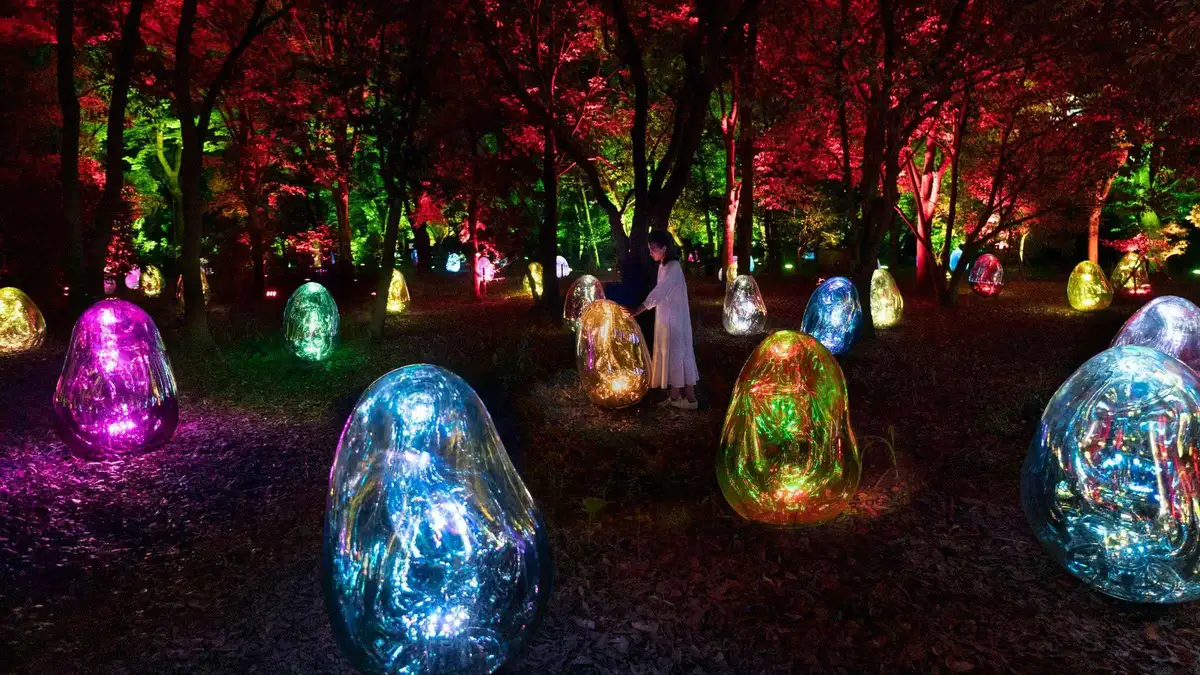 from $11.86
Osaka: teamLab Botanical Garden Entry Ticket
A date-and-time ticket for the night-only art walk through Nagai Botanical Garden. The venue prices by date, ¥1,800–¥2,400, so this sits mid-range; closing times shift by season and re-entry is not allowed.
Check Availability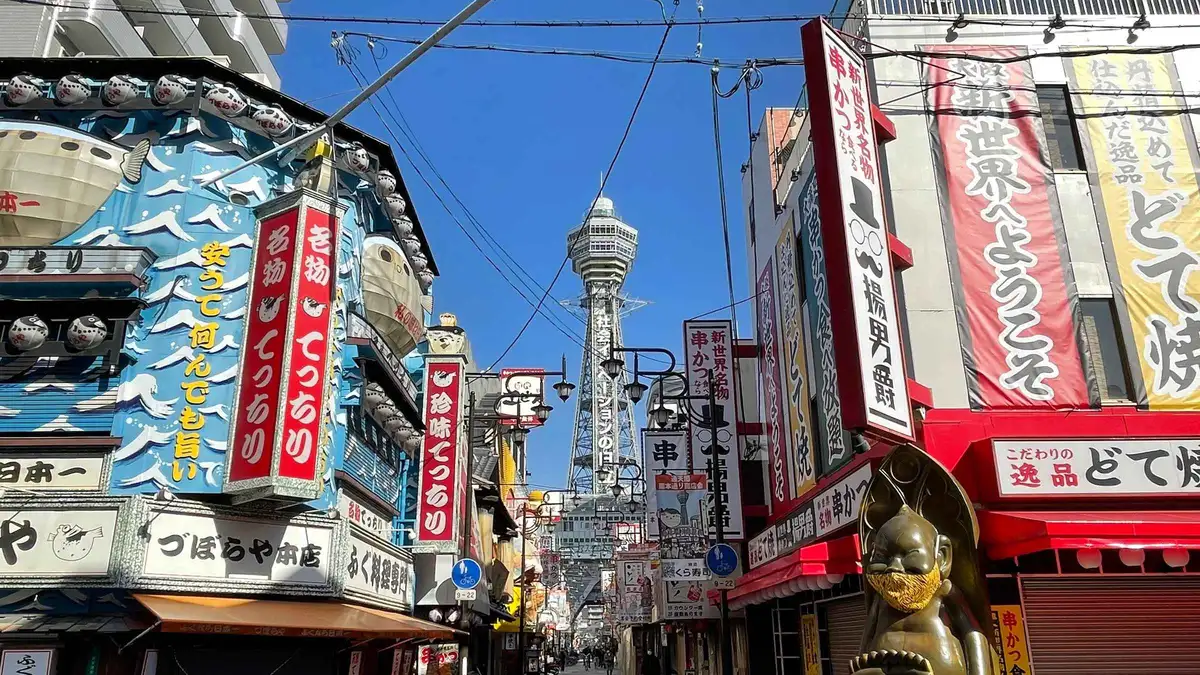 from $6.87
Official ticket
from $6.87
Official ticket
Osaka: Tsutenkaku Tower Experience Ticket
Options run from the 87.5-metre general deck up to the all-in ticket with the outdoor deck, the Tower Slider and Dive & Walk. The tower now requires a timed reservation for every ticket, pass holders included, so booking a slot is the point.
Check Availability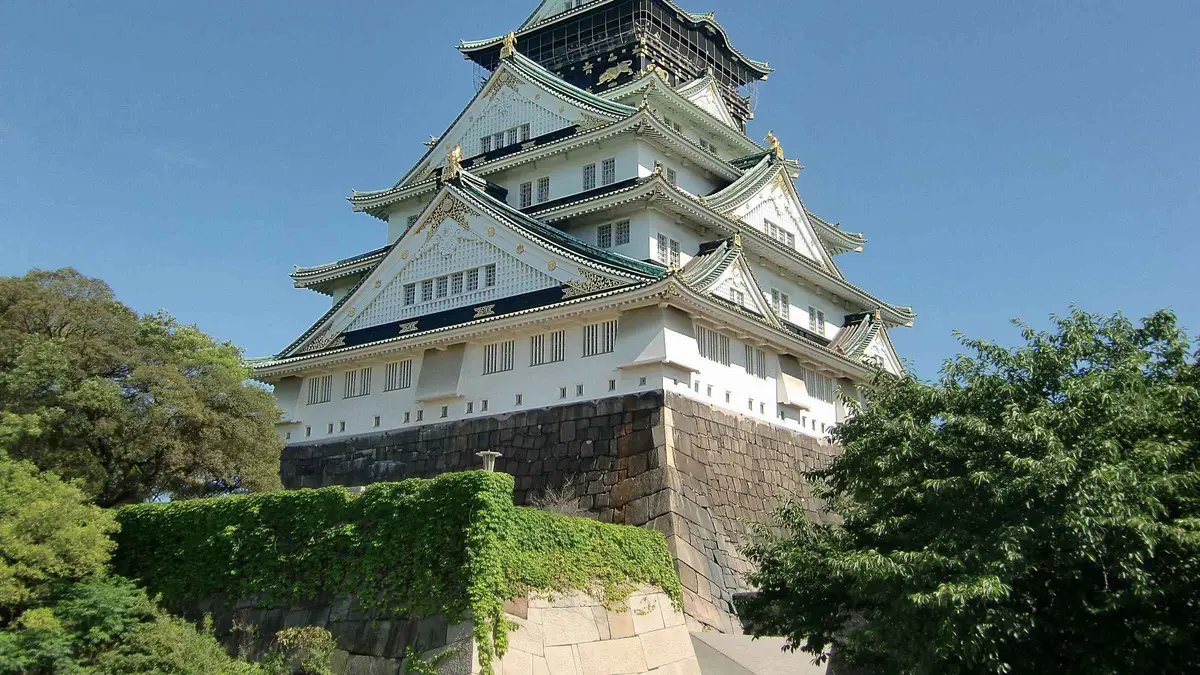 from $7.49
Cheapest way in
from $7.49
Cheapest way in
Osaka Castle: Museum and Tower Entry Ticket
The keep's own admission plus the Toyotomi Ishigaki Museum on one QR code, for roughly what the keep alone costs at the gate (¥1,200). The castle takes no reservations, so this saves the booth queue rather than securing a time slot.
Check Availability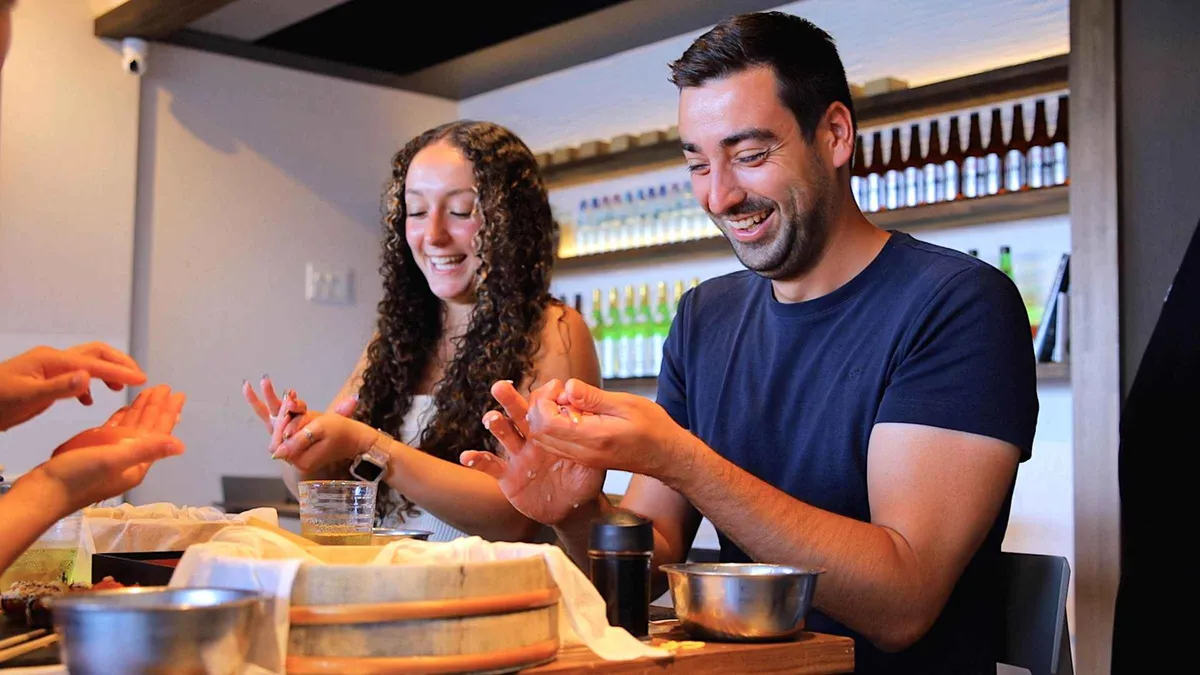 from $43.70
Osaka: Roll and Authentic Sushi Making Class in Dotonbori
A hundred minutes making rolled and hand-formed sushi in central Dotonbori, then eating it — ingredients, English instruction and the meal included. The most reviewed cooking class in this list and the cheapest of them.
Check AvailabilityPrices, ratings and details are the platform's own. Dollar figures are the listed prices. The platform bills in your account's currency.
Three Family Days That Fit Together
Built from the opening hours and closed days above rather than from a map.
- Bay day (any day but a Monday-sensitive one). Kaiyukan at opening — which may be 08:00, 09:00 or 10:30, so check the date — then lunch at Tempozan, then the harbour. It is one subway ride, one long indoor attraction and no walking to speak of. The single best family day in the city.
- North day (avoid Mondays). The Osaka Science Museum's planetarium in the morning, 45 minutes and free for junior-high and under in the halls, then Umeda Sky in the late afternoon, remembering that its entrance is outside the building, and the HEP Five ferris wheel after dark at ¥1,000 with under-6s free.
- South day (avoid Mondays). Tennoji Zoo from 09:30, Shinsekai for lunch, and either Tsutenkaku — which needs a timed reservation for every ticket, pass holders included — or Spa World next door. Buying the tower first gets you the ¥720 and ¥180 zoo rate.
- The out-of-town morning (avoid Tuesdays). The Cup Noodles Museum at Ikeda, arriving near the 09:30 opening so that the ¥500 make-your-own tickets are still available. Free entry, a workshop, and back in the city by lunch.
How many days you need with children is a different question from how many an adult needs, and the honest answer is one more than you think — not because there is more to see, but because a family day here holds one anchor attraction and a meal rather than three sights. The three-day itinerary is the adult version; with young children, take its first two days and spread them over three.
One last piece of city law that catches families: street smoking has carried a $6.27 fine (¥1,000) across the whole city since 27 January 2025, which in practice means the pavements outside the family attractions are cleaner than they used to be, and the designated smoking areas are where everyone has gone. It is a small thing that makes walking a pram through Dotonbori noticeably better than it was.
Where to Go Next
Three pages that a family plan runs into next.
Osaka attraction tickets
Every entry price in one table, including the two attractions that price by the date and the passes that do or do not include them.
The ticketsUniversal Studios Japan tickets
Studio Pass, Twilight Pass and Express Pass arithmetic — including why an Express Pass alone does not get you into the park.
The big dayAccessibility in Osaka
The same lift, ramp and step-free information from the venues' own pages, in more detail than a pram needs but useful if you are travelling with a grandparent too.
The logisticsOsaka With Kids: The Questions
Does Osaka suit a family trip better than Kyoto?
More so than most Japanese cities, because its best sights are indoors, close together and reached step-free. A family week here needs no long temple days: the aquarium, USJ, the zoo, a free noodle museum and a bath complex are five genuinely different days inside one metro network.
What does a child pay at the aquarium?
It depends on the date, because the aquarium runs four price bands. A child aged 7 to 15 pays $8.78, $9.41, $10.35 or $11.29 (¥1,400, ¥1,500, ¥1,650 or ¥1,800); ages 3 to 6 pay ¥700, ¥700, ¥800 or ¥900; and 2 and under are free. The calendar is published about two months ahead — the ticket page has the bands.
What age goes free at USJ?
Three and under go free. The child pass covers ages 4 to 11 and starts from $34.50 (¥5,500); from 12 a child pays the adult rate, which starts from ¥8,400. Every USJ price is a “from” price because the park prices each date separately and says so on its own ticket pages.
Which Osaka family attractions are free for children?
teamLab Botanical Garden admits preschool children free and issues them no ticket at all; the Cup Noodles Museum is free for everybody; the Science Museum's exhibition halls are free for junior-high and under; the castle keep is free for junior-high and under; and Tennoji Zoo is free for any child who lives in or is schooled in Osaka City.
Can you take a pram on the Osaka Metro?
Yes, and easily. All 134 subway and New Tram stations have a lift and a step-free route from street to platform, every interchange has a step-free transfer, and every station has an accessible toilet with a nappy table and a care bed. Ask staff at the ticket gate on the day if you want ramp assistance; there is no advance booking.
Where can I change a nappy in Osaka?
At any subway station: the operator states that every one of its 134 stations has an accessible toilet fitted with handrails, a care bed, a nappy table and ostomate fittings. That is the most reliable published answer in the city — individual attractions mostly say nothing about baby-change facilities on their own sites.
Which days should a family avoid in Osaka?
Mondays and Tuesdays, for different reasons. Mondays close Tennoji Zoo, the Science Museum and the National Museum of Art; Tuesdays close the Cup Noodles Museum and the Museum of History. The aquarium and USJ are open on both, which is why they anchor those two days in every plan we would build.
Osaka With Children, on Film
Three videos whose ids we verified against YouTube's own record — useful for seeing the pace of a family day here before you commit to it. They load only when you press play.
Traveling To Osaka With Kids | Where to stay | How to get Around | Itinerary
The logistics side — where a family bases itself and how the days join up.
Video: Brendan in JapanThings to do in Osaka with kids - The ultimate Osaka family travel guide
A run through the same attractions this page prices, at the pace children move.
Video: Family Travel Guide10 Things to Do in Osaka With Kids: What's Worth It for Toddlers, Big Kids & Teens
Sorted by age band, which is the way this page recommends planning.
Video: The Itinerant TravelerVideos load from YouTube only when you press play.
Prices, hours and terms are set by the venue or operator and confirmed at checkout.
We may earn a commission if you book through one of our links, at no extra cost to you. Full affiliate disclosure