 Osaka City Guide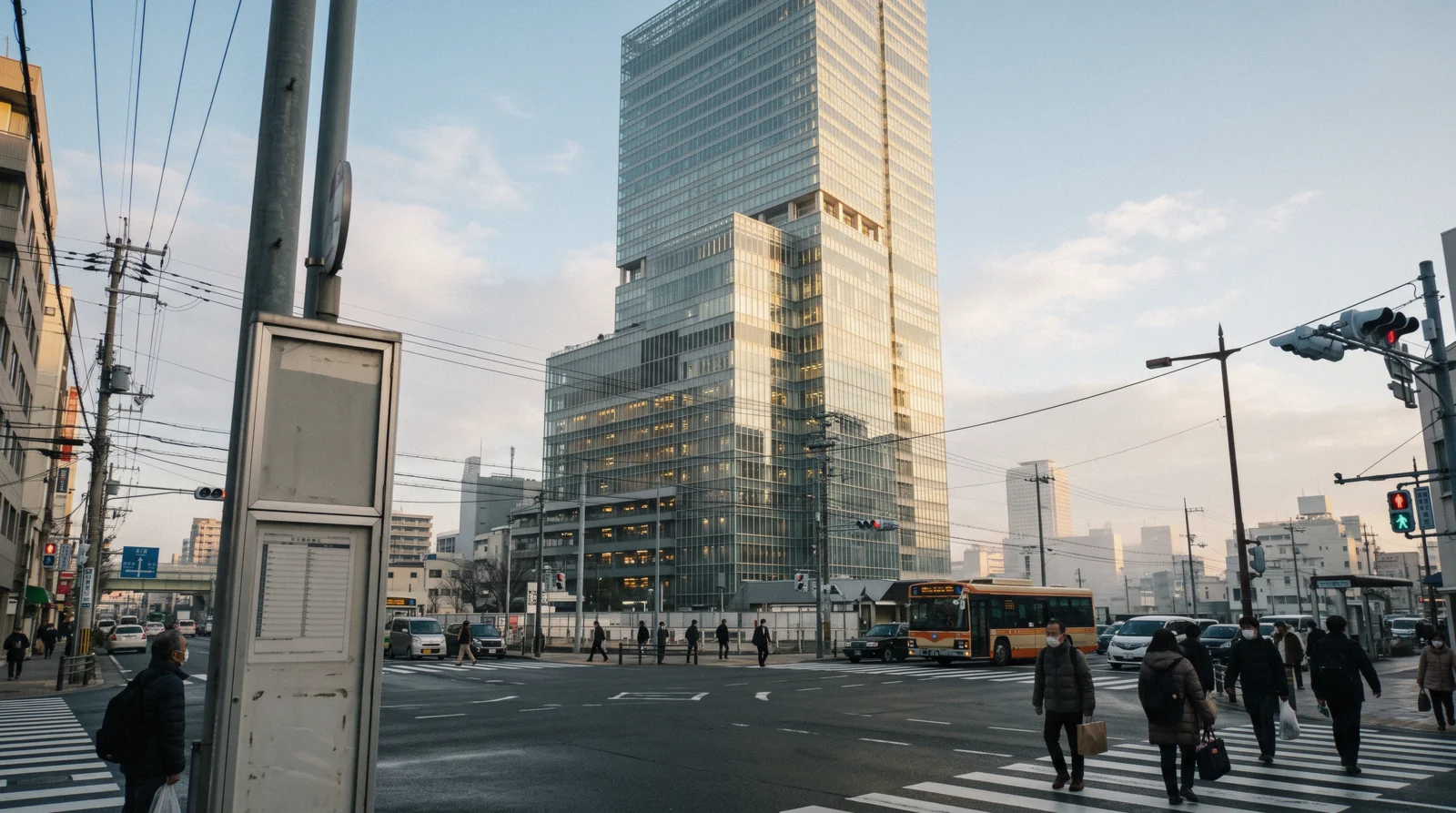
Abeno Harukas 300
Abeno Harukas 300 is the observatory on the top three floors of a 300-metre tower above Osaka Abenobashi station, and it is the highest place in the city a visitor can stand. It stopped being the tallest building in Japan in 2023, it revised its entry fee on 23 July 2026 in a way that now punishes buying at the counter, and it is the one Osaka deck that is not on the Osaka Amazing Pass free list at all. Below: what the three floors actually offer, the four different prices, the two paid extras above the deck, and the view on a clear day. The rest of the city is covered in top places to visit in Osaka.
Quick answer The July fee change, the four prices, the hours and the two extras — in five lines
The observatory opens 09:00 to 22:00 with final admission at 21:30, and since 23 July 2026 it costs $13.79 (¥2,200) at the counter, $12.41 (¥1,980) on the web if you buy by the day before, and ¥2,200 again on the web on the day itself. Children aged 6 to 14 pay $5.64 (¥900) and preschoolers go free. There is no timed slot, but walk-up tickets are sold at one counter on the 16th floor and can be suspended when it is busy. Figures come from the operator's own ticket page; dollar figures on this page use the European Central Bank rate of ¥1,000 to $6.27.
Key takeaways
- Buy on the web the day before and the same ticket is $1.38 (¥220) cheaper — the 10 per cent discount applies only to advance purchases, and buying online on the day gets you nothing off
- The e-ticket sold through GetYourGuide was listed below even the advance web rate when we checked, which makes it the cheapest way onto the deck rather than the most convenient one
- It is not on the Osaka Amazing Pass free list — we read all 41 entries and no Harukas product appears on any of them, unlike Umeda Sky and Tsutenkaku
- Two paid extras sit above the deck and neither includes admission: EDGE THE HARUKAS at $18.81 (¥3,000) walks you around the roof edge, and the heliport tour at $9.41 (¥1,500) is sold only at the 60th-floor counter
- Weighing it against the other two decks? The three-deck comparison puts the prices, the heights and the booking rules side by side
Key facts
Opening hours
| Harukas 300 observatory, daily | 09:00–22:00 |
|---|---|
| Last admission | 09:00–21:30 |
| Walk-up ticket counter, 16F | 08:50–21:30 |
Closed None published. The operator closes or shortens for typhoons and posts each decision as a news item — it did so twice in 2026, for the storms of 2 to 3 June and 27 to 28 June
Admission
- Adult
- $13.79 (¥2,200) walk-up or same-day web; $12.41 (¥1,980) on the web bought by the day before
- Reduced
- $5.64 (¥900) child aged 6 to 14, $5.08 (¥810) on the web in advance; $6.90 / $2.82 (¥1,100 / ¥450) with a disability certificate, and the same number of companions get the same rate; $12.41 (¥1,980) / $5.08 (¥810) on the walk-up group rate, whose minimum party size the operator does not print
- Free
- Preschool children aged 5 and under; a six-year-old who has not started school still counts as preschool
Planning it
- Time needed
- Not stated by the operator; our routing: 60 minutes, or 90 with a drink on the 58th-floor terrace
- Book ahead
- Recommended — a few days
- Address
- Abeno Harukas 16F ticket counter, Abenosuji 1-chome, Abeno-ku, Osaka — the operator publishes no street address on its ticket page
Five ways in, priced from the operator's own ticket page and from GetYourGuide in Q3 2026. Since the 23 July 2026 revision the counter is the most expensive door and the advance web ticket the cheapest official one — and the reseller e-ticket undercut both on the day we read them.
One question decides the row: does a dollar or two matter more than being able to change your mind? The official web advance ticket is $12.41 (¥1,980) and the reseller e-ticket undercut it at $9.89 — but nothing in this table refunds you.
| Option | Price | Includes | Cancel | Book |
|---|---|---|---|---|
| Official web advance, adultAnyone who knows the day they are going and wants the cheapest official price | $12.41 (¥1,980) | All three observatory floors; QR scanned at the 16F gate | No refunds after purchase, the operator states | Official site |
| Official walk-up at the 16F counter, adultOnly if you turn up unplanned; one counter, and sales can stop on busy days | $13.79 (¥2,200) | Same three floors; sold first-come, one counter only | No refunds; sales can be suspended on busy days | Official site |
| Official child ticket, ages 6 to 14Families with a child aged 6 to 14; under-6s and preschoolers need no ticket | $5.64 (¥900), or $5.08 (¥810) in advance | Same access; under-6s and preschoolers free | No refunds | Official site |
| Reseller e-ticket, adultThe cheapest way up on the day we read it, if a non-refundable code suits you | Listed at $9.89 | Observatory admission, redeemed at the counter | Non-refundable | Check Availability |
| Admission with a two-hour barbecue on 58For an evening on 58 rather than a look from the deck — dinner and hotel transfers included | Listed at $40.45 | Entry at any hour, barbecue set, hotel pick-up and drop-off | Non-refundable | Check Availability |
Three conditions the operator prints that resellers do not repeat. There is no re-entry: leave the gate and your ticket is spent. No ticket of any kind is refundable. And the group and disability rates cannot be bought online at all — the sales system will not carry them, so anyone entitled to ¥1,100 or ¥450 has to queue at the 16th-floor counter, where the walk-up rules also apply. If the barbecue row looks expensive, the arithmetic is that admission is ¥1,980 of it and the rest is two hours of dinner.
Abeno Harukas 300 entry options compared
Both cards link to the operator's own page, where the live calendar shows what is open on your date. Prices are the platform's USD listings, and the operator charges in your own currency at checkout.
 from $9.89
Cheapest way in
from $9.89
Cheapest way in
Osaka: Panoramic Observatory Abeno Harukas 300 E-Ticket
Admission to the 300-metre deck on Japan's tallest building, at roughly ¥1,580 against the venue's ¥1,980 web-advance rate and ¥2,200 walk-up. There is no timed slot, and the 16F counter can cap walk-up sales on busy days.
Check Availability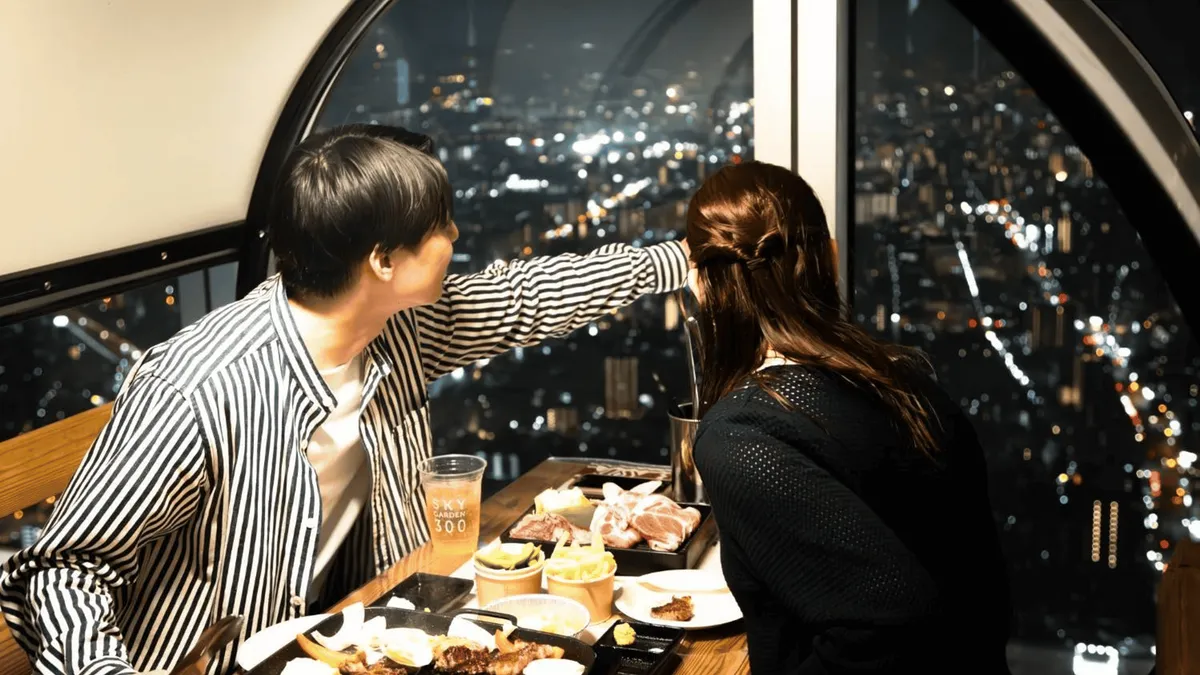 from $40.45
Osaka: BBQ Dinner at Panoramic Observatory Harukas E-Ticket
Observatory entry at any hour with a two-hour BBQ set on the 58th floor. The meal is most of the price — admission alone is ¥1,980 in advance — and unlike the plain ticket this one is non-refundable.
Check AvailabilityPrices, ratings and details are the platform's own. Dollar figures are the listed prices. The platform bills in your account's currency.
Abeno Harukas 300 against Osaka's other two decks
Osaka sells three high views and they answer different questions. Prices, hours and booking rules below are from each venue's own site, and heights are the Wikidata figures for each structure.
| Deck | Adult ticket | What you stand on | Hours | Booking and passes |
|---|---|---|---|---|
| Abeno Harukas 300 | $12.41 web advance, $13.79 at the counter (¥1,980 / ¥2,200) | A 300-metre tower; glass corridor floor-to-ceiling on 60, open-air atrium on 58 | 09:00–22:00, last admission 21:30 | No slot, but walk-up is one counter and can be capped. Not on the Amazing Pass |
| Umeda Sky Building, Floating Garden | $12.54 (¥2,000) | A 173-metre building; the top level is an open ring around the roof, no glass | 09:30–22:30, last admission 22:00 | No slot, walk up. Amazing Pass free before 15:00 only, 10% off after |
| Tsutenkaku | $9.41 (¥1,500) | A 108-metre tower; general deck plus a small open outdoor deck above it | 09:00–21:45, last admission 21:15 | Timed reservation required for every ticket, pass holders included |
From the Harukas side the trade is straightforward: you pay the most and stand the highest, and you do it behind glass. Our verdict from this page: come here for distance and daylight. On a clear day the operator says you can pick out Kyoto, the Rokko range, the Akashi Kaikyo Bridge, Awaji Island, the Ikoma mountains and Kansai Airport — no other Osaka deck reaches any of that, and 58's open-air atrium means the height is not entirely abstract. If what you want is a night photograph with nothing between you and the sky, Umeda Sky is the better ¥2,000 and its roof is open until 22:30. If you want the cheapest way to look at Osaka from above and a slide on the way down, that is Tsutenkaku.
The 23 July 2026 fee revision, and why old advice is now wrong
The operator announced the revision on 1 April 2026 and applied it on 23 July. It did not simply raise the price; it changed which door is cheapest.
Before the revision the counter and the web charged the same adult fare and the discount for buying ahead was the only variable. Since 23 July 2026 the structure has four separate figures, and the gap between the best and the worst is $1.38 (¥220) an adult — small money on its own, real money for a family of four, and enough to make every guide that prints one flat number wrong. Here is the whole tariff as the operator publishes it.
| Ticket | Adult, 15 and over | Child, 6 to 14 | Where you buy it |
|---|---|---|---|
| Web advance, bought by the day before | $12.41 (¥1,980) | $5.08 (¥810) | The operator's own web ticket pages; 10% off |
| Web on the day of the visit | $13.79 (¥2,200) | $5.64 (¥900) | Same pages, no discount |
| Walk-up | $13.79 (¥2,200) | $5.64 (¥900) | The 16th-floor ticket counter, first-come |
| Group rate, walk-up | $12.41 (¥1,980) | $5.08 (¥810) | Counter only; the operator prints no minimum party size here |
| With a disability certificate | $6.90 (¥1,100) | $2.82 (¥450) | Counter only; companions up to the same number pay the same |
The rules that come attached to the price
Four of them, all from the same page, all worth knowing before you queue. A ticket cannot be refunded once bought, whatever happens to your day. There is no re-entry — once you pass back out through the gate the ticket is finished. Walk-up tickets are sold only at the 16th-floor counter, first-come, from ten minutes before opening until thirty minutes before closing, and the operator states plainly that on a busy day the wait to buy can be considerable. And when demand is heavy the counter switches to numbered tickets: a fixed number are handed out, and once they are gone only the people holding one can buy. On special-operation days and heavy days walk-up sales may be stopped entirely.
The web ticket sidesteps all of that. Buy it, show the QR code at the 16th-floor gate, walk through — the operator confirms no exchange at a counter is needed. That is a stronger argument for booking ahead than the ¥220, and it is the reason this page rates it two dots for booking rather than one.
What the reseller listing does to the arithmetic
On 2 September 2026 the GetYourGuide e-ticket for the same admission was listed at $9.89, which at the day's rate is roughly ¥1,577 — under the operator's own advance web rate of ¥1,980. It is a genuine saving rather than a repackaging, and its trade-offs are the ordinary ones: it is non-refundable, it is redeemed at the counter rather than scanned at the gate, and the reviews behind it are 4.4 out of 5 from 281 travellers on the platform. We would take it for a fixed date and take the operator's own web ticket for a date that might still move, since neither is refundable but only one requires a second queue.
What the three floors are, and what you can see
The observatory is 58, 59 and 60, and it is designed as a descent rather than an arrival — you are put down on the highest floor and walk back down through the other two.
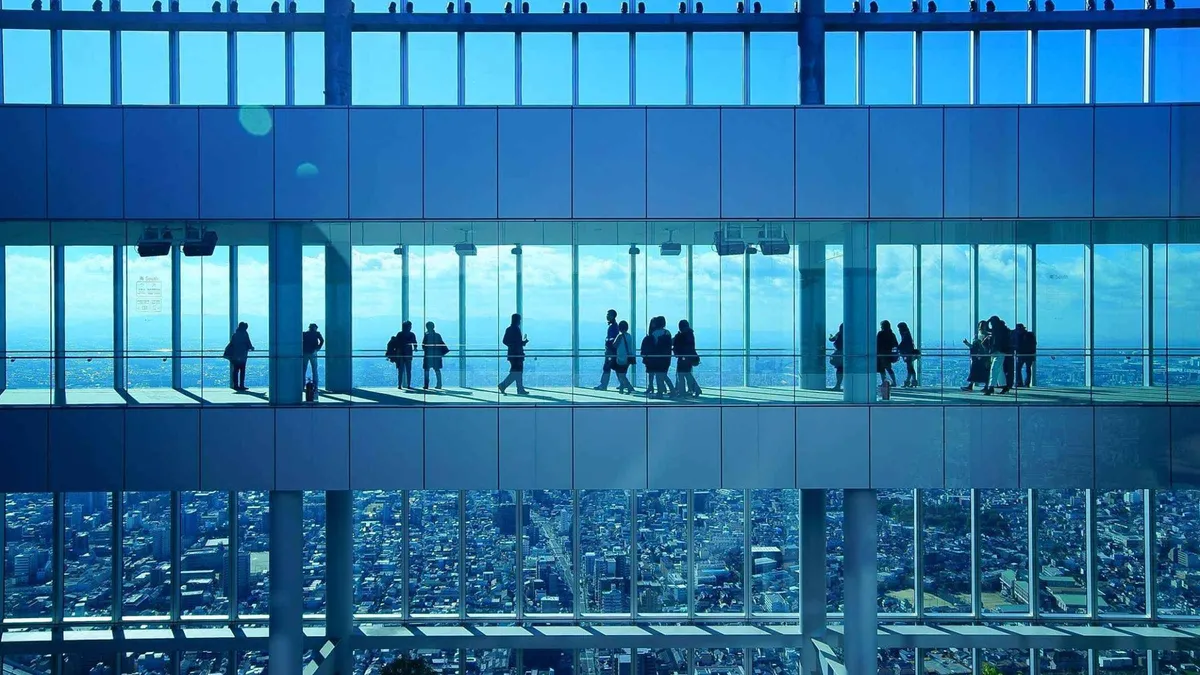
The shuttle lift from the 16th floor puts you out on 60, an indoor gallery with glass from floor to ceiling on all four sides, roughly 300 metres above the Osaka plain. The operator's phrase for it is a space where you feel you are walking in mid-air, and it is the floor the photographs come from. 59 is the return floor and holds the shop. 58 is the one people are not expecting: an open-air courtyard that runs up through the building to the sky, floored in wood decking, planted around the edges, used for events, with the SKY GARDEN 300 cafe and bar under cover on one side. It is not a roof ring in the Umeda Sky sense — the walls are high and the sky is a rectangle — but it is real outside air at 288 metres, and it is where you should spend the second half of your visit.
On what the operator calls good conditions, the published list of what is visible reads: Kyoto to the north-east, the Rokko range behind Kobe, the Akashi Kaikyo Bridge and Awaji Island to the west, the Ikoma mountains to the east, and Kansai International Airport out in the bay to the south-west. That is a genuinely unusual claim for a city deck, and the reason to prefer daylight here and darkness at Umeda. A deck with views stretching from Kyoto to Awaji Island rewards planning, and comparing Osaka guided tours is one way to build the rest of the day around a clear-hour visit.
The two extras above the deck, and the one at the bottom
Three paid add-ons run from the observatory and none of them includes the admission fee — the operator says so twice on its own ticket page, and it is the most common complaint people arrive with. Two hundred and eighty metres below all of it, on the 16th floor beside the ticket counter, the Abeno Harukas Museum runs paid exhibitions of its own, and a combined museum-and-deck ticket ran from 4 July to 9 September 2026, exchanged at the 16th-floor counter rather than scanned at the gate. Every figure here is from the operator's own ticket page.
| Extra | Price | Where and when you buy it |
|---|---|---|
| EDGE THE HARUKAS, the roof-edge walk | $18.81 (¥3,000) per person | Booked online; seasonal, and the booking page opens and closes with the season |
| Heliport tour | $9.41 (¥1,500) per person | Sold nowhere except the information counter on the 60th floor, so it cannot be planned from home |
| Harukas Bungee VR | $7.52 adult, $5.64 junior and senior high, $4.39 elementary (¥1,200 · ¥900 · ¥700) | Advance purchase; weekends and public holidays only |
| Harukas Museum and observatory set | $23.80 adult, $21.30 university and high school, $6.27 elementary and junior high (¥3,800 · ¥3,400 · ¥1,000) | Counter exchange at 16F; the set ran 4 July to 9 September 2026 |
Is it the tallest building in Japan?
No, and this is the fact the search results are most confidently wrong about. Abeno Harukas is 300 metres over 62 floors and held the title from its completion on 7 March 2014 until 2023, when Azabudai Hills Mori JP Tower in Tokyo overtook it. It remains the tallest building in Osaka and the highest public viewpoint in the city, which is what actually matters when you are choosing a deck — but a page or a sign that still calls it Japan's tallest is describing 2022.
The name comes from an old Japanese verb, harukasu, meaning to brighten or to clear up. Heights, dates and the succession are from the English Wikipedia articles on Abeno Harukas and Azabudai Hills.
Getting in: one lift, one counter, one gate
The route is short and completely prescriptive, and the operator would rather you did not drive.
Everything starts at the Harukas Shuttle Elevator, which takes you to the 16th floor. The ticket counter and the entry gate are both there. A web ticket is scanned at the gate; a walk-up ticket is bought at the counter and you are expected to join the entry queue straight away — the operator warns that if you leave the queue after buying, you may not be admitted, which reads like a rule written after an incident. From the gate a second lift runs to 60.
The building sits directly on top of Osaka Abenobashi station, the Kintetsu Minami Osaka Line terminus, and shares its block with Tennoji station on the JR Loop Line, the Midosuji and Tanimachi Metro lines and the Hankai tram — which makes it one of the easiest arrivals in the city and puts Tennoji Zoo, Shitennoji and the Tenshiba park lawn within a ten-minute walk. There is no car park for the observatory; the operator asks visitors to come by public transport and points drivers at the building's general parking instead. Metro fares run $1.19 to $2.45 (¥190 to ¥390) by zone — the getting around Osaka page has the zones and the day cards.
Typhoons, and how the operator handles them
The observatory publishes no closed days, and in practice its closures are weather. Its own news feed carried two in 2026 — bilingual notices about operating hours on 2 and 3 June for Typhoon No. 6, and on 27 and 28 June for Typhoons No. 7 and No. 8. That is the pattern to expect: a decision posted a day or so ahead on the operator's news page in Japanese and English.
Since tickets are not refundable, a storm in the forecast is a reason to delay buying rather than a reason to buy early.
Is Abeno Harukas 300 worth it?
It is the most expensive of the three decks and the one with the strongest single argument.
Go if the day is clear and you care about geography — this is the only deck in Osaka that shows you the shape of the whole Kansai basin, from the Rokko range to the Ikoma mountains, and 300 metres is high enough that the city reads as a map rather than a street. Go too if you are already in Tennoji, because it is directly above the station and the surrounding block holds a zoo, a temple and a park.
Skip it if the forecast is grey, because you are paying a premium for distance you will not get; if you want night photographs, because Umeda Sky gives you an open roof for ¥2,000 and stays open half an hour later; or if you are working through an Osaka Amazing Pass, since this is the one major viewpoint the pass does not carry and buying it separately undermines the pass's arithmetic for the day.
One warning about expectations. Floor 60 is a corridor with a glass wall, and it is a beautifully made one, but it is still a room. The part of the visit that stays with people is the open atrium two floors down, and that is where we would spend the second half of the hour.
Abeno Harukas map: the tower, the station and what is next door
The tower stands on its own station, and three of the four things worth walking to are within ten minutes of the same block.
Coordinates are the venue-published ones where a venue publishes them; the Harukas pin uses the operator's own figure from its ticket page. Map tiles are OpenStreetMap.
Next stop from Abeno Harukas 300
Walking times are our estimates from the venue-published coordinates.
Tennoji Zoo
$5.02 (¥800), 09:30 to 17:00 with last admission at 16:00, closed every Monday — and free for a disability-certificate holder with up to two carers.
8 minutes on footShitennoji
The grounds are free and the gates are open around the clock; the central precinct costs $3.14 (¥500) and closes at 16:00, earlier than anyone expects.
14 minutes on footTennoji
The district guide to what else is inside and around this station — the park lawn, the department stores and the walk west into Shinsekai.
The block the tower stands onAbeno Harukas 300 questions
How much does Abeno Harukas 300 cost?
$12.41 (¥1,980) for an adult if you buy on the web by the day before, and $13.79 (¥2,200) at the 16th-floor counter or on the web on the day itself. Children aged 6 to 14 pay $5.08 or $5.64 (¥810 or ¥900) on the same terms, preschoolers are free, and a disability certificate brings it to $6.90 or $2.82 (¥1,100 or ¥450) for the holder and the same number of companions. These are the fees set on 23 July 2026. The reseller e-ticket was listed lower again when we checked.
What are the Abeno Harukas 300 opening hours?
09:00 to 22:00 every day, with last admission at 21:30. No closed days are published. The walk-up counter opens ten minutes before the observatory and stops selling thirty minutes before it closes. Closures happen for typhoons and are posted as dated news items on the operator's own site, in Japanese and English — it published two such notices in June 2026.
Do you need to book Abeno Harukas 300 in advance?
There is no timed slot, so no booking is compulsory — but the advance web ticket is 10 per cent cheaper, and it lets you walk to the 16th-floor gate and scan a QR code instead of queueing at the single counter that sells walk-up tickets. On heavy days that counter switches to numbered tickets and can stop selling altogether, which is the real argument for buying ahead.
Is Abeno Harukas the tallest building in Japan?
Not since 2023. It is 300 metres over 62 floors and held the title from March 2014 until Azabudai Hills Mori JP Tower in Tokyo overtook it. It is still the tallest building in Osaka and the highest public viewpoint in the city, which is the part that matters when you are choosing between decks — the other two are Umeda Sky at 173 metres and Tsutenkaku at 108.
Can you go outside at the top of Abeno Harukas?
Yes, on the 58th floor, which is an open-air courtyard with a wooden deck and planting that runs up through the building to the sky. The 60th floor, where the lift puts you down, is an indoor glass gallery. For a deck that is genuinely open on top with nothing above you, the Umeda Sky Building roof ring is the one, and it stays open until 22:30.
What can you see from Abeno Harukas 300?
The operator's own list, for good conditions: Kyoto, the Rokko mountain range, the Akashi Kaikyo Bridge, Awaji Island, the Ikoma range and Kansai International Airport. That reach is the argument for coming here in daylight rather than after dark, and for moving your date if the forecast is grey — the ticket is not refundable.
Is EDGE THE HARUKAS included in the ticket?
No. EDGE THE HARUKAS is $18.81 (¥3,000) per person, the heliport tour is $9.41 (¥1,500) and sold only at the 60th-floor information counter, and the weekend Bungee VR runs from $4.39 to $7.52 (¥700 to ¥1,200). The operator states on its ticket page that none of the attraction and tour tickets includes observatory admission, which has to be bought separately.
Where Abeno Harukas fits in an Osaka day
It belongs to a Tennoji morning, not to an evening spent in the north of the city.
The strongest version of this visit is a clear morning: up at nine when the deck is empty and the air has not hazed, an hour on 60 and 58, then down into the block underneath, which holds more than most districts — Tennoji Zoo across the park, Shitennoji fourteen minutes north, and a twenty-minute walk west into Shinsekai for lunch under Tsutenkaku. That day needs no train after the first one.
What does not work is treating this as the evening view. It closes at 22:00 with last entry at 21:30, the glass on 60 reflects the room back at you after dark, and the deck that rewards a night visit is thirty minutes north at Umeda Sky. Our routes place it accordingly — see Osaka in 2 days and Osaka in 3 days — and the things to do in Osaka hub ranks it against the rest of the city's paid sights.
Harukas 300 on film: the lift, the glass corridor and the open floor
Three walk-throughs, each id copied from our own verified list rather than typed from memory and each checked against YouTube's oEmbed record and its thumbnail. Between them they cover the arrival on 60, the open courtyard on 58 and an honest verdict on the price.
Tallest Skyscraper in Japan - Osaka Abeno Harukas 300 Observatory
The full route from the 16th-floor counter up to the glass gallery, filmed at walking pace.
Video: Yellow ProductionsThings to do in Osaka: Harukas 300 an Immersive Sky Garden
Spends its time on the 58th-floor open-air courtyard, the floor most visitors do not expect.
Video: Angel WhalingHarukas 300 Observation Deck in Osaka: 3 Things You HAVE to Do!
A short verdict on what is actually worth doing once you are up there, including the extras.
Video: Vicky FlipFlopVideos load from YouTube only when you press play.
Prices, hours and terms are set by the venue or operator and confirmed at checkout.
We may earn a commission if you book through one of our links, at no extra cost to you. Full affiliate disclosure