 Osaka City Guide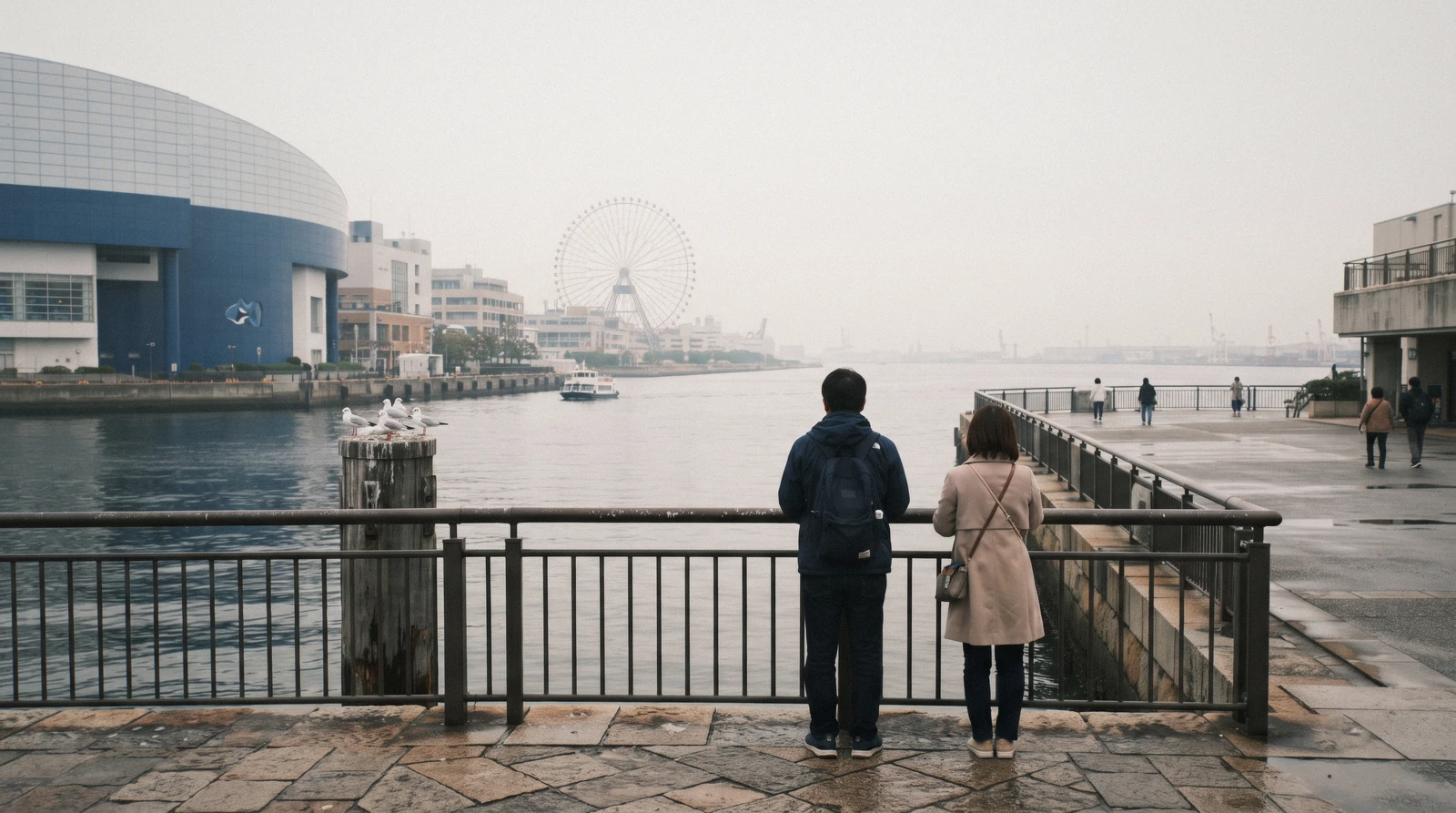
Osaka Aquarium Kaiyukan
The Osaka Aquarium — Kaiyukan to everyone who lives here — is built around a single tank nine metres deep that you meet on six different floors as you spiral down past it, and around the two whale sharks that live in it. It is the sight in this city with no fixed price and no fixed opening time: both are set date by date and published about two months ahead through the aquarium's own booking system. This page has the bands, the calendar, the route through the building, the walk from the station and the honest comparison with NIFREL, the other aquarium the same company runs. Yen figures are the venue's own, with dollars at ¥1,000 ≈ $6.27 (European Central Bank reference rate via frankfurter.dev). For the rest of the city, see things to do in Osaka.
Quick answer The band, the hours, the route and how long it takes — in four lines
The Osaka Aquarium charges an adult $17.56, $18.18, $20.10 or $21.90 (¥2,800, ¥2,900, ¥3,200 or ¥3,500) depending on the date, opens somewhere between 08:00 and 10:30 and closes between 20:00 and 21:00, with last admission an hour before it shuts. The route is one way: an escalator lifts you to the eighth floor and you walk down. Bands and hours are from the aquarium's own booking calendar.
Key takeaways
- There is no single price to compare — the calendar decides it, and a September Tuesday and the Monday of a holiday weekend are $4.39 (¥700) apart; the bands and how to read the calendar
- Buy the aquarium's own e-ticket with a date and a time: the venue itself says a same-day counter ticket may not admit you at your chosen hour
- Allow two to two and a half hours. Nobody publishes a duration — the aquarium does not, and neither do we without saying so — but the descent from the eighth floor sets the pace
- The pass most visitors arrive holding does not work here: Kaiyukan is not on the Osaka Amazing Pass free list, and neither is Universal Studios
- No guided tour on our platform includes this aquarium; the three city walking tours below are the honest neighbours, and none of them goes inside
Key facts
Opening hours
| Weekdays, September 2026 | 10:30–20:00 |
|---|---|
| Weekends, September 2026 | 09:30–20:00 |
| Peak dates, 20-22 September 2026 | 08:00–21:00 |
Closed 13–14 January 2027, for annual maintenance — the only closure the aquarium has published. Every other dated day in its calendar is an operating day
Admission
- Adult
- $17.56 · $18.18 · $20.10 · $21.90 by date (¥2,800 · ¥2,900 · ¥3,200 · ¥3,500)
- Reduced
- Children 7–15 $8.78–$11.29 (¥1,400–¥1,800); ages 3–6 $4.39–$5.64 (¥700–¥900); a disability-certificate holder and one carer pay half
- Free
- Ages 2 and under
Planning it
- Time needed
- Not stated by the aquarium; our routing: 2 to 2.5 hours for the one-way descent, longer with a feeding time
- Book ahead
- Recommended — a few days
- Address
- 1-1-10 Kaigandori, Minato-ku, Osaka — about five minutes on foot from exit 1 at Osakako station, following the signs for the Tempozan ferris wheel
Four ways in, all of them sold by the aquarium itself. We searched GetYourGuide — the platform this site earns from — for a Kaiyukan admission product in Q3 2026 and found none, so there is no reseller row to print: the official shop is the route. Prices are the aquarium's own, converted at ¥1,000 ≈ $6.27.
There is no reseller to weigh here, so the question is narrower than usual: are you booking an entry hour, or taking your chances at the window? The aquarium's own warning is that a same-day counter ticket may not admit you when you want to go in.
| Option | Price | What it gets you | Change or cancel | Book |
|---|---|---|---|---|
| Kaiyukan e-ticket, date and time chosenThe default, and the only row that guarantees the hour you picked | $17.56–$21.90 adult by date (¥2,800–¥3,500) | Admission at the hour you booked, straight to the gate | Per the aquarium's own e-ticket terms | Official site |
| Ticket counter, on the daySame money, no promise of an entry time — a fallback, not a plan | Same band as the e-ticket for that date | Every ticket type, including the set tickets — but the aquarium warns you may have to wait for an entry time | Not stated | Official site |
| Half-price disability admissionCertificate holders and one carer; bring the booklet or the Mirairo ID app | Half the day's band for the holder and one carer | The original certificate book, the Mirairo ID app or the My Number Portal record — screenshots and printouts are refused | Not applicable | Official site |
| Set tickets: Santa Maria cruise, LEGOLAND Discovery Center or the Captain Line boatOnly if you want the second attraction anyway; the price loads inside the calendar | Not printed in the page text — the figures load inside the venue's calendar | Admission plus the second attraction, bought together | Not stated | Official site |
The aquarium also sells a Whale Shark Backyard ticket that takes a small group behind the Pacific tank on published dates only; it is an add-on to admission, not a substitute for it. Keep the admission ticket after you scan it — it doubles as a discount coupon in the Tempozan Marketplace next door.
Guided walks near the aquarium, and what they actually cover
Read this before you click: none of these three tours goes inside the aquarium, because no guided product on our platform does. They are here because a bay morning usually has a city afternoon attached, and these are the walks that fit around it. Prices are GetYourGuide's own USD listings.
 from $35.71
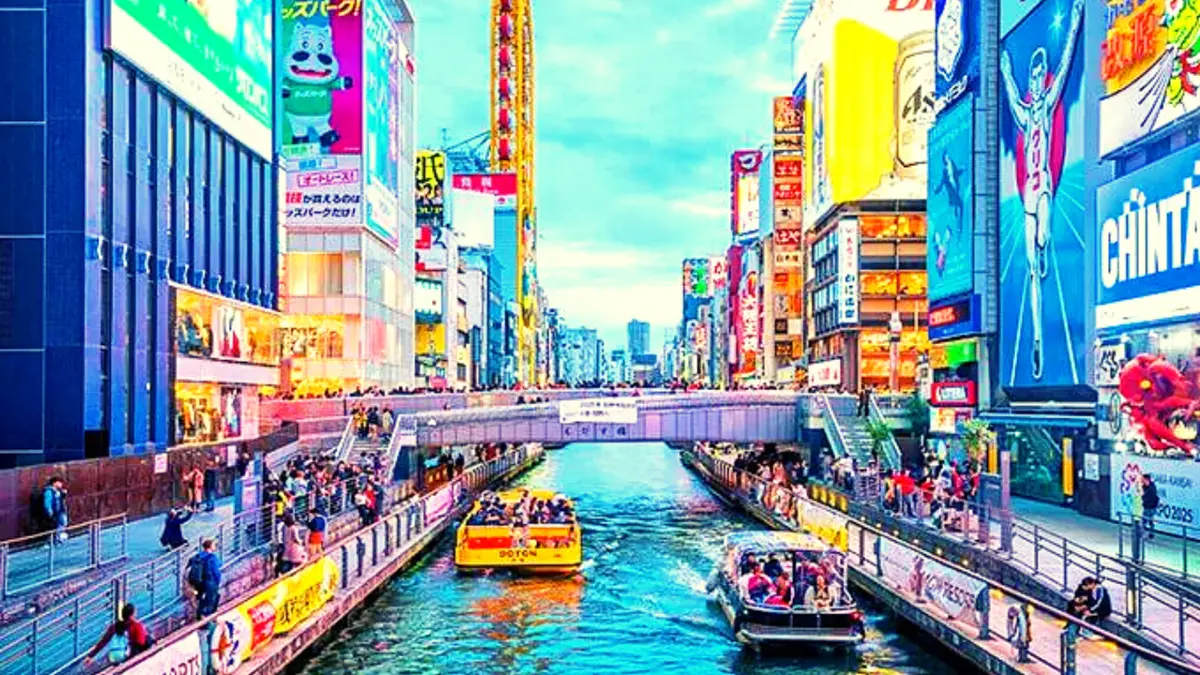
Osaka: Private or Group Hotspots & Hidden Gems Walking Tour
A three-hour walk that stretches to seven if you want it to, private or shared, with a takoyaki and a retro vending-machine drink included. The longer options use trains, which you pay for — usually under ¥1,000 a head.
Check Availability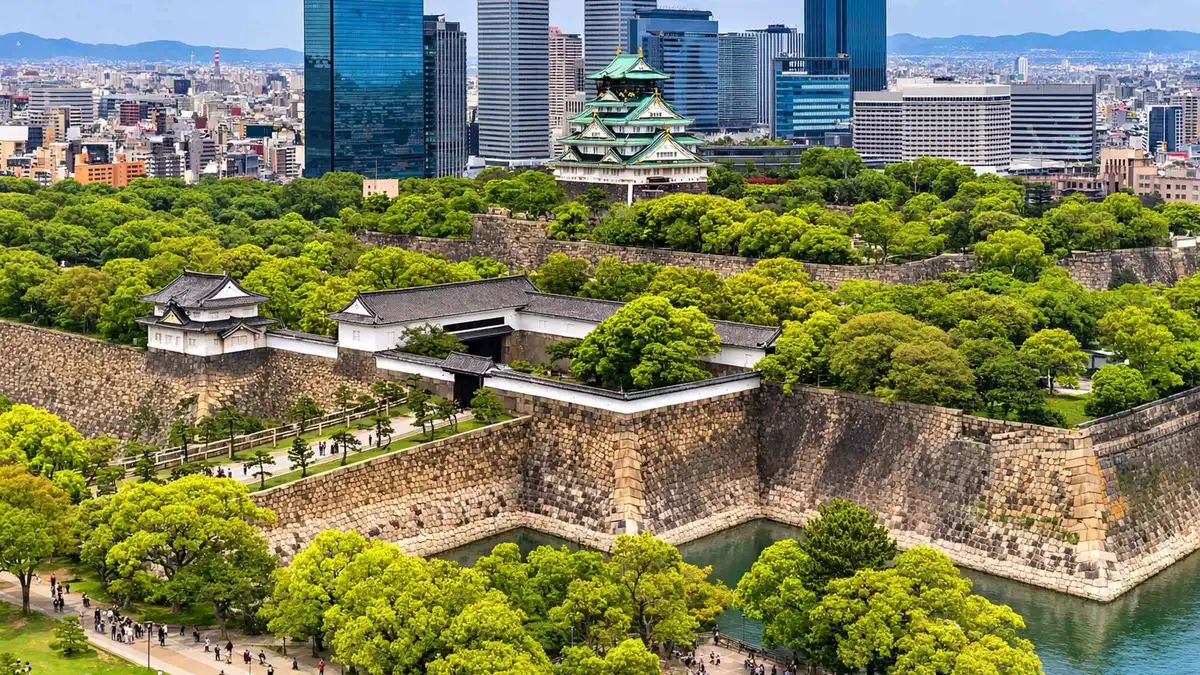 from $54.56
Osaka: Guided Walking Tour with a Native Expert – Top Sights
Four hours linking Osaka Castle, Tsutenkaku and Namba by metro, with the ¥1,200 keep admission included and the ¥430 of train fares not. A Japan Rail Pass buys you nothing here — the route runs on Osaka Metro.
Check Availability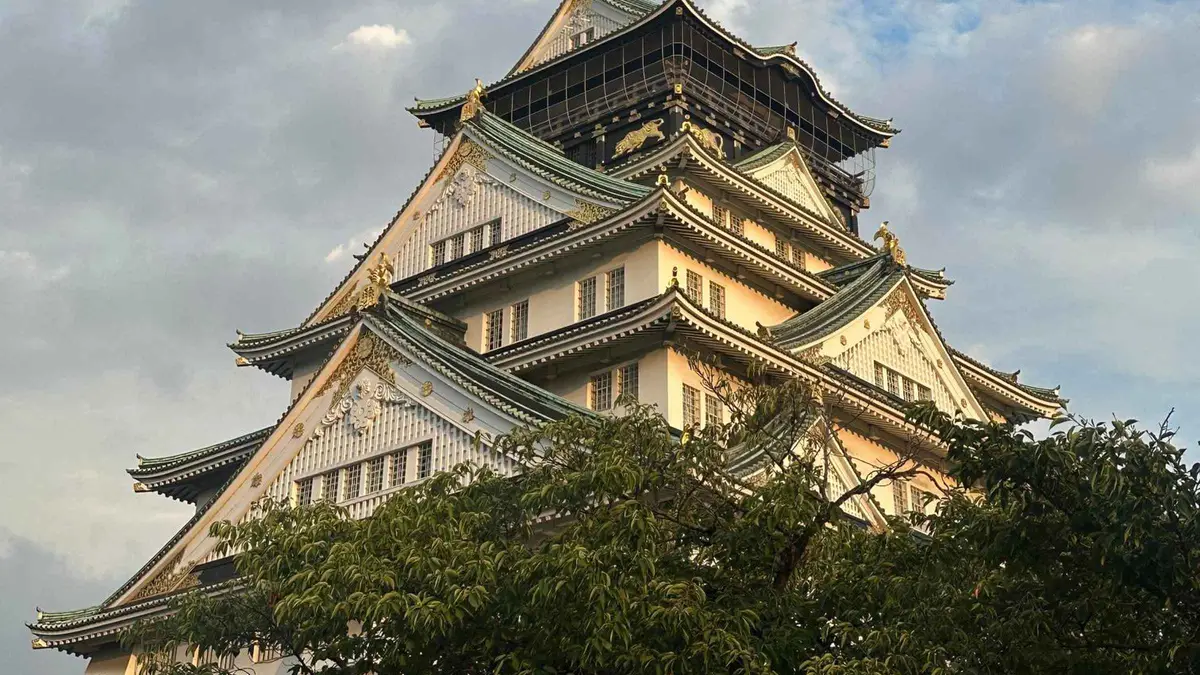 from $49.74
Osaka: Essential City Loop Tour with Local Guide
Five hours in a group of eight covering the castle, the Showa-era backstreets and the neon strip in one loop, with food bought stop by stop instead of a sit-down lunch. Only four people have rated it so far.
Check AvailabilityPrices, ratings and details are the platform's own. Dollar figures are the listed prices. The platform bills in your account's currency.
Inside Kaiyukan: the escalator up, and then the long walk down
The building is a route, not a set of rooms, and it only runs one way — which is why the visit takes as long as it does and why turning back is awkward.
You do not walk in at the bottom. An escalator carries everyone straight to the eighth floor through the Aqua Gate, a tunnel tank with tropical fish overhead, and the visit is a slow spiral down from there to the fourth floor. The first three floors are not exhibits at all: they hold the filtration plant that keeps the whole place alive. Peter Chermayeff, who later designed the Lisbon Oceanarium, laid the building out this way on purpose — you meet the same water at different depths as you descend, so a single tank reads as a shallow reef at the top and as open ocean by the time you reach the bottom of it.
That tank is the Pacific. It runs 34 metres at its longest, drops nine metres and holds 5,400 cubic metres of water, and its inhabitants are the reason most people come: two whale sharks, reef manta rays, scalloped hammerheads, Pacific bluefin tuna. Osaka was the second aquarium in the world, after Okinawa, to keep whale sharks, and the ocean sunfish it added in 1995 is reported to pull as much of a crowd as they do. Around the Pacific sit 27 tanks in 16 main exhibits, about 10,941 tonnes of water in total, arranged as a circuit of the Ring of Fire: the Aleutians with tufted puffins, Monterey Bay with sea lions, an Ecuadorian rainforest with capybaras and arapaima, the Tasman Sea with Pacific white-sided dolphins, the Japan Deeps with spider crabs, and a jellyfish gallery at the end. Once the spiral has carried you from the shallow reef down to the open ocean of the Pacific tank, the aquarium makes a natural anchor for a longer visit, and guided tours in Osaka can fold it into the rest of the day.
The engineering nobody mentions, and why the water looks like that
The tanks are held behind 314 tonnes of acrylic; the largest single pane measures six metres by five by thirty centimetres and weighs around ten tonnes, because glass at that thickness would neither hold nor stay clear. The water is filled from the bottom of each tank and drawn off at the top, the reverse of normal practice, so that waste and uneaten food rise into the outflow instead of settling — that is why the viewing panes look as clean as they do at eight in the evening. Oxygen comes from artificial waterfalls, most of them hidden behind the tanks, a few left visible because they look good.
What to do rather than queue at the Pacific window
The Pacific tank has a crowd at every level, and the crowd moves down at the same speed you do. The trick is to break the descent: the New Interactive Area, opened in 2013, has an Arctic zone with ringed seals, a Falklands zone with rockhopper penguins and a Maldives zone where you can put your hands in the water with rays and small bamboo sharks — most groups pass it quickly on the way to the exit, so it thins out exactly when the main route is thickest. Feeding times are posted at the entrance on the day; they are the one thing worth planning the descent around.
How much time to give Kaiyukan
The aquarium publishes no visit length, so these are our three routings against its own calendar: doors between 08:00 and 10:30 depending on the date, closing between 20:00 and 21:00, last admission an hour before.
The building sets the pace, not you. An escalator lifts everyone to the eighth floor and the visit spirals down from there past the same Pacific tank at four different depths, so there is no short version that keeps the point of the place — a fast walk still passes every exhibit. What changes between the routings is how long you stand at the tank, and whether Tempozan gets a second hour.
| Routing | Inside | Door to door from central Osaka | What it skips |
|---|---|---|---|
| Straight down, no stopping | About 90 min | About 3 h with the Chuo line both ways | The feeding times, the jellyfish gallery at the end and any second look at the Pacific |
| Our own routing, at opening | 2–2.5 h | 4 h | Nothing inside; the quay outside is what gets cut |
| Late entry, after 17:00 | 2–2.5 h in a lit, emptier building | 4 h, ending after 20:00 | The Tempozan market hall and ferris wheel, which shut earlier than the tanks |
Two figures decide which of the three you take. Doors move by date — 10:30 on a quiet weekday, 08:00 on a peak holiday — so the early routing is only early on the dates the calendar makes it early. And Osakako is the western end of the Chuo line, about half an hour from the castle, which is why every routing above carries an hour and a half of travel it cannot lose.
Kaiyukan in nine dates
The aquarium is younger than most visitors assume — it opened the year Japan's bubble economy peaked — and its own company history records the milestones by the day.
-
8 April 1988
The company is founded
Registered as Osaka Waterfront Development Co., Ltd., two years before anything opened on the quay.
-
20 July 1990
Kaiyukan and Tempozan Marketplace open
Peter Chermayeff's building and the shopping hall beside it open on the same day, as one waterfront redevelopment rather than two attractions.
-
28 August 1990
One million visitors, in forty days
The five-millionth arrived on 7 July 1991 and the ten-millionth on 21 August 1992 — a rate no Osaka attraction has matched since.
-
1 July 1994
Certified as a museum-equivalent facility
The Osaka Prefectural Board of Education's designation, which is why the place reads as a scientific institution rather than a leisure park.
-
12 July 1997
The Tempozan Ferris Wheel opens
The wheel in every photograph of this quay is the same company's, opened seven years after the aquarium and reaching five million riders by July 2002.
-
17 April 1998
The Aqua Gate tunnel opens
The tropical tunnel every visit now walks through on the way to the escalator. The jellyfish pavilion followed on 16 July 1999.
-
1 October 2011
The company takes the aquarium's name
Osaka Waterfront Development becomes Kaiyukan Co., Ltd.; a new entrance gate opens in April 2012.
-
3 August 2015
Into the Kintetsu group, and NIFREL opens
A stock transfer brings the company into Kintetsu on 3 August; NIFREL opens at Expo City in Suita on 19 November, which is why the two are so often confused.
-
1 October 2025
Ninety million visitors
12,541 days after opening. The eightieth million had come on 7 September 2021, and the Great Barrier Reef tank was renovated on 28 November 2024.
Every date here is from the operator's own published company history at kaiyukan.com/company/about/history/; the building's authorship and the tank figures are from the aquarium's own exhibit pages.
Hours and price bands change by date — here is the actual calendar
Kaiyukan runs demand pricing and demand hours. Both come from the venue's own booking calendar, and both are only set about two months ahead, which is why so many guides print a single figure that is wrong for the day you are going.
The aquarium states the policy itself: prices vary so that the fee matches demand and more people can get in. In practice that produced four adult bands in the autumn 2026 calendar we read on 2 September — ¥2,800, ¥2,900, ¥3,200 and ¥3,500, roughly $17.60 to $21.90 — with children and infants scaled to each band. Opening time moves with the same logic, from 10:30 on a quiet weekday down to 08:00 on the busiest holiday, and closing moves from 20:00 to 21:00.
Last admission is one hour before closing on every dated day in the calendar.
| Kind of date | Adult | Child 7–15 | Ages 3–6 | Doors |
|---|---|---|---|---|
| Ordinary weekday (most of September and October 2026) | $17.56 (¥2,800) | $8.78 (¥1,400) | $4.39 (¥700) | 10:30–20:00 |
| Weekend (Saturday and Sunday) | $17.56 (¥2,800) | $8.78 (¥1,400) | $4.39 (¥700) | 09:30–20:00 |
| Busy weekend, e.g. 19 and 24–27 September 2026 | $18.18 (¥2,900) | $9.41 (¥1,500) | $4.39 (¥700) | 08:30–09:30 start |
| Holiday shoulder, 23 September and 10 and 31 October 2026 | $20.10 (¥3,200) | $10.35 (¥1,650) | $5.02 (¥800) | 08:30–09:00 start |
| Peak, 20–22 September and 11–12 October 2026 | $21.90 (¥3,500) | $11.29 (¥1,800) | $5.64 (¥900) | 08:00–08:30 start, 21:00 close on the September dates |
How far ahead you can actually buy
Two consequences worth acting on. First, the gap between the cheapest and dearest adult ticket is $4.39 (¥700) — not enough to rearrange a trip around, but enough that a family of four should look at the calendar before fixing the day. Second, the hours matter more than the price: on a 10:30 day the doors open two and a half hours later than on a peak day, and a party that planned an early start finds itself waiting on the quay. Check the date, not the guidebook.
The calendar's limit is real. When we read it, September and October were fully costed and every date from November 2026 onward came back empty — the operator had not set them. If you are booking further out than about two months, there is nothing to buy yet and nothing to compare; put a reminder in for the date the calendar opens. The one thing already fixed for next year is the closure: 13–14 January 2027, annual maintenance, and no other closed day is published anywhere on the site.
Getting to the Osaka Aquarium
Tempozan sits west of the centre on the Chuo line, which is the one part of the trip nobody gets wrong; the parking and the boat are where the decisions are.
The station is Osakako on the Osaka Metro Chuo line. Take exit 1, follow the signs to the Tempozan Marketplace and walk towards the giant ferris wheel — about five minutes, all of it flat and signposted, and the wheel is visible the whole way. Osaka Metro prices by distance band, not by station pair: ¥190 up to three kilometres, ¥240 to seven, ¥290 to thirteen, ¥340 to nineteen and ¥390 beyond, so a ride out from the centre sits in the lower bands.
If the aquarium is your third ride of the day, the Enjoy Eco Card at $5.14 on a weekday and $3.89 at the weekend (¥820 / ¥620) has already paid for itself.
| Arriving by | Route | Where it puts you | Note |
|---|---|---|---|
| Metro | Chuo line to Osakako, exit 1 | Five minutes on foot | The default; fares are zone-based, $1.19–$2.45 (¥190–¥390) |
| City bus | Route 88 from Osaka Station, route 60 from Namba, both to Tempozan | At the door | Slower than the metro whenever the roads are busy |
| Airport bus | Kansai Airport limousine bus, Tempozan (Kaiyukan) stop | At the door | Rare among Osaka sights: a direct bus from the airport, useful on an arrival day |
| Boat | Captain Line shuttle from the Universal City port to Kaiyukan Nishi-hatoba | At the quay beside the aquarium | The crossing from Universal Studios; suspended whenever either end is closed |
| Car | Hanshin Expressway, Tempozan exit | Tempozan car park under the aquarium, about 1,000 spaces | Height limit 2.00 m, length 5.00 m — a hired van will not fit |
If you drive: the Tempozan car park
If you do drive: the car park runs 08:00 to 23:00 with exit until midnight, no overnight stays, and charges $1.25 per 30 minutes (¥200) with a $12.54 cap (¥2,000) on weekdays, $1.57 per 30 minutes (¥250) with a $15.68 cap (¥2,500) at weekends and on holidays. Buses and minibuses pay ¥2,500 per five hours, including for a drop-off. Accessible bays exist and staff will direct you to them, but the aquarium states plainly that the disability discount does not apply to parking.
On the busiest dates cars are waved on to overflow lots; on 19–23 September 2026 the main car park opens an hour early, at 07:00, which tells you what those days look like.
Kaiyukan or NIFREL: telling the two Osaka aquariums apart
Search engines conflate them because the same company produces both. They are 25 kilometres apart, priced differently and built for different visits.
NIFREL is at Expo City in Suita, on the Osaka Monorail at Banpaku-kinen-koen, and it calls itself a living museum rather than an aquarium: fewer, smaller tanks, arranged as an art installation with lighting and colour doing much of the work, plus a walk-through zone with birds and a white tiger. It charges one flat $15.05 (¥2,400) for anyone 16 and over, ¥1,200 for elementary and junior-high children, ¥700 for ages three to five and nothing for two and under, with half price for a disability-certificate holder and one companion. Its hours move by date like Kaiyukan's — opening at 09:30 or 10:00 and closing at 18:00, 19:00 or 20:00 in the autumn 2026 calendar — and its web tickets go on sale 30 days ahead.
| What differs | Kaiyukan | NIFREL |
|---|---|---|
| Adult admission | $17.56–$21.90 by date (¥2,800–¥3,500) | $15.05 flat (¥2,400) |
| Where | Tempozan, Osakako station on the Chuo line | Expo City, Suita — Osaka Monorail to Banpaku-kinen-koen |
| The exhibit that decides it | Two whale sharks in a nine-metre-deep Pacific tank | Small tanks lit as artworks, a walk-through zone, a white tiger |
| Re-entry | Not stated | Same-day re-entry allowed if you return an hour before closing |
| Tickets | E-ticket with a date and a time, calendar about two months ahead | Web tickets from 30 days ahead |
Our reading, plainly: if you have one aquarium day in Osaka and you came for animals at scale, it is Kaiyukan, and the extra few hundred yen is not the deciding factor. NIFREL earns the trip if you are already going out to Expo City, if you are travelling with young children who wilt in a two-hour descent, or if the day you wanted at Kaiyukan is in the ¥3,500 band and you would rather spend the difference on lunch. One caution that applies to both: their calendars go quiet at the same point, and NIFREL publishes one unscheduled maintenance closure a year without fixing the date in advance.
Osaka Aquarium map: where Tempozan sits, and how far the rest is
Every pin here is a coordinate published by the venue itself. The point of the map is the distance: the aquarium is out on the bay, and the sights people try to pair it with are a long way east.
Coordinates as published by each venue on its own access page. Where a venue embeds a map by address instead of coordinates, it is not pinned here rather than guessed.
Five things most visitors do not know about the Osaka Aquarium
Facts that change how the building reads, each with where it comes from.
- The first three floors are not exhibits. They hold the filtration plant that keeps roughly 10,941 tonnes of water alive, which is why the escalator takes everyone past them to the eighth. (Kaiyukan's own exhibit and facility pages) - It is legally a museum, not an attraction. The Osaka Prefectural Board of Education certified it as a museum-equivalent facility on 1 July 1994. (Kaiyukan company history) - The same architect later built Lisbon's oceanarium. Peter Chermayeff laid out the one-way descent here so that a single tank reads as a shallow reef at the top and open ocean at the bottom.
(Kaiyukan exhibit pages) - The wheel outside belongs to the same company. The Tempozan Ferris Wheel opened on 12 July 1997 and passed five million riders in July 2002 — it is not a separate operator's ride bolted onto the quay. (Kaiyukan company history) - Ninety million people have now walked the descent. The figure was reached on 1 October 2025, 12,541 days after the 20 July 1990 opening. (Kaiyukan company history)
Eating at Tempozan
There is no restaurant inside the route, and the walk down does not pass one — the food is on the quay, two minutes from the exit.
Tempozan Marketplace, the hall beside the aquarium, opened on the same day as it in July 1990 and is run by the same company; its food alley was added on 20 July 2002. Neither the aquarium nor the operator publishes prices for any of it, so we will not invent a figure — what we can say is that it is the only concentration of food within walking distance, because Osakako is a terminus surrounded by port infrastructure rather than a neighbourhood.
The timing question is real. On a date whose doors open at 10:30 and close at 20:00, the useful order is to eat first and enter late, when the tanks are lit and the coach parties have gone; on a peak date opening at 08:00, do the reverse and eat afterwards. If you would rather eat properly, the honest advice is to do it back in the city — where to eat explains the districts, and Kuromon Ichiba is a different world about thirty minutes away on the Chuo line and one change.
Dos and don'ts at the Osaka Aquarium
The short version of everything above, for the day you go.
Do
- Buy the aquarium's own e-ticket with a date and a time — the venue itself warns that a same-day counter ticket may not admit you at your chosen hour
- Read the calendar before the price: adult bands run $17.56 to $21.90 (¥2,800 to ¥3,500) and the doors move with them
- Allow two to two and a half hours inside, plus the Chuo line at both ends — the day around it is a half-day, not a filler
- Consider a late entry after 17:00 on a date that closes at 20:00: same ticket, lit tanks, fewer people
- Take the certificate booklet or the Mirairo ID app for the half-price disability admission — screenshots and printouts are refused
- Pair it with the quay, not with a second big ticket: the wheel, the market hall and the Santa Maria cruise are all two minutes from the exit
Don't
- Don't arrive holding an Osaka Amazing Pass expecting to walk in — Kaiyukan is not on its free list, and neither is Universal Studios
- Don't plan to turn back for a second look; the route runs one way from the eighth floor down and rejoining it is awkward
- Don't book the aquarium and Universal Studios Japan on the same day — the boat between them makes it look easy and the park is a full day from $52.70 (¥8,400)
- Don't trust a single price you read elsewhere: the calendar is set about two months ahead and a quiet Tuesday and a holiday Monday are $4.39 (¥700) apart
- Don't confuse this with NIFREL in Suita — same company, 25 kilometres away, a flat $15.05 (¥2,400) and a completely different visit
- Don't leave the last admission to chance; it is one hour before closing on every dated day in the calendar
Next stop from the aquarium
Walking times are ours, measured from the venue coordinates; boat and metro times are the operators' own.
Tempozan and the bay
The giant ferris wheel, the Santa Maria cruises and the market building are all inside the aquarium's own block, and all of them are on the Osaka Amazing Pass even though the aquarium is not — which is the one case where holding the pass changes what you do after you come out.
Two minutes — it is the same quayUniversal Studios Japan
The shuttle crosses from Kaiyukan Nishi-hatoba to the Universal City port, which makes the pairing physically easy and financially heavy: the park's 1-Day Studio Pass starts at ¥8,400 and is a full day in its own right, not an afternoon.
About ten minutes by the Captain Line boatA day built around children
The descent is long for small legs and there is nowhere to shortcut it. If the party includes under-fives, the interactive zone near the bottom is the reward to hold in reserve — and the walking tours that meet in Namba are the wrong shape for the same day.
Planning, not walkingOsaka Aquarium questions
Is the Osaka Aquarium worth it?
For the Pacific tank, yes — there are two whale sharks in nine metres of water and you meet them on six levels as you walk down, which no photograph conveys. What you are paying between $17.56 and $21.90 (¥2,800 and ¥3,500) for is that one tank and the circuit around it; if you have seen large aquariums elsewhere and are not travelling with children, the honest answer is that the city's other sights will surprise you more. The bands by date decide what it actually costs you.
Is Kaiyukan the largest aquarium in the world?
It was, when it opened in 1990. It is not now — several later builds are bigger — and the aquarium's own English pages do not make the claim. What it still holds is about 10,941 tonnes of water across 27 tanks in 16 main exhibits, and a Pacific tank 34 metres long and nine metres deep, which puts it in the front rank rather than at the top of it.
How long does a visit to Kaiyukan take?
Our routing is two to two and a half hours, and we say that as our own estimate: the aquarium publishes no suggested duration, and neither does any other venue in this city except the Science Museum. The building sets the pace, because the escalator puts you on the eighth floor and the only way through is down. Add half an hour if you stop for a feeding time, and a full hour if you are with children who want the touch pools twice.
Do I need to book the aquarium in advance?
Book the e-ticket with a date and a time. The aquarium sells every ticket at the counter as well, but its own ticket page warns that a same-day counter ticket may not let you in at the hour you want, and that you may be asked to wait for your entry time. The calendar only opens about two months ahead, so there is a window rather than a race — what to buy and where.
When is the Osaka Aquarium closed?
Once, so far as it publishes: 13–14 January 2027, for annual maintenance. There is no weekly closed day, no New Year closure printed, and no other date flagged in the calendar we read. That is unusual in this city — the Monday and Tuesday closures that catch people out apply to the museums and the zoo, not here.
Can I see the whale sharks all year?
The two whale sharks live in the Pacific tank permanently, so there is no season to plan around, but no aquarium guarantees a particular animal on a particular day and Kaiyukan makes no such promise either. The ocean sunfish, added in 1995 and reported to draw as big a crowd as the sharks, is the other one people come out talking about.
Is the aquarium wheelchair accessible?
The route is a continuous ramped descent rather than stairs, and wheelchairs are lent at the information desk beside the ticket window and at the third-floor service counter of the entrance building — numbers are limited and there is no reservation. A disability-certificate holder and one carer pay half the day's band. The one thing that is not discounted is the car park, which the aquarium states outright. How the rest of the city compares.
Where the aquarium fits in an Osaka day
Tempozan is a terminus, not a stop on the way to anything. Plan the day around that and it works; ignore it and you spend an hour on the Chuo line.
The geography is the whole argument. Osakako is at the western end of the Chuo line, about half an hour from the castle and further from Namba once you have changed trains, so the aquarium is a half-day with its own travel attached, not a filler between two central sights. The two shapes that work: a morning here followed by an afternoon in the city, using the doors' opening time as the alarm clock; or a late visit, arriving after 17:00 on a day that closes at 20:00, when the tanks are lit and the tour groups have gone — the aquarium markets its evening hours for exactly that reason.
The pairing that costs nothing extra is the quay itself: the ferris wheel, the market hall and the Santa Maria cruise are all within two minutes of the exit, and all of them sit on a pass the aquarium is missing from. The pairing to think twice about is Universal Studios — the boat makes it look like an easy double, but the park is a full day from ¥8,400 and nobody enjoys doing half of each. If you want a second ticketed sight in the same day, put it in the centre in the evening: Tsutenkaku now needs a timed slot booked in advance, and Umeda Sky Building takes its last admission at 22:00, which no other deck in the city does.
The Osaka Aquarium on film: the Pacific tank and the walk down
Three walk-throughs from our verified list for this page — each id checked against YouTube's own oEmbed record and its thumbnail, so none of them is a dead player. They show the descent at the pace you will actually do it.
Osaka Aquarium Kaiyukan, Japan's Most Beautiful Aquarium | Full Tour (4K Video)
A full circuit in order, from the Aqua Gate escalator down to the jellyfish gallery.
Video: Luxury Travel HostOsaka Aquarium Kaiyukan, Japan | One of the World's Largest Aquariums (4K Walking Tour)
Filmed at walking pace, which is the best guide there is to how long the descent takes.
Video: ST TravelOsaka Aquarium Kaiyukan Walking Tour (2023) (4K HDR)
The Pacific tank on several levels — the clearest look at what the nine-metre depth means.
Video: Discovery Walking Tours TVVideos load from YouTube only when you press play.
Prices, hours and terms are set by the venue or operator and confirmed at checkout.
We may earn a commission if you book through one of our links, at no extra cost to you. Full affiliate disclosure