 Osaka City Guide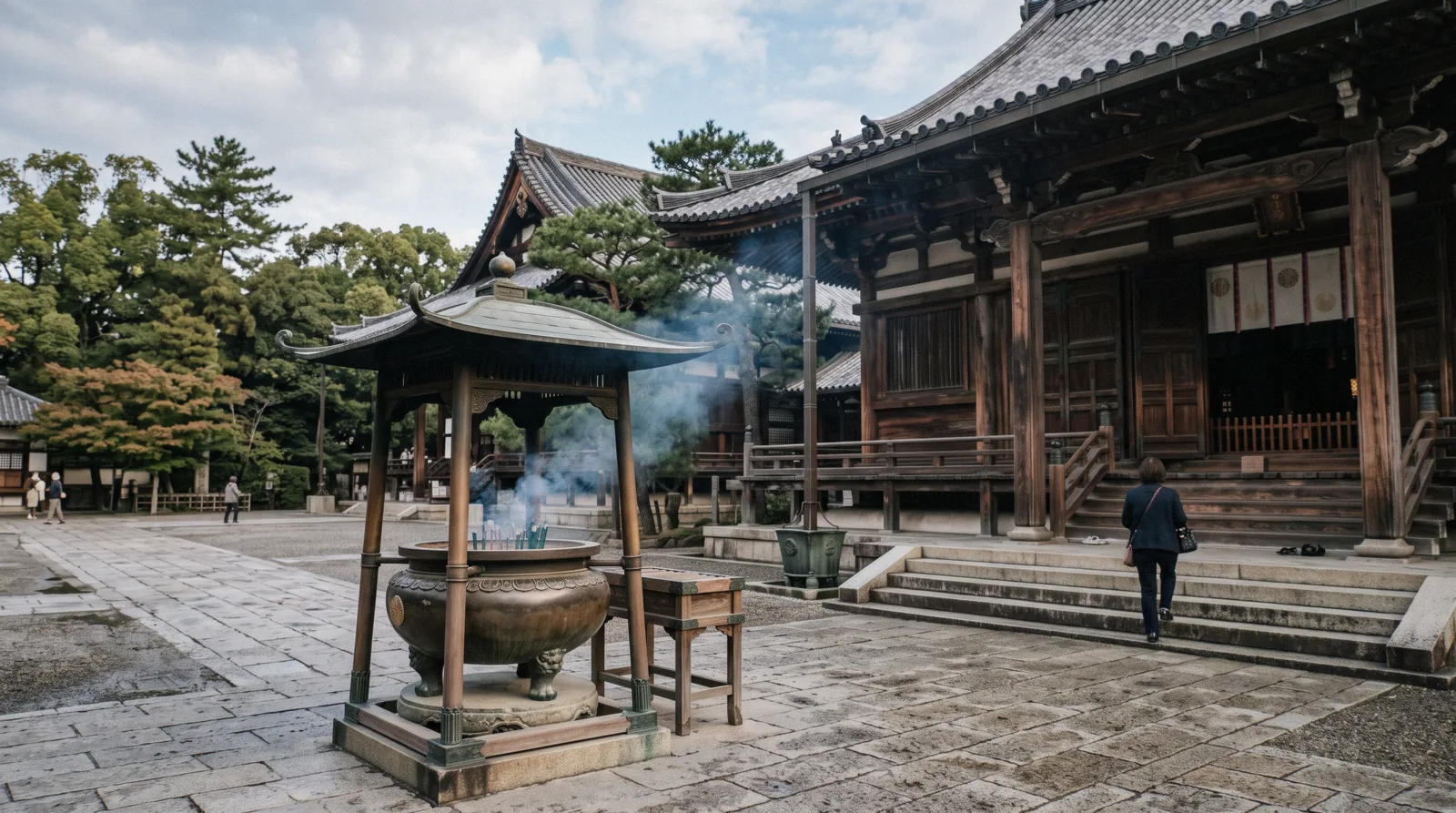
Temples and Shrines in Osaka
Osaka temples are a strange category to price, because most of them do not have a price. Of the seven sites on this page, exactly one publishes an admission fee for its main precinct; two publish no fee at all and no way to ask for one; one is a lane rather than a building; and one sits inside a park whose own website renders placeholder text where the facts should be. That is not a failure of research, it is the shape of the subject — Japan's great urban shrines are open ground, and the ticket is the exception. This page prints what each site publishes, dates it, and says plainly where the source runs out. Figures were read from the listings, with dollar glosses at ¥1,000 ≈ $6.27, the European Central Bank reference rate of that day. For the wider city, see top places to visit in Osaka.
Quick answer What they cost, when the gates open, which one to see first — in four lines
Almost every temple and shrine in Osaka is free to walk into, and the walled inner precincts are the exception rather than the rule. The only standing charge on this page is at Shitennoji: $3.14 (¥500) for the Central Precinct, $1.88 (¥300) for the garden and $3.14 (¥500) for the treasure hall, while its outer grounds are open around the clock at no charge. Sumiyoshi Taisha and Namba Yasaka Shrine publish no admission fee at all — not free, unpublished, and this page says which. Gate hours run early: Sumiyoshi opens at 06:00 from April to September and 06:30 from October to March, and Shitennoji at 08:30. Read from the sites' own pages, at $6.27 (¥1,000) ≈ $6.27.
Key takeaways
- If you see one, see the oldest one — a temple foundation of 593 with a pagoda you can climb, $3.14 (¥500) for the centre and nothing at all for the grounds
- On the 21st and the 22nd of every month, and during the spring and autumn equinox services, that $3.14 (¥500) comes off entirely — the dates and what happens on them are below
- The shrine that photographs best is not the biggest: it is the giant lion's head stage in Minami, which publishes neither a fee nor an opening hour on its own site
- A guided walk that takes in the temple quarter and the centre is the essential city loop; everything here is otherwise a walk-up
The seven, grouped by where they stand
Filter to the part of the city you are in, or sort by what each one costs. Every figure below is the site's own published statement, read at ¥1,000 ≈ $6.27; where a site publishes nothing, the entry says so rather than guessing, and the times given for a visit are our routing, because no temple or shrine in Osaka publishes one.
Tennoji and the south — the two great foundations
-
Shitennoji
Buddhist temple ¥50060–90 minbook-ahead tier 1 of 3
The temple Prince Shotoku is credited with founding in 593, laid out in the straight-line Shitennoji style — gate, pagoda, golden hall, lecture hall on one axis. The Central Precinct is $3.14 (¥500), the Honbo garden $1.88 (¥300) and the Treasure Hall ¥500, each charged separately. Open 08:30–16:00, and 08:00–16:30 on the 21st of the month and during observances.
Tip: The grounds outside the walls are free and the gates are open 24 hours, so an evening walk past the pagoda costs nothing at all — the fee only ever buys the walled centre.
-
Sumiyoshi Taisha
Shinto shrine No fee published60 minbook-ahead tier 1 of 3
Four halls in the Sumiyoshi-zukuri style behind a drum bridge so steep it has steps cut into it. The shrine's own site prints gate times and prayer fees but never an entry charge, so this page says no fee is published rather than calling it free. Gates open 06:00 from April to September and 06:30 from October to March; the outer gates close at 16:00 and the inner Migakiuchi precinct at 17:00 all year.
Tip: Three minutes' walk east of Nankai's Sumiyoshitaisha station. On the first of each month and on Hatsu-tatsu days the gates open at 06:00 whatever the season, and the amulet office runs 09:00–17:00.
Minami — the two you walk past without meaning to
-
Namba Yasaka Shrine
Shinto shrine No fee published20–30 minbook-ahead tier 1 of 3
A twelve-metre lion's head with a stage in its mouth, in a residential block a few minutes west of the Namba crossings. The shrine's own website — a 2013-era build — covers its deities, its tug-of-war rite, its summer festival and its wedding bookings, and prints an address and a phone number. It publishes no opening hours, no closing time, no admission statement and nothing at all about the lion hall itself.
Tip: The phone number on the shrine's own page is 06-6641-1149. Treat every blog that tells you it is free and open in daylight hours as unsourced, because the shrine has never said so.
-
Hozenji
Temple in a lane Free15–20 minbook-ahead tier 1 of 3
Two stone-paved lanes behind the noise of the canal, built around a Fudo Myoo statue so thickly covered in moss from the water visitors ladle over it that the face has disappeared. Nothing is charged and nothing is gated. It is not mentioned on the tourism bureau's own page for the surrounding district, and no association publishes hours for the lane.
Tip: Ladle the water over the statue rather than yourself, walk it early in the evening, and eat elsewhere — the bars along it seat about six each.
The castle side and Kita
-
The shrines inside Osaka Castle Park
Shrines in a park No fee published20–30 minbook-ahead tier 1 of 3
There are shrines in the grounds below the keep, and this is the most honest entry on the page: the park's own website publishes nothing usable about them. Its facility articles render Japanese placeholder text — 見出しが入ります, この文章はダミーです — in every content slot, and its news dates are still yyyy.mm.dd. So there is no official statement of a name, an hour, a fee, or even that the park is open around the clock.
Tip: What is sourced is the keep: $7.52 (¥1,200), 09:00–18:00, last admission 17:30. Everything else in that park is walked, not booked — and nothing on this site prints an hour for it.
-
Osaka Tenmangu
Shinto shrine No fee published30 minbook-ahead tier 1 of 3
The shrine to Sugawara no Michizane at the foot of the Tenjinbashisuji arcade, and the one whose calendar the whole city works around: its Tenjin Matsuri runs on 24 and 25 July 2026, with the land procession, the boat procession and the votive fireworks all on the second day. What we read is its own festival notice; the shrine publishes no admission figure and no opening hour there.
Tip: Its own notice states that the rites inside the main hall are for clergy and officials only and that the land procession is viewable from the marked route — a useful correction to every itinerary that promises access.
Out of town
-
Katsuo-ji
Temple, hillside Ticket sold from $102–3 h with travelbook-ahead tier 2 of 3
The daruma temple in the hills above Minoh, where thousands of small red figures are wedged into every ledge and hollow on the grounds. The temple's own admission figure is not in anything we read; what is verifiable is that a QR entry ticket is sold on the booking platform, listed at $10, and that the valley below it is free.
Tip: Pair it with the waterfall rather than the temple alone: Hankyu Osaka-umeda to Minoo is $1.76 (¥280) each way and the falls path is 2.7 kilometres from the station with no fee at all.
Numbers match the list — tap a pin for the guide.
Four of the seven publish no coordinate of their own, so the map carries three pins rather than seven — we do not invent a lat and lng from a map embed. Times allowed are ours; not one temple or shrine in Osaka publishes a suggested visit length.
The same seven, by what they charge and when the gates move
Each site's own published statement, read on in Q3 2026, in yen with dollar glosses at ¥1,000 ≈ $6.27. Where a column says not published, that is the finding: the site prints no such figure anywhere on its own pages.
| Site | Admission | Gates open | Gates close | District |
|---|---|---|---|---|
| Shitennoji grounds | Free | Open 24 hours | Open 24 hours | Tennoji |
| Shitennoji Central Precinct | $3.14 (¥500) | 08:30 | 16:00 | Tennoji |
| Shitennoji Honbo garden | $1.88 (¥300) | 08:30 | 16:00 | Tennoji |
| Sumiyoshi Taisha | Not published | 06:00 April–September | 16:00 outer, 17:00 inner | South |
| Namba Yasaka Shrine | Not published | Not published | Not published | Minami |
| Hozenji | Free | No gate | No gate | Minami |
| Shrines in Osaka Castle Park | Not published | Not published | Not published | Castle |
| Osaka Tenmangu | Not published | Not published | Not published | Kita |
| Katsuo-ji | Ticket sold from $10 | Not published | Not published | Out of town |
Nine rows for seven sites, because Shitennoji sells its grounds, its Central Precinct and its garden as three different propositions. Five of the nine rows read not published — which is the single most useful line on this page, and the reason it exists.
The guided versions
No operator sells a temple circuit of Osaka the way they do in Kyoto — the platform's catalogue here is city walks that pass a shrine, plus one temple entry ticket out at Minoh. Prices are the platform's listings in US dollars, read from the listings, and confirmed in your own currency at checkout.
 from $54.56
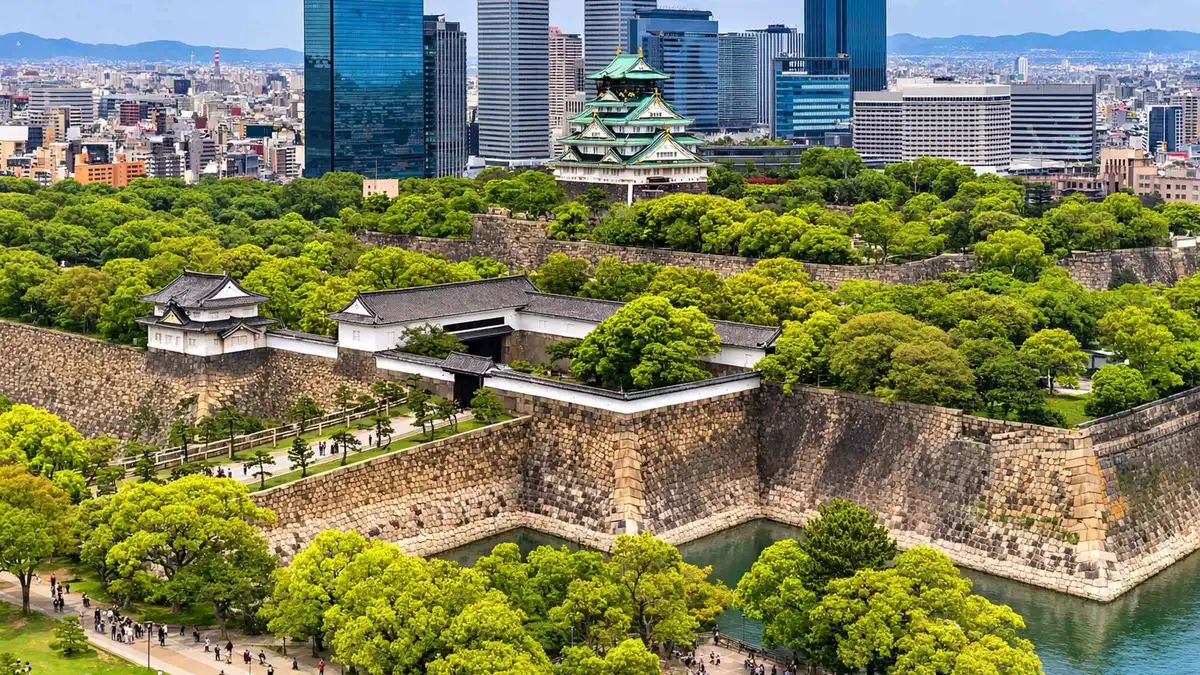
Osaka: Guided Walking Tour with a Native Expert – Top Sights
Four hours linking Osaka Castle, Tsutenkaku and Namba by metro, with the ¥1,200 keep admission included and the ¥430 of train fares not. A Japan Rail Pass buys you nothing here — the route runs on Osaka Metro.
Check Availability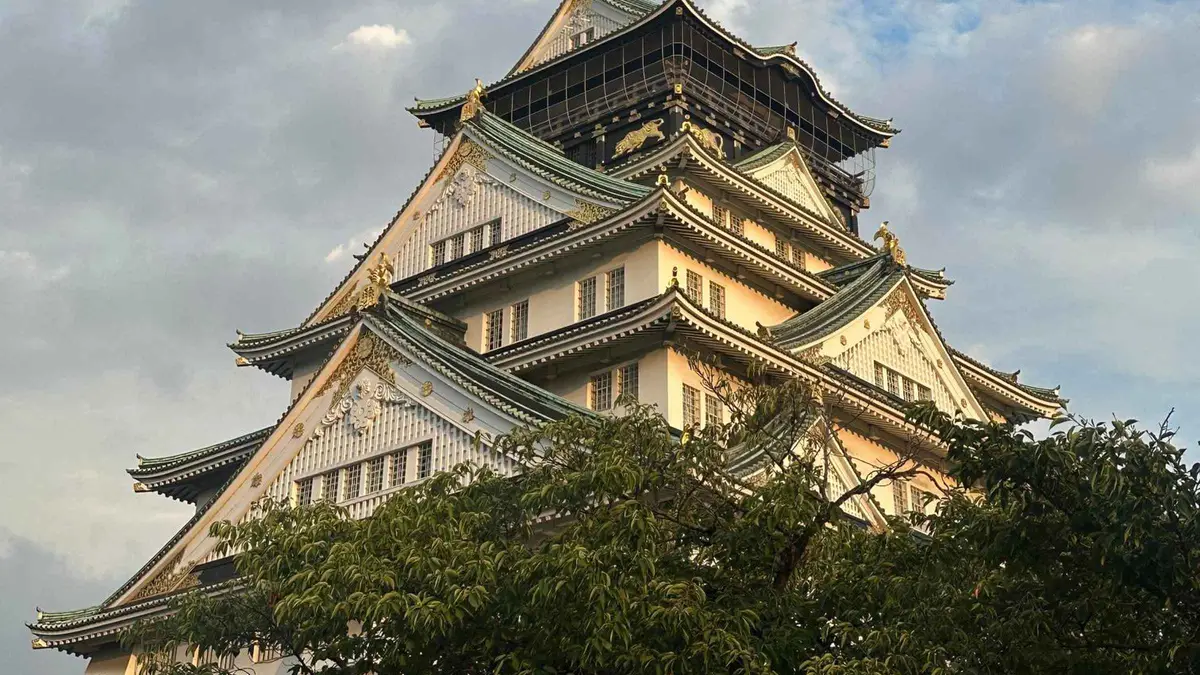 from $49.74
Osaka: Essential City Loop Tour with Local Guide
Five hours in a group of eight covering the castle, the Showa-era backstreets and the neon strip in one loop, with food bought stop by stop instead of a sit-down lunch. Only four people have rated it so far.
Check Availability from $10
Osaka: Katsuo-ji Temple Ticket with QR Code Entry
A QR-code admission ticket for the daruma temple in the Minoo hills and nothing else — no transport, and Katsuo-ji has no station of its own. The gate sells the same ticket, so this buys a smoother entry rather than a saving.
Check AvailabilityPrices, ratings and details are the platform's own. Dollar figures are the listed prices. The platform bills in your account's currency.
The 21st, the 22nd and the equinox: the days the fee comes off
One temple in this city publishes a standing free-admission rule, and almost nothing written in English mentions it.
Shitennoji's own admission page states it in a single line: on the 21st of every month (the Daishi-e service for Kobo Daishi), on the 22nd of every month (the Taishi-e service for Prince Shotoku), and during the spring equinox services in March and the autumn equinox services in September, the Central Precinct is opened free of charge. The $3.14 (¥500) does not apply on those days.
The hours move with it. Ordinarily the precinct runs 08:30–16:00; on the 21st and during observances it opens at 08:00 and closes at 16:30, and on 21 October it runs 08:00–17:00. The autumn equinox week itself is dated on the temple's own calendar: 20 to 26 September, the equinox day plus three days either side.
What you trade for the free entry is quiet. The 21st is the temple's market day as well as its service day, the courtyard fills, and the pagoda stair queues. If you want the precinct empty, take an ordinary weekday at 08:30 and pay the ¥500; if you want the temple as a working temple rather than a monument, take the 21st and accept the crowd.
- Free, every month: the 21st and the 22nd, Central Precinct only — the garden and treasure hall are unaffected
- Free, twice a year: the spring and autumn equinox services, with the autumn week running 20 to 26 September
- Extended hours on those days: 08:00–16:30, and 08:00–17:00 on 21 October
- Always free, every day: the grounds outside the walls, gates open around the clock — the temple's own page has the layout
Why half of this page says not published, and why that matters
There is a real difference between a shrine that is free and a shrine that has never said what it costs, and almost every guide collapses the two.
Sumiyoshi Taisha is the clearest case. Its site is detailed: gate times by season, amulet-office hours, prayer-reception times to the minute, the fees for having a prayer said. Nowhere does it print an admission charge for walking in. The honest statement is that no admission fee is published — which in practice means you walk in, but is not the same as a shrine declaring itself free, and it is not a promise the shrine has made.
Namba Yasaka Shrine goes further. Its own site publishes no fee, no opening hour, no closing time and not one line about the lion-head hall that is the only reason most visitors go. The address and the phone number are the entire practical content. Every itinerary that gives you an opening time for it is repeating something no source supports.
Osaka Castle Park is the strangest of the three, because the site exists and is broken. Its facility articles render Japanese placeholder text in every slot; the home page still shows yyyy.mm.dd. So for anything inside that park other than the keep — the shrines, the garden hours, whether the grounds close at night — there is no official statement to quote, and this site prints none.
The practical upshot for a visitor is small and worth stating: carry ¥500 in coins and expect nothing else to be charged. The variable is not money, it is gate hours, and those are published where they exist. The free-things page treats the same layer from the budget end. Because the published gate hours are the one thing that varies across these shrines, an anchor from best tours in Osaka is worth checking, since a guide keeps the current timetable for you.
Temple or shrine: how to tell in ten seconds, and why it changes your visit
The two words get used interchangeably in English-language guides, and the difference is visible from the entrance.
A shrine is Shinto. You come in under a torii — two uprights and a crossbar, usually vermilion or unpainted wood — and there is water at the entrance for rinsing hands and mouth before you approach. At the hall you toss a coin, bow twice, clap twice, bow once. Sumiyoshi Taisha, Namba Yasaka and Osaka Tenmangu are shrines.
A temple is Buddhist. You come in through a roofed gate rather than a torii, there is often incense to draw over yourself rather than a clap, and the buildings have names — pagoda, golden hall, lecture hall — laid out to a plan. You bow, you do not clap. Shitennoji, Hozenji and Katsuo-ji are temples.
Why it matters practically: temples are the ones that charge. A walled Buddhist precinct with a treasure hall has a ticket window and a closing time; a shrine's outer precinct usually has neither, which is why the gate hour matters more than the fee at Sumiyoshi and the fee matters more than the hour at Shitennoji. It also explains the shape of this page — one paid entry, five open precincts, and a booking platform that has nothing to sell for any of them.
One more distinction visitors ask about: the goshuin, the calligraphed seal collected in a book. Where it is offered it is at an office with its own hours — at Sumiyoshi the amulet office runs 09:00–17:00 and the prayer reception closes at 15:50, both earlier than the gates. Arriving at 16:30 gets you the precinct and not the seal.
The festival dates, from the shrines rather than from a listing site
Two of these sites run festivals that shut the surrounding streets, and both publish their own dates. The clock times everyone quotes are not among them.
The table below is taken from the shrines' own notices, read from the notices. The gaps are as instructive as the entries: Osaka Tenmangu publishes the dates and the sequence of rites for Tenjin Matsuri but no clock times, no fireworks launch sites and no boat route, so every 19:30 start and every shell count in circulation comes from a tour operator rather than from the shrine.
| 2026 date | Site | What happens | Time published |
|---|---|---|---|
| Monday 20 July | Sumiyoshi Taisha | Mikoshi-arai, the washing of the portable shrine, at Sumiyoshi Park | 19:20, gates close 20:00 |
| Friday 24 July | Osaka Tenmangu | Yoimiya: the eve rite at the main hall and the hoko-nagashi on the water | None published |
| Saturday 25 July | Osaka Tenmangu | Honmiya: land procession, boat procession and votive fireworks | None published |
| Sunday 26 July | Sumiyoshi Taisha | Mikoshi togyo, the procession of the portable shrine | 15:40, gates close 19:00 |
| 31 July – 1 August | Sumiyoshi Taisha | Nagoshi-no-harae and the main festival, then the rite at Shukuin Tongu | 17:00 and 18:30; food stalls 14:00–19:30 |
| 20–26 September | Shitennoji | Autumn equinox services — the Central Precinct opens free | 08:00–16:30 |
Two practical consequences. On 24 and 25 July the streets around the Tenjinbashi arcades are effectively closed to normal movement in the evening, and Osaka Tenmangu states that the rites inside the main hall are for clergy and officials only — the land procession is what a visitor can actually see, from the marked route. And on the Sumiyoshi festival days the shrine's own gate-closing times move, to 20:00, 19:00, 17:00, 19:00 and 19:00 on the five dates above, with the prayer reception cut short on two of them.
The events page carries the rest of the city's calendar, including the fireworks that moved to October this year, and the best-time page puts the festival months against the weather.
Doing two of them in a morning: the route and what it costs
The two big ones are at opposite ends of the same southbound line, which makes a temple morning simpler than it looks on a map.
Start at Shitennoji for the 08:30 opening. It is a twelve-minute walk north from Tennoji station, five minutes south from Shitennojimae-yuhigaoka on the Tanimachi line, or fourteen minutes north from Abenobashi — the temple publishes all three distances itself. Take the Central Precinct first while it is empty, then the garden if you want it, then walk out through the free grounds.
From there Sumiyoshi Taisha is a run further south, and it is worth the trip for the drum bridge alone; the shrine is three minutes east of Nankai's Sumiyoshitaisha station. Osaka Metro's fares run by zone at $1.19, $1.50, $1.82, $2.13 and $2.45 (¥190, ¥240, ¥290, ¥340 and ¥390), and the Nankai and Hankai lines run their own tariffs — the transport page sets out which pass covers which operator, and the answer is not the obvious one.
That pairing is a morning: two sites, one fee of ¥500, and both gates open before nine. Add Hozenji in the evening, because it is thirty seconds off the canal and reads completely differently after dark. What does not fit the same day is Katsuo-ji, which is a separate excursion out to the hills above Minoh — Hankyu Osaka-umeda to Minoo is $1.76 (¥280) and the walk from the station is 2.7 kilometres.
- 08:30 — Shitennoji Central Precinct, $3.14 (¥500), or free on the 21st and 22nd
- 10:30 — south to Sumiyoshi Taisha, no fee published, gates from 06:00 in summer
- Evening — Hozenji and the lane behind Dotonbori, free and never closed
- A separate day — Katsuo-ji above Minoh, $1.76 (¥280) each way plus the walk
Manners, and the one city rule that carries a fine
Shrine etiquette is not enforced. One thing on the walk between them is.
At a shrine: rinse at the water basin before you approach — left hand, right hand, a little water into the left palm for the mouth, then upright to rinse the handle. At the hall, coin, two bows, two claps, one bow. At a temple: no clap. Walk to the side of the path rather than up its centre at a shrine, and if you are photographing a rite rather than a building, wait to be told it is allowed.
The rule that actually bites is not religious. Osaka City has fined street smoking across every road, square and park it manages since 27 January 2025 — heated tobacco included, the penalty a $6.27 (¥1,000) non-criminal fine. That covers the approach to every site on this page, and it replaced an older system of six designated districts that a great deal of published advice still describes.
One thing nobody publishes, and it comes up constantly: no Osaka district has published a rule against eating while walking. Not Dotonbori, not the arcades, not the market association — we looked, and the one body whose site would carry such a rule sits behind a bot wall. The convention is real; the ordinance does not exist, and this site will not invent one. The safety page covers the rules that do carry a penalty.
Where to go next
The four pages these sites lead into.
Shitennoji
The full visit: the three separate fees, the 593 foundation, the pagoda climb and what the 21st of the month actually looks like.
The one with a ticketSumiyoshi Taisha
Gate times by season, the drum bridge, the four halls, and the festival days when the closing hour moves.
The one with no ticketFree things to do in Osaka
Where these open precincts sit among the canals, the arcades and the parks that also charge nothing.
The wider listThings to do in Osaka
Every major sight priced and mapped, with the clusters these two big foundations belong to.
The whole listOsaka temples and shrines: the questions
What is the oldest temple in Osaka?
Shitennoji, credited to Prince Shotoku in 593 and generally described as the oldest officially administered temple in Japan. The buildings you walk through are reconstructions — the layout is the ancient part, a straight axis of gate, pagoda, golden hall and lecture hall. Entry to that walled centre is $3.14 (¥500), or nothing on the 21st and 22nd of the month.
Are temples in Osaka free to enter?
Mostly, but the wording matters. Hozenji is free and ungated; Shitennoji is free in its outer grounds and $3.14 (¥500) inside the walls. The two big shrines publish no admission fee at all, which is not the same as declaring themselves free — the table above prints the distinction row by row.
How many temples and shrines should I see in Osaka?
Two, and a third by accident. This is not Kyoto: the city's religious sites are widely separated and mostly open ground, so the oldest temple and the great southern shrine in one morning is the whole of it, with the lane temple in Minami turning up on any evening walk. The two-day route places them.
Which Osaka shrine has the giant lion head?
Namba Yasaka, a few minutes west of the Namba crossings — a twelve-metre lion's head with a performance stage set in its mouth. Its own site publishes no hours and no admission statement, so plan it as a daylight detour rather than to a timetable, and treat any opening time you see elsewhere as unsourced.
Do Osaka temples charge for a goshuin seal?
The seal is written at an office with its own hours, which close before the gates do — at Sumiyoshi Taisha the amulet office runs 09:00–17:00 and the prayer reception stops at 15:50, while the inner precinct stays open to 17:00. None of these sites publishes a seal price on its own pages, so carry coins and ask at the office.
Is there a temple pass or a combined ticket in Osaka?
No combined temple ticket exists here. The city's sightseeing pass covers Shitennoji as one of its free entries, and covers nothing else on this page because nothing else on this page charges. Whether that pass is worth buying is a question about towers and cruises, not temples — the arithmetic is here.
On Film: The Sites and the Etiquette
Three videos on the buildings and the manners that go with them — each id checked against YouTube's own record. They load only when you press play.
Top 10 Best Shrines, Temples & Parks to Visit in Osaka
A run through the shrines and temples this page ranks, with the parks around them.
Video: Trip MoitoJapan Shrine Manners | DONT make FOREIGNER MISTAKES
Shrine etiquette demonstrated rather than described — the washing, the bowing, the offering.
Video: Paolo fromTOKYOThe 5 Surprising Differences between Shrines & Temples
The difference between a shrine and a temple, explained by a Japanese guide in Kyoto.
Video: Let's ask Shogo | Your Japanese Friend in KyotoVideos load from YouTube only when you press play.
Prices, hours and terms are set by the venue or operator and confirmed at checkout.
We may earn a commission if you book through one of our links, at no extra cost to you. Full affiliate disclosure