 Osaka City Guide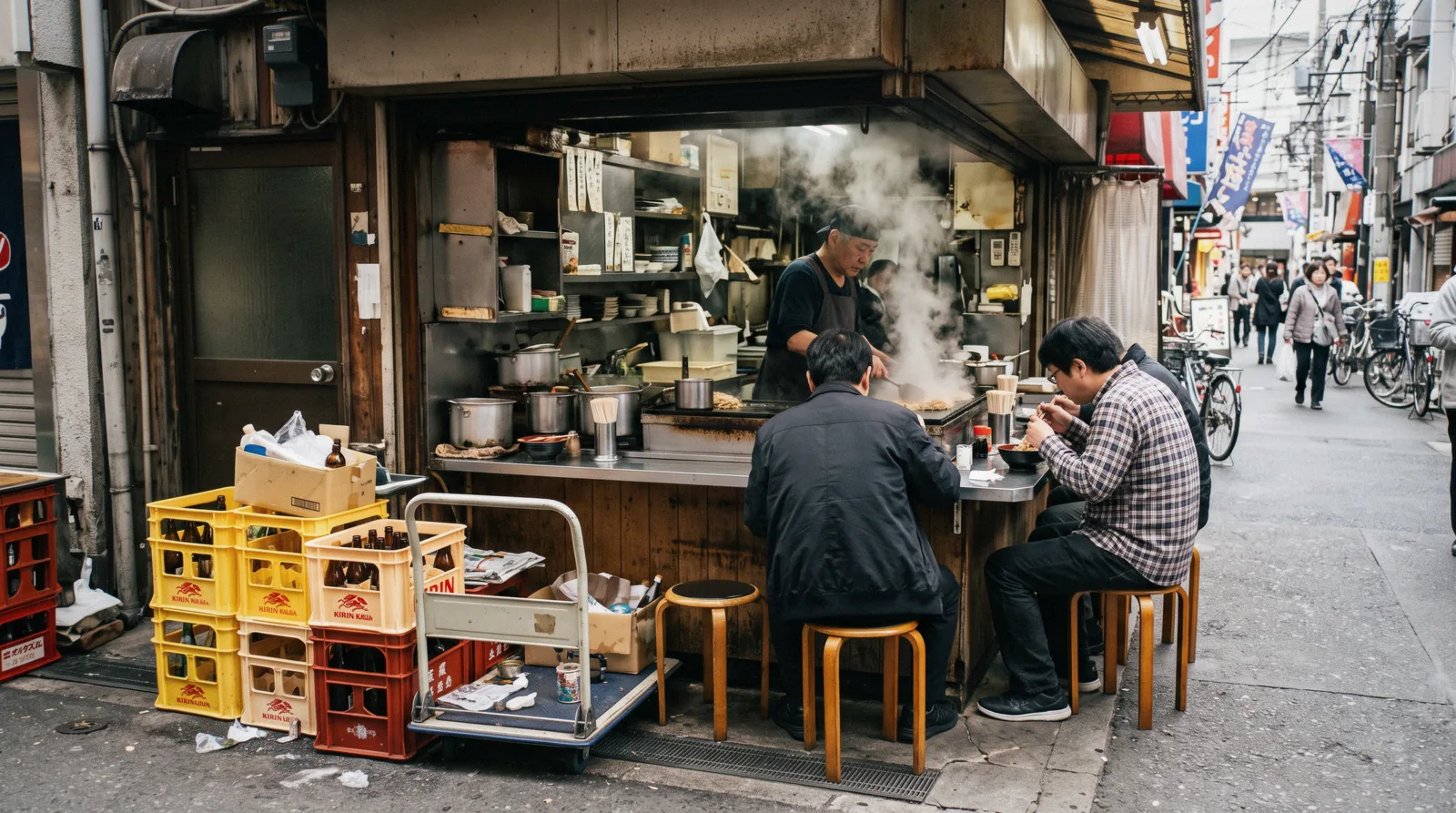
Osaka Food: What to Eat, and Where
Almost every Osaka food guide is a list of shop names, and almost none of them says where the names came from. This one works the other way round. It sets out what the dishes actually are on the city's own tourism-bureau sources, then names eleven places — every one of them because a published guide named it first, with the guide and its year printed on the card. The gap between those two halves is the most useful thing on the page: the MICHELIN Guide's 2026 Bib Gourmand selection for Osaka contains no takoyaki shop and no okonomiyaki restaurant at all, so the two dishes the city is famous for get described here and attached to no address. Yen is the primary figure throughout; dollar glosses use ¥1,000 ≈ $6.27, the European Central Bank reference rate. For the rest of the city, see things to do in Osaka.
Quick answer The dishes, the streets, and why no takoyaki shop is named
Osaka food means konamon — flour-based dishes built on dashi — eaten standing up or at a counter: takoyaki and okonomiyaki in the Minami streets around Namba, kushikatsu in Shinsekai, and udon, soba, ramen and tonkatsu everywhere in between. The city's tourism bureau calls Osaka the city of kuidaore and, in the 17th century, "the Kitchen of the Nation".
Key takeaways
- The dish everyone comes for has a short history: the bureau's own account says takoyaki shops "only began to pop up in the city in the 1950s", and it calls the pan-in-every-kitchen story an urban legend — the history, in full.
- We name eleven places, all of them off the MICHELIN 2026 Bib Gourmand selection or Asia's 50 Best — and not one of them serves takoyaki or okonomiyaki, which is why neither dish is attached to an address on this site.
- If you want a shop chosen for you, that is what a guide is for: the Dotonbori and Shinsekai foodie tour runs three hours across both districts, and the 15-dish Shinsekai walk is the highest-reviewed of the set.
- Street rules that do exist: no district publishes a ban on eating while walking, but street smoking has carried a $6.27 (¥1,000) fine city-wide since January 2025, heated tobacco included.
What Osaka Food Actually Is: Konamon, Dashi and Kuidaore
Three ideas explain most of the menu, and all three come from the Osaka Convention & Tourism Bureau's own gastronomy pages rather than from a listicle.
The first is konamon — literally flour things. Takoyaki and okonomiyaki are the headline pair, and the bureau describes them as "cheap and delicious street food" and "a major part of Kansai food culture", abundant in Minami, the southern half of the centre around Namba, Dotonbori and Shinsaibashi. Kushikatsu, skewered and deep-fried, is filed alongside them as "a representative Osaka B-class gourmet dish", concentrated in Shinsekai around Tsutenkaku.
That is the whole geography of Osaka street food in two sentences, and it is the reason this page keeps sending you south and west rather than to the smart streets of Kita.
The second is dashi. The bureau's line is blunt: Osaka udon, takoyaki and okonomiyaki all rest on "a generous amount of dashi stock", and dashi "was born in Osaka". It matters practically as well as historically.
A bowl of Osaka udon looks pale next to a Tokyo one because the broth is built on kombu and light soy rather than dark soy, and it is seasoned to be drunk rather than left. If you order one thing to understand the local palate rather than to photograph it, order udon.
The third is kuidaore — eating yourself into ruin, the city's own word for its appetite — and the older title that goes with it. In the 17th century, when the country's rice and produce moved through its warehouses, Osaka was called "The Kitchen of the Nation". The bureau still leads with both phrases, and the konamon article on its Discover Osaka site is co-signed by the Japan Konamon Association, an industry body, which is the closest thing to an authority the genre has.
What that means for a three-day stomach
Osaka is not a city where you book one big dinner and eat sandwiches around it. The structure that works is four or five small paid moments a day: a griddle snack in the afternoon, a counter meal at 18:00 before the queues, a skewer stop after, and a bowl of noodles at the end. The eleven venues named further down are all counter or small-room places for exactly that reason — MICHELIN's Bib Gourmand mark is given for good value, not for occasion dining, and in Osaka that selection reads as a map of lunch counters.
The Food Streets Compared, With What Each One Publishes
Five streets and one market, with the figures their own promoters put in writing and the ones nobody does. Sizes, shop counts and station access are the Osaka Convention & Tourism Bureau's published figures, read on in Q3 2026.
| Street or market | Published size | Nearest station | What it is for | Hours published? |
|---|---|---|---|---|
| Dotonbori | Not stated — no district authority exists | Namba (Nankai, Kintetsu, Metro Midosuji / Sennichimae / Yotsubashi) | Griddle snacks, neon, the canal and the boats | "Varies by store" |
| Kuromon Ichiba | About 580 m of arcade, about 150 stores | Nippombashi (Sennichimae line), right outside | Seafood counters, wagyu skewers, fruit; a morning and lunch market | "Varies by location" — no market-wide time |
| Shinsekai and Janjan Yokocho | Janjan Yokocho: about 50 establishments over 130 m | Ebisucho (Sakaisuji line), adjacent | Kushikatsu and doteyaki at standing counters | Not stated |
| Tenjinbashisuji | About 2.6 km, about 800 shops | Tenjinbashi 1–7 chome, Kita-ku | Everyday eating where Osaka shops, not where it poses | "Business hours vary by shop" |
| Shinsaibashi-suji | About 580 m, roofed; about 60,000 people a weekday | Shinsaibashi (Midosuji line), 1 minute | Shopping first, eating in the side streets off it | "Business hours vary by individual store" |
Every one of these places answers "what are the opening hours?" with some version of "varies by shop". The Shinsaibashi association's own site publishes no length, no shop count and no hours — the figures above are the tourism bureau's. The Kuromon association's site could not be read at all: it answers a Cloudflare bot challenge to every fetch, headless and headful alike, so the market's own hours, closed days and its rules about eating in the aisles are simply not available to quote. Hozenji Yokocho, two lanes south of the canal, is the quiet counterpart to Dotonbori and is treated on its own page.
Takoyaki: A Short History, and Why No Shop Is Named Here
The dish is younger than most visitors assume, its inventor is contested by the city's own tourism bureau, and — the finding this page turns on — not one takoyaki shop appears in the MICHELIN Guide's 2026 Bib Gourmand selection for Osaka.
Start with the history, because it is the part every blog embroiders. The bureau's gastronomy page calls takoyaki's history "surprisingly short": shops "only began to pop up in the city in the 1950s". On origins it hedges deliberately — "there are various theories about who invented it, but it is said to have originated from 'choboyaki' and 'radioyaki', which were popular from the Taisho to Showa periods".
Choboyaki was a sweet-shop snack for children: a flour-and-water batter poured into semicircular moulds with pickled ginger, konjac and spring onion, dressed with soy sauce. Takoyaki is what happened when someone swapped the water for dashi and dropped in octopus, "caught in large quantities in Osaka Bay". The sauce, mayonnaise, aonori and katsuobushi finish came later still and was, in the bureau's words, "influenced by okonomiyaki after the war".
The bureau also demolishes the line you will hear from a guide: that every Osaka household owns a takoyaki pan. It calls that an urban legend. What it does not publish, anywhere, is an inventor's name, a founding shop, a founding year, or any count of takoyaki shops in the city.
Every "the first takoyaki stall opened in 1935 and it is still there" sentence in circulation traces back to somebody's blog quoting another blog.
Why there is no shop name attached to this dish on this site
This guide names a venue only when a citable list names it first — the MICHELIN Guide, Slow Food, Gambero Rosso, or the venue's own site for hard facts. For Osaka the list that exists is the MICHELIN Guide Kyoto Osaka 2026, whose Bib Gourmand selection for Osaka and surroundings runs to 67 restaurants. We read the whole selection.
It contains kushiage, tonkatsu, udon, soba, ramen, sushi and izakaya. It contains no takoyaki stall and no okonomiyaki restaurant. Asia's 50 Best Restaurants 2026, the other list that reaches Osaka, is a fine-dining ranking and does not reach street griddles either.
So there is no honest way for us to hand you a takoyaki address. What we can hand you is the method for judging one on the spot, which is more useful than a name that will have a forty-minute queue by the time you arrive. Watch the pan before you commit: the batter should be loose enough that the cook is topping the moulds up and turning the balls with a pick every few seconds, not once.
The octopus should be a visible chunk, not a fleck. A shop turning out an unbroken line of orders is cooking to demand; a shop with a full tray sitting under a lamp is not. Ask for them without mayonnaise if you want to taste the dashi rather than the dressing.
And take the first bite carefully — the centre is molten for a good minute after it leaves the pan, which is the single most common way visitors ruin the experience.
Where to walk: the bureau places konamon "in the Minami area", which in practice means the canal-side blocks of Dotonbori, the lanes running north towards Shinsaibashi, and the covered stretch of Kuromon Ichiba where the griddles sit between the fish counters. If you want a stall picked for you by somebody who eats there, the honest route is a guided walk rather than a list — a six-shop takoyaki tasting exists for precisely this, and the tours below cover the same ground more broadly.
Okonomiyaki, Modanyaki and the Same Silence
The second konamon has the same problem as the first: it defines the city in every guidebook and it appears nowhere in the citable list.
Osaka-style okonomiyaki is a mixed batter — flour, dashi, egg and shredded cabbage stirred together with the filling before it hits the griddle — which is what separates it from the layered Hiroshima version where the noodles and cabbage are stacked. Modanyaki is the same batter with a nest of yakisoba noodles pressed underneath, and it is the order to make if you are eating one thing for a meal rather than as a snack. The finish is the same sauce, mayonnaise, aonori and katsuobushi quartet that migrated onto takoyaki after the war.
The bureau frames both dishes together as cheap street food that is "a major part of Kansai food culture", abundant in Minami. It publishes no history for okonomiyaki as detailed as the takoyaki account, no inventor and no founding shop. And the MICHELIN 2026 Bib Gourmand selection for Osaka — all 67 addresses — includes no okonomiyaki house.
The closest street-food genres the guide recognises in this city are kushiage and tonkatsu, both of which are represented on the cards below.
How to read an okonomiyaki counter without a recommendation
Sit at the teppan rather than at a table if you have the choice; the counter seats are where the cook works and where the plate arrives at the right temperature. Most places will cook it for you — the do-it-yourself version is more common in tourist-facing rooms than in ordinary ones, and if you do get the batter bowl, mix it thoroughly, pour once, and resist pressing the pancake down, which squeezes out the air the cabbage put in. Do not flip it more than once.
If there is a negiyaki on the board — a thinner, spring-onion-heavy relative — it is usually the cook's own preference and a better order than a second okonomiyaki.
One practical note that applies to both dishes: they are hot, sauced and loose, and Osaka is a city where you will be eating them within a metre of other people. Nowhere publishes a rule against eating on the move — no district association has one in writing — but the shops themselves solve it — most griddle counters have a shelf, a bin and a spot to stand, and using them is both easier and better manners than walking a boat of takoyaki through the Ebisubashi crowd.
Eleven Places We Can Name, and Who Names Them
Ten of these come from the MICHELIN Guide Kyoto Osaka 2026 Bib Gourmand selection — "Osaka and surroundings: 67 restaurants" — picked to spread across the genres people actually search for here. The eleventh is Osaka's entry on Asia's 50 Best. Every address opens in Google Maps so you can see the walk before you commit to it. Every card says "not stated" for hours and closed days, and that is not laziness: MICHELIN publishes a name, an address, a cuisine and a price band, and it publishes no opening time and no closed day for any restaurant in this selection. Where a venue's own site was not found and cited, we do not fill the gap with a guess. The price column is MICHELIN's own band — ¥ is its cheapest, ¥¥ the next — not a figure we have seen charged.
-
Kushikatsu Gojoya
¥ (MICHELIN's cheapest band)MICHELIN's own note describes a kitchen where "the tempo… is lively as cooks deep-fry these imaginative" skewers — kushiage rather than the tourist-facing kushikatsu counters of Shinsekai, and in its cheapest price band. It sits in Uchihiranomachi, a quiet office block of Chuo-ku ten minutes' walk north of the canal, which is why it stays a local booking rather than a queue.
- Address
- 2-1-11 Uchihiranomachi, Chuo-ku, Osaka 540-0037
- Hours
- not stated
- Closed
- not stated
-
kushiage 010
¥¥The other kushiage entry in the selection, and the smarter one: fourth floor of a building in Sonezakishinchi, the after-work drinking quarter of Kita behind Osaka Station, at MICHELIN's second price band. If you are sleeping in Umeda and want the genre without the trek south, this is the address the guide gives you.
- Address
- 4F, 1-1-41 Sonezakishinchi, Kita-ku, Osaka 530-0002
- Hours
- not stated
- Closed
- not stated
-
Tonkatsu Minato
¥ (MICHELIN's cheapest band)New to the Bib Gourmand list in the 2026 edition. MICHELIN describes it as "a tonkatsu restaurant supervised by tempura emporium Shunsaiten Tsuchiya" — a frying pedigree from a different discipline, in Shimanochi, a few minutes' walk from Amerikamura and the Shinsaibashi end of Minami.
- Address
- 2-9-26 Shimanochi, Chuo-ku, Osaka 542-0082
- Hours
- not stated
- Closed
- not stated
-
Ogimachi Udonya Asuro
¥ (MICHELIN's cheapest band)Tagged "Worth Queueing For" by MICHELIN, which is the guide's way of warning you about the line rather than apologising for it. Its own note places it "close to Tenjinbashi-suji, Kansai's longest shopping street" — so this is the lunch to build around a walk down the 2.6 km arcade, and udon is the dish that shows you what Osaka dashi tastes like.
- Address
- 3-8-3 Tenjimbashi, Kita-ku, Osaka 530-0041
- Hours
- not stated
- Closed
- not stated
-
Oudon Yomogi
¥¥The second udon house on the list, out in Sagisu, Fukushima-ku, north-west of the centre and well off any visitor route — which is the point of including it. At the second price band, it is the version of the dish that gets ordered by people who are not on holiday.
- Address
- 2-10-6 Sagisu, Fukushima-ku, Osaka 553-0002
- Hours
- not stated
- Closed
- not stated
-
Naniwa Okina
¥ (MICHELIN's cheapest band)Soba rather than udon, in Nishitemma — the grid of small bars and galleries between the castle and Umeda, a district most itineraries cross without stopping. Cheapest price band. Order it cold if the day is warm; the point of a soba counter is the buckwheat and the dipping broth, not the garnish.
- Address
- 4-1-18 Nishitemma, Kita-ku, Osaka 530-0047
- Hours
- not stated
- Closed
- not stated
-
Ramen Kuon
¥ (MICHELIN's cheapest band)In the basement of Semba Center Building 3, the long thin retail strip that runs underneath Chuo-odori in the middle of the business district — an address that is almost impossible to find by wandering and trivial with a map open. Cheapest price band, and the only ramen entry we picked from the selection.
- Address
- B2F Semba Center Bldg 3, 1-4-3 Sembachuo, Chuo-ku, Osaka 541-0055
- Hours
- not stated
- Closed
- not stated
-
Daidokoro Kamiya
¥¥An izakaya at the second price band in Kyomachibori, Nishi-ku, across the water from Nakanoshima. This is the card to use if you want an evening of small plates and drinking rather than a single dish — the format the rest of this list does not cover.
- Address
- 1-10-12 Kyomachibori, Nishi-ku, Osaka 550-0003
- Hours
- not stated
- Closed
- not stated
-
Nikomi Kimura
¥¥The guide lists it in the Bib Gourmand selection at the second price band and prints no cuisine category for it at all — we leave that blank rather than guess from the name. Tanimachi, in the long north–south spine of Chuo-ku that runs down from Osaka Castle.
- Address
- 6-18-6 Tanimachi, Chuo-ku, Osaka 542-0012
- Hours
- not stated
- Closed
- not stated
-
Sushidokoro Kaihara
¥¥Sushi at MICHELIN's second band rather than at the numbers the counters in the guidebooks charge, in Ikedacho, Kita-ku, north of the Ogimachi blocks. Osaka's own sushi tradition is pressed — boxed and cut — rather than hand-formed, so ask what is pressed on the day before you default to nigiri.
- Address
- 5-4 Ikedacho, Kita-ku, Osaka 530-0033
- Hours
- not stated
- Closed
- not stated
-
La Cime
Not stated by the listThe other end of the city's range entirely, and the one Osaka fact that outranks Tokyo: on Asia's 50 Best Restaurants 2026 chef Yusuke Takada's La Cime, open since 2010, is No. 13 — the highest-ranked restaurant in Japan on that list, and the first time a restaurant outside Tokyo has held that place. The list page gives the ranking and the chef but publishes no street address, so we print none; the map link searches the name in Osaka.
- Hours
- not stated
- Closed
- not stated
Not a ranking and not a shortlist of the best food in Osaka — it is who is in the published guides. Twelve restaurants joined the Bib Gourmand selection in the 2026 edition, nine of them in Osaka, among them PITAK GOHAN (Thai), Chukashunsai Morimoto (Chinese), Tonkatsu Minato above and the yakitori houses Sumisho Mikuriya and Sumibi Iwata. And note what the whole 67-address selection does not contain: a single takoyaki or okonomiyaki venue.
Kushikatsu, and the One Rule Everybody Actually Enforces
The third konamon has a geography, a price logic and a genuine piece of etiquette that is worth knowing before you sit down.
Kushikatsu is skewered meat, vegetables and oddities — lotus root, quail egg, cheese, whole garlic cloves — crumbed and deep-fried to order, and the tourism bureau names it "a representative Osaka B-class gourmet dish" concentrated "in the Shinsekai area around Tsutenkaku Tower". That is a real concentration rather than a marketing line: Janjan Yokocho, the lane that runs off the tower's foot, packs about 50 establishments into 130 metres, most of them kushikatsu and doteyaki counters, according to the bureau's own figures.
The rule the bureau prints alongside the dish is "no double dipping". Every counter puts out a communal steel tub of thin, dark sauce. Each skewer goes in once, before the first bite.
After that you use the shredded cabbage that comes free on the counter as a scoop, or you ask for sauce in a dish. This is not a quaint custom for visitors to perform — it is a hygiene rule in a shared tub, it is posted in English in almost every shop on that lane, and it is the one thing a counter will correct you on.
The cabbage is worth understanding too: it is there as a palate reset and a sauce vehicle, it is refilled without charge in most shops, and eating it between skewers is the difference between a good ten-skewer sitting and feeling like you have eaten a fryer. Order in rounds of three or four rather than in a block, because everything arrives within a minute of being asked for and nothing survives sitting.
Kushikatsu, kushiage, and why the guide names one and not the other
MICHELIN's selection files its two Osaka skewer entries — Kushikatsu Gojoya and kushiage 010 — under kushiage, the more careful, seasonal, restaurant version of the same technique, cooked in smaller batches and often served one skewer at a time by the cook. Both are on the cards above. Neither is in Shinsekai.
If you want the genre at its most refined, that is where the citable list points; if you want the genre at its noisiest, go to Janjan Yokocho, where no shop can be named here because no published guide names one.
Eating on the Street: What Is Published, and What Nobody Publishes
Two questions come up constantly — can you walk and eat, and are there rules — and the honest answers run in opposite directions. Sources: each district association's own site, and the City of Osaka's ordinance page.
No Osaka district publishes a ban on eating while walking. We looked for a tabearuki rule or a food-hygiene notice on the associations' own sites for Dotonbori, Shinsaibashi, Shinsekai, Amerikamura and Tenjinbashisuji, and there is none. Kuromon Ichiba is the one place such a rule would live — markets elsewhere in Japan have posted them — and its association site sits behind a Cloudflare bot challenge that returned nothing to any fetch we tried. So we cannot tell you what Kuromon's own signage says, and we will not invent it.
Read the signs on the arcade as you walk in; where a stall wants you to eat on the spot, it says so in English at the counter.
The one city-wide rule that does bite is about smoking, not food. From Monday 27 January 2025 Osaka City banned street smoking across the entire city, replacing the old six designated districts with "roads, squares, parks and other public places" the city manages. Heated tobacco is covered as well as lit cigarettes. The penalty is a $6.27 (¥1,000) non-criminal fine under the city's street-smoking ordinance. Anyone who visited before 2025 and remembers stepping outside a food stall to smoke on the pavement should not do that now; use the enclosed smoking rooms, which are common in stations, department stores and larger arcades.
Bins, and the practical part nobody warns you about
Osaka's food streets produce enormous amounts of small waste — boats, picks, cups, skewers — and there are very few public bins. The convention that works is the one the shops expect: you eat within sight of the stall that sold it to you and put the tray in that stall's bin. Skewer counters count your sticks to price the bill, so leaving them on the counter is not littering, it is the receipt.
Carry a small bag for anything you do end up walking off with, because a bin in the next street is unlikely.
One more piece of arithmetic worth having: the street layer is where Osaka is cheap and the counters are where it is good value, but neither is where the queues are worst. The worst hour on Dotonbori is between 18:00 and 21:00, when the same crowd photographing the Glico sign is also buying dinner. Eat at 17:00 or after 21:00 and the same shops serve you in a fraction of the time.
Markets and Arcades: Where the Figures Come From, and Where They Stop
The covered streets are the backbone of eating here, and their published record is patchier than any visitor expects. Everything in this section is either the tourism bureau's own figure or an explicit absence.
Kuromon Ichiba is the food market visitors are sent to: about 580 metres of arcade and about 150 stores, at 2-4-1 Nippombashi, Chuo-ku, immediately outside Nippombashi station on the Sennichimae line. Its history is real and documented — merchants sold fish from Sakai and Kishu near Enmyoji temple in 1822–1823, the market burnt in the 1912 Great Namba Fire and again in the wartime air raids, and was rebuilt both times. What it does not have is an opening time.
The bureau's own spot page answers hours and closed days with "varies by location", and the two bureau pages even disagree on the shop count — one says about 150, another almost 170. Any guide printing "Kuromon Market, 9:00 to 18:00, closed Sundays" has made that up.
Tenjinbashisuji is the other one worth walking, and it is a different proposition: about 2.6 km and about 800 shops running through Tenjinbashi 1–7 chome in Kita-ku, grown as the gate-town of Osaka Tenmangu and still, overwhelmingly, a street where Osaka does its ordinary shopping. It is the best place in the city to eat cheaply among people who are not visiting, and it is where MICHELIN's udon pick, Ogimachi Udonya Asuro, sits at the northern end. The "longest shopping street in Japan" claim attached to it is not certified by any public authority; the only body that has put a number on it is a private register, and the street's own site covers just two of its seven blocks.
The arcades that are not really about food
Shinsaibashi-suji — about 580 roofed metres, around 60,000 people on a weekday and 120,000 at the weekend — is a shopping street with eating in the lanes off it rather than on it. Amerikamura, the 1970s second-hand and streetwear quarter beside it, publishes no boundary, no founding year and no shop count of its own; its association describes itself only as a voluntary group of Nishi-Shinsaibashi shop owners. Treat both as places you eat near, not places you eat in.
The practical routing that comes out of all this: do the market in the morning or at lunch, when the seafood counters are actually cooking; do the arcades in the afternoon, when the rain does not matter and the shops are open; do the griddles and the skewers after dark, when the streets are what people come to see. That order also happens to walk downhill in crowd terms, which is why the itineraries on the planning hub sequence a food day the same way.
The Paid Alternative to a Named-Shop List
This is the honest answer to "just tell me which takoyaki shop": we will not name one without a published guide behind it, and a local guide will, because they are standing in front of it. These ten walks and classes are the paid version of the list this page declines to write — a guide picks the stalls, orders in Japanese and explains what is on the plate. Prices are the platform's listed USD, and each card links to the operator's own page where the calendar shows what is still open. The Dotonbori-and-Shinsekai walks cover both konamon districts in one evening; the two market walks are the ones to book if you would rather be led round Kuromon than guess at the counters.
 from $104.87
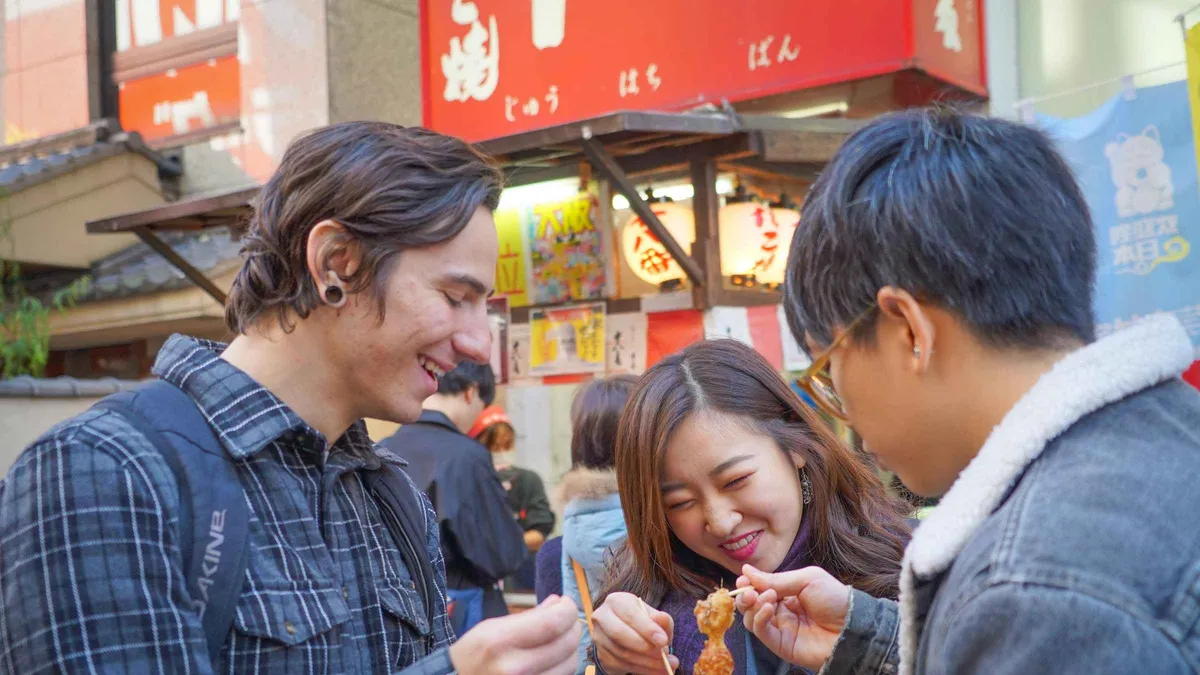
Osaka: Local Foodie Tour in Dotonbori and Shinsekai
Three hours across Shinsekai and Dotonbori taking in kushikatsu, takoyaki and an okonomiyaki you cook yourself, with two drinks. The dearest food walk here, and the ¥190 train fare between the two districts is on you.
Check Availability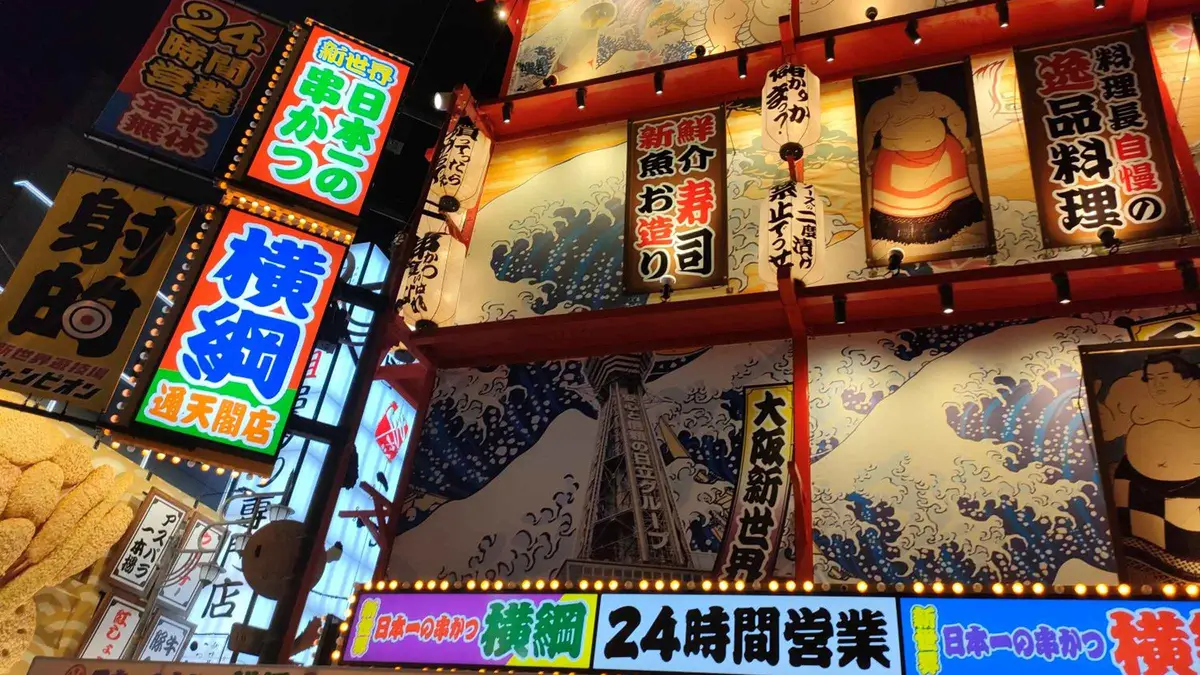 from $69.79
Hungry Osaka Street Food Tour Shinsekai: 15 Tastings 3 Drinks
Fifteen tastings and three drinks across an izakaya, a stall, a standing bar and two restaurants in Shinsekai, over three hours. The best rated of the big evening food walks; getting there and home afterwards is your own affair.
Check Availability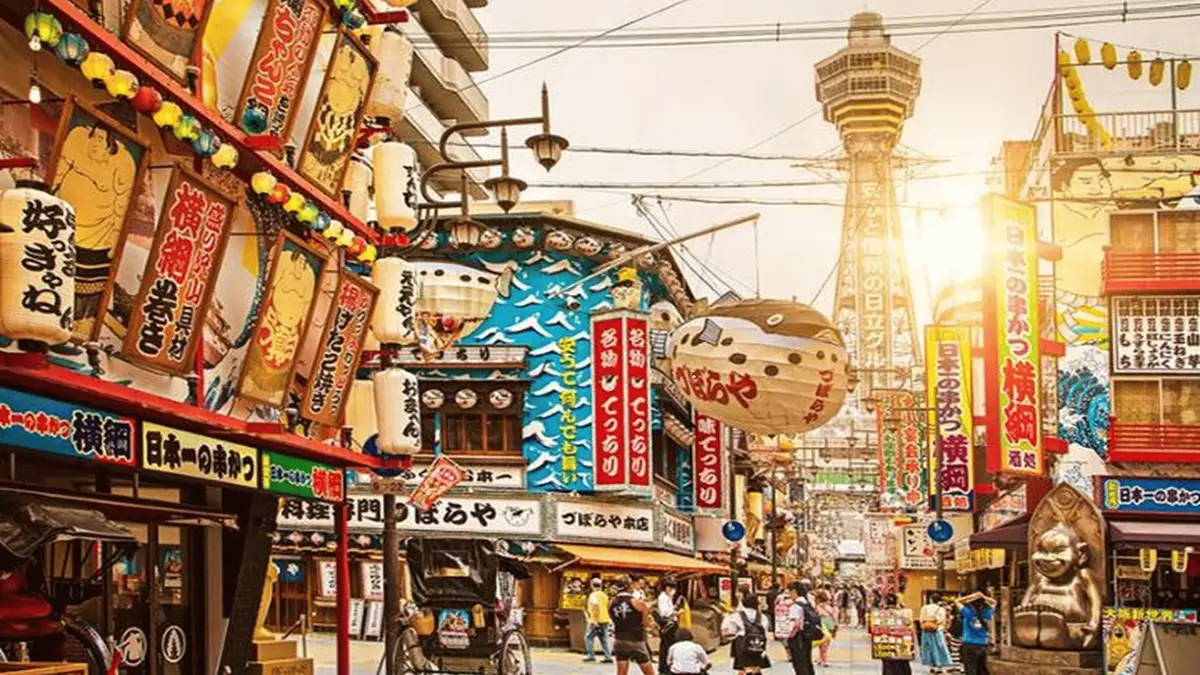 from $60.86
Most booked
from $60.86
Most booked
Osaka: Food Tour with 15 Dishes & 3 Drinks with a Local Expert
The same shape as the Hungry Osaka walk — five Shinsekai venues, fifteen dishes, three drinks — for about nine dollars less, with far more reviews behind the rating and hotel pickup included.
Check Availability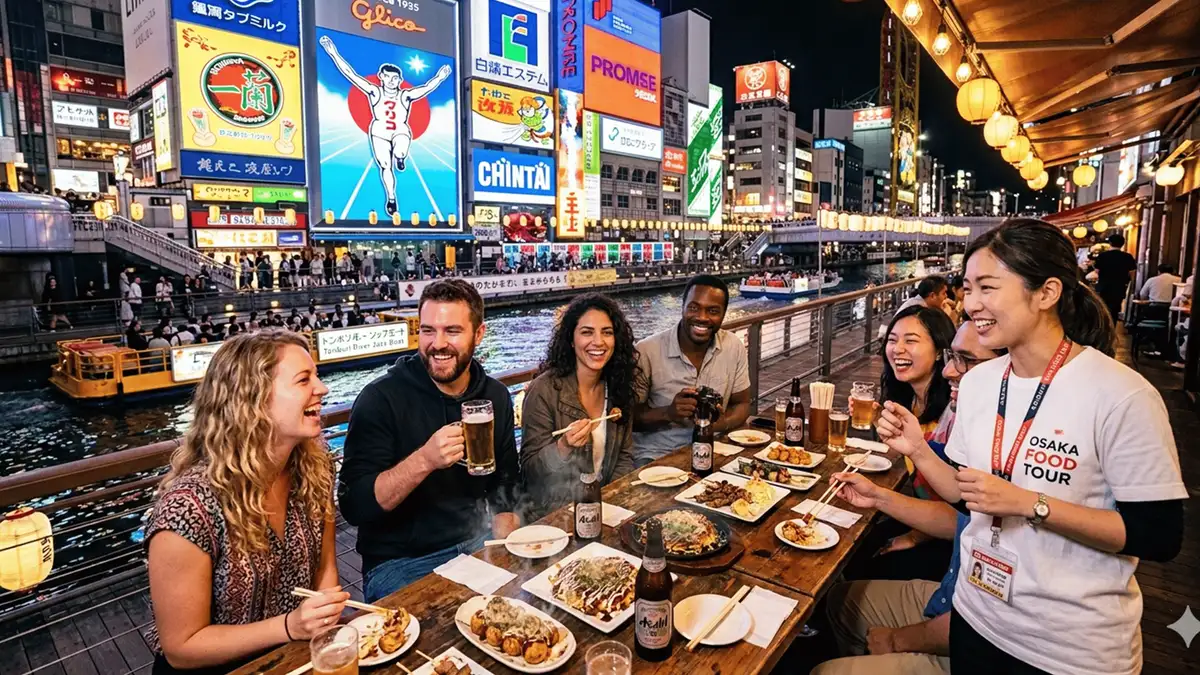 from $51.13
Osaka: Guided Food Tour with 12 Dishes and 2 drinks
Twelve dishes and two drinks in two and a half hours, taking in sake bars locals use and a street stall listed in the Michelin guide. Well rated, and among the cheaper options per dish in this group.
Check Availability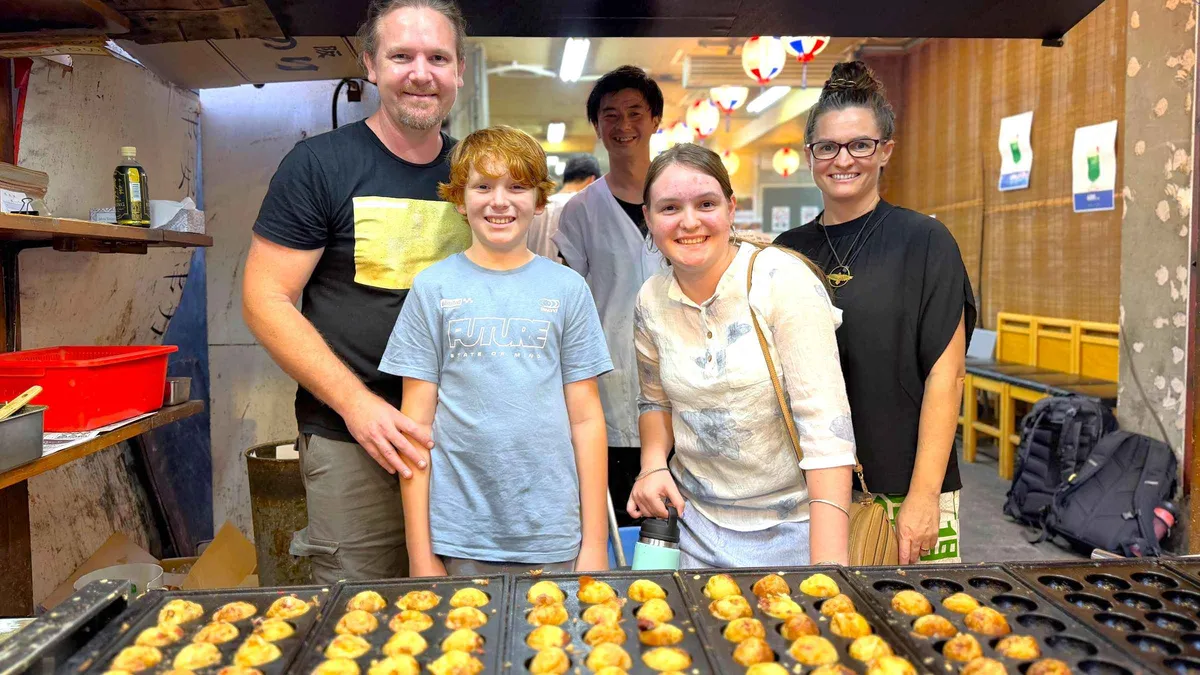 from $53.37
Osaka: Dotonbori Street Food Tour with Tastings
Two hours of street food along Dotonbori with a temple stop and the Glico sign, guide included. The listing never says how many tastings you get, which the 12- and 15-dish tours in this group do.
Check Availability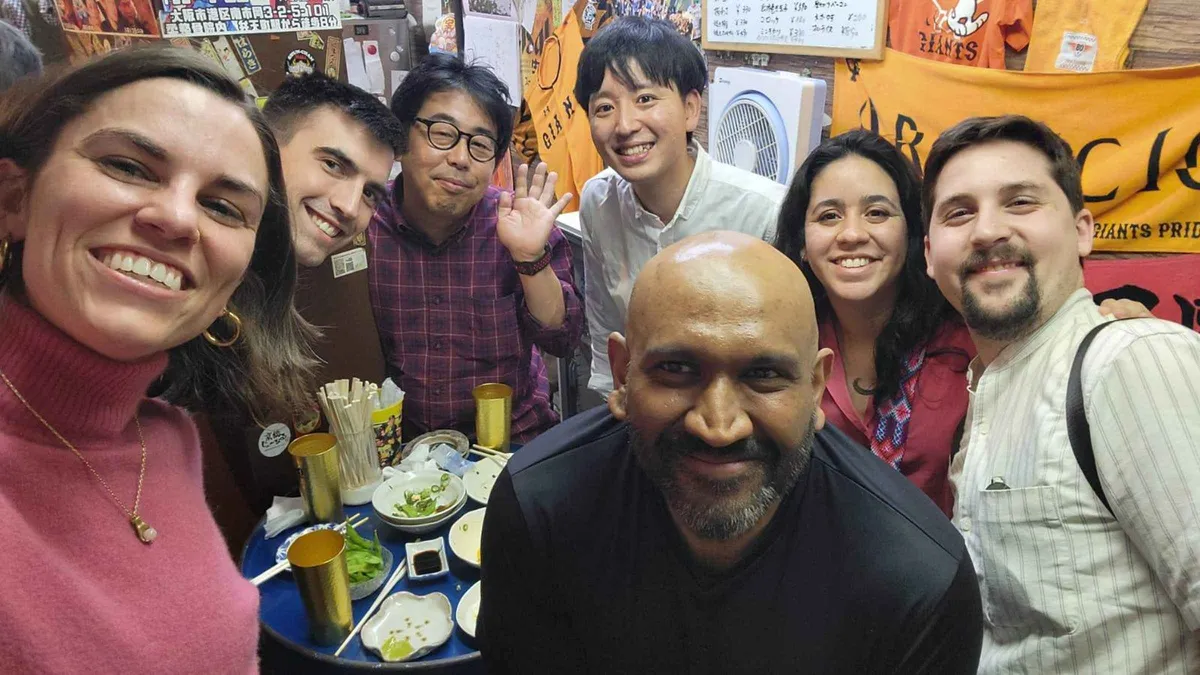 from $74.91
Osaka, Dotonbori: Backstreet Food Tour with Local Guide
Three hours off the main strip in a group of no more than eight: yakitori, ochazuke, oden and a fourth stop the guide picks. Drinks are not included, which is the difference from the cheaper 15-dish evening tours.
Check Availability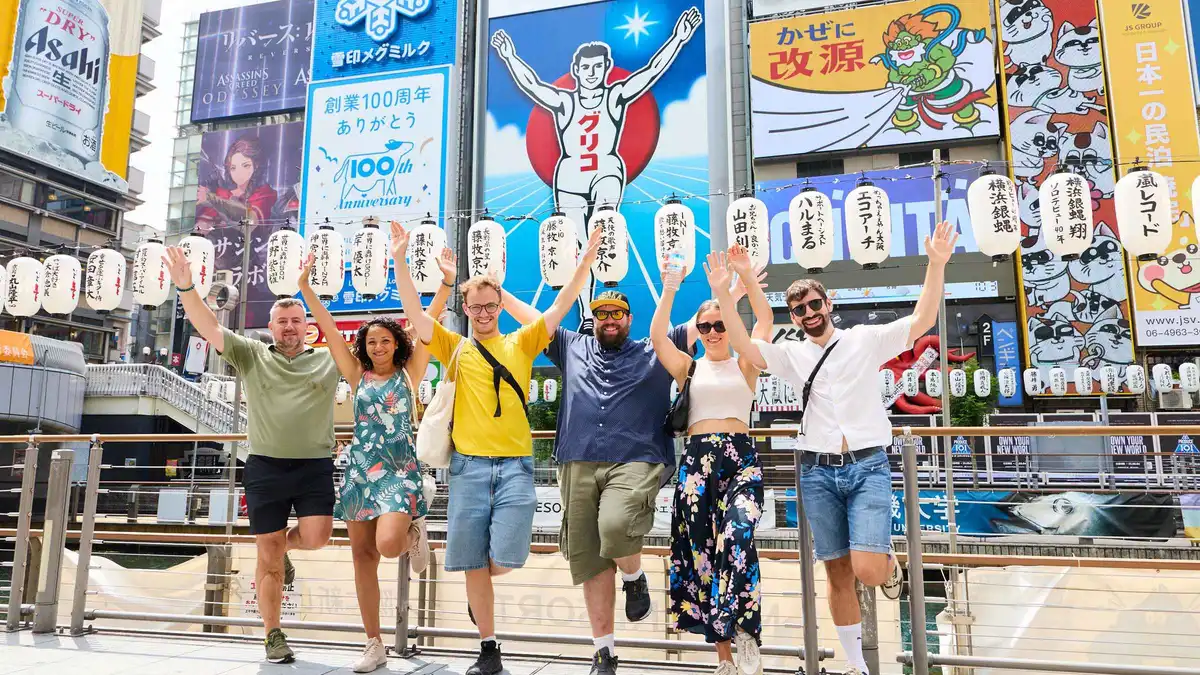 from $17.48
Osaka Walking Tour: Dotonbori, Kuromon Market & Street Food
Two and a half hours from Shinsaibashi through Hozen-ji, Kuromon Market and Den Den Town with a licensed guide and some food included. Cheap for a guided walk, but only 23 people have rated it so far.
Check Availability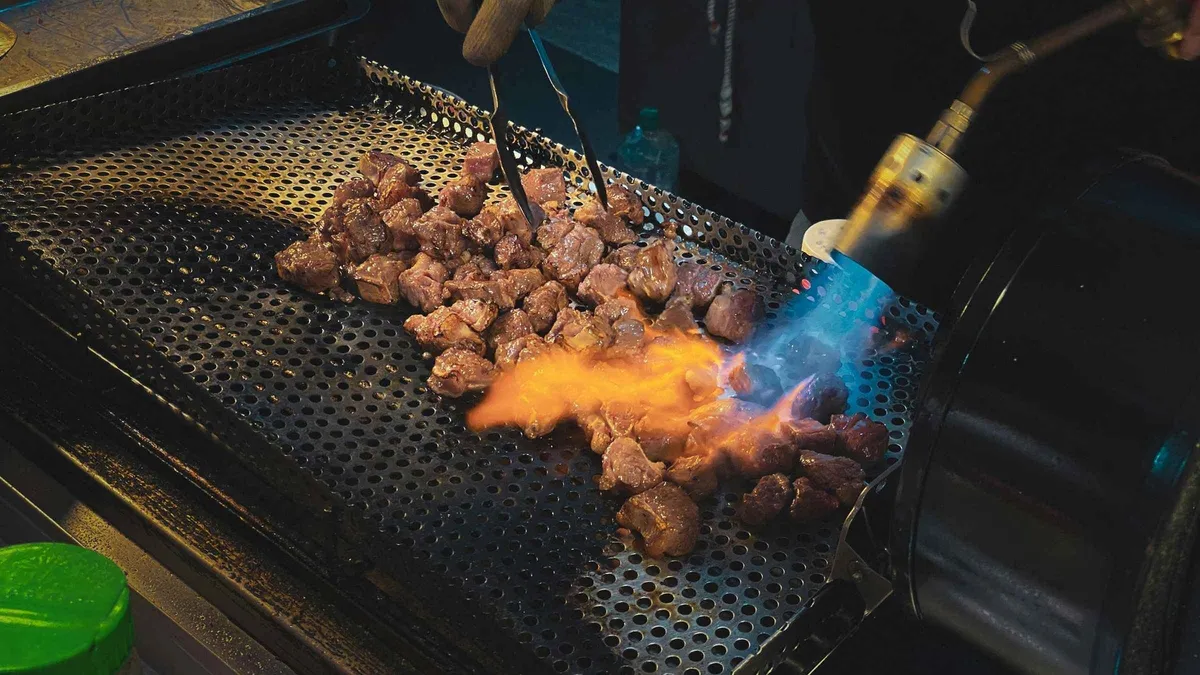 from $42.45
Osaka: Wagyu & Street Food Tour at Dotonbori, Kuromon, &more
Two hours weighted heavily towards Kuromon Market — 105 minutes of the itinerary sits there — with wagyu, takoyaki, gyoza and a matcha latte, finishing in Dotonbori. Six reviews so far, all five stars.
Check Availability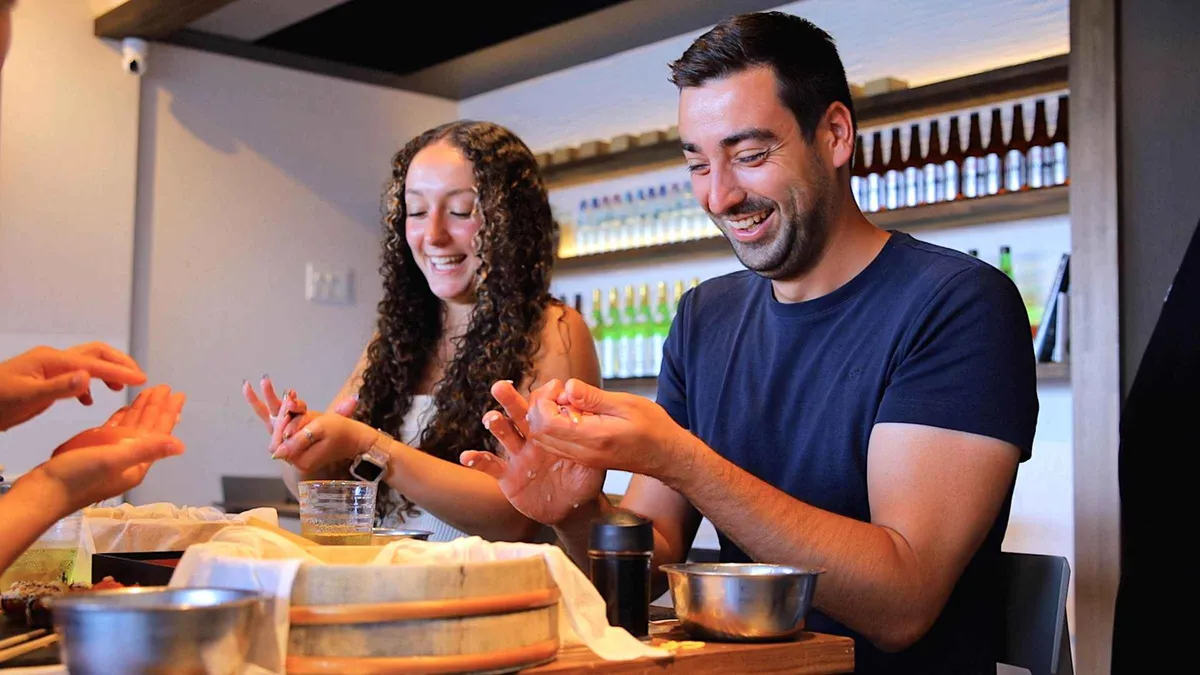 from $43.70
Osaka: Roll and Authentic Sushi Making Class in Dotonbori
A hundred minutes making rolled and hand-formed sushi in central Dotonbori, then eating it — ingredients, English instruction and the meal included. The most reviewed cooking class in this list and the cheapest of them.
Check Availability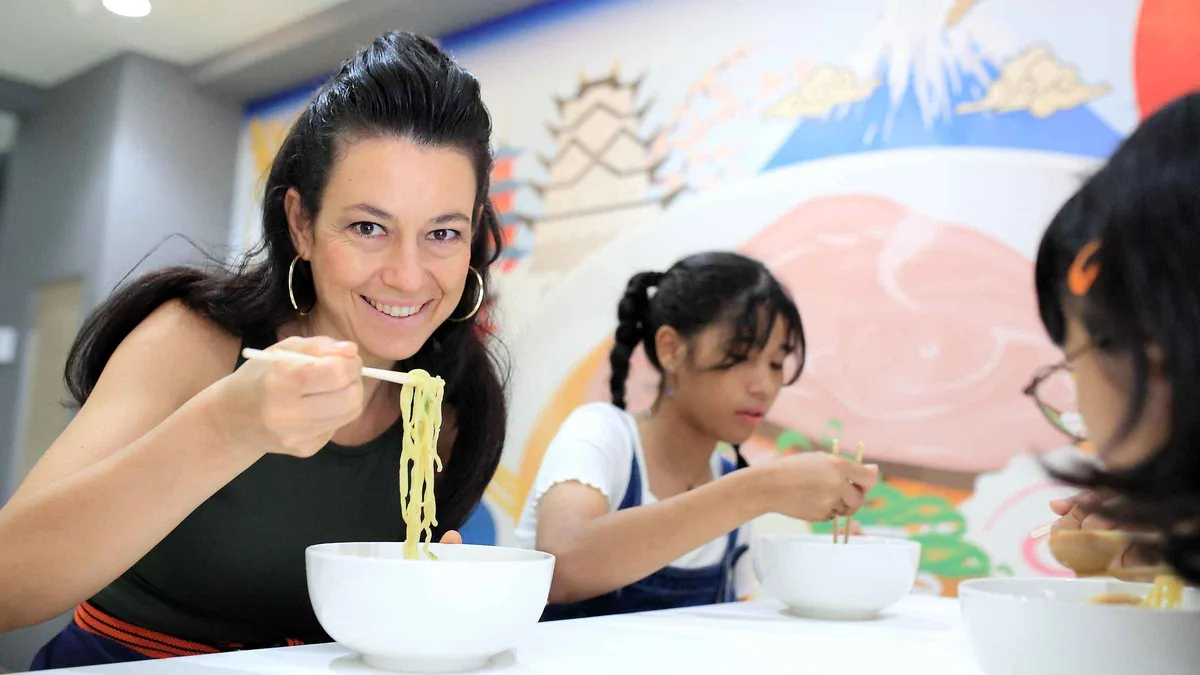 from $64.92
Osaka Castle Area Ramen-Making Experience with Souvenir
Two hours making noodles, broth and chashu from scratch a short walk from Osaka Castle, with a drink and a souvenir to take away. Every English-speaking reviewer so far has scored it five; vegetarian and vegan versions need advance notice.
Check AvailabilityPrices, ratings and details are the platform's own. Dollar figures are the listed prices. The platform bills in your account's currency.
What Changed in the 2026 Guide, and How to Read a Bib Gourmand
The list this page leans on moved this year, and the mark it uses means something specific that is worth knowing before you treat it as a recommendation.
The Bib Gourmand is MICHELIN's good-value mark, not a star and not a lesser star. It is given to restaurants the inspectors judge to serve good food at a moderate price, and in a city like Osaka — where the everyday eating is the point — that selection reads much more like a working map than the starred list does. That is why this page is built on it.
It also explains the shape of the eleven cards: counters, noodle rooms, a basement ramen shop, one izakaya.
In the 2026 edition twelve restaurants joined the Bib Gourmand selection across the guide's Kyoto–Osaka territory — three in Kyoto and nine in Osaka. Among the Osaka arrivals MICHELIN names PITAK GOHAN, a Thai kitchen; Chukashunsai Morimoto, Chinese; Tonkatsu Minato, which is on the cards above; and two yakitori houses, Sumisho Mikuriya and Sumibi Iwata. The direction of travel is worth noticing: the guide is adding breadth — Thai, Chinese, yakitori — to a city selection that visitors imagine as wall-to-wall konamon.
And the ceiling: Osaka now outranks Tokyo on one list
On Asia's 50 Best Restaurants 2026, La Cime — Yusuke Takada's kitchen, open since 2010 — sits at No. 13, which makes it the highest-ranked restaurant in Japan on that list and the first time a restaurant outside Tokyo has taken that position. It is a tasting-menu room and a booking made weeks out, not a walk-in, and the list page gives no address, which is why its card carries none. If your trip has one expensive dinner in it, that is the single most defensible reason in print to spend it in Osaka rather than saving it for Tokyo.
A last word on how to use any of this. Published lists go stale in a season, and the entries that survive get busy enough to stop being the thing that was recommended. The parts of this page that will still be true in two years are the ones about the dishes, the streets and the rules — what konamon is, where kushikatsu lives, how to read a griddle, that the sauce tub is dipped once.
Use the cards for addresses and the tours above for a shortcut, and let the method carry the rest.
Where to Go Next
The canal, the signs and the boats
The griddle streets in their own right, with what the tourism bureau does and does not publish about the signage: Dotonbori.
Namba station, right outsideThe market, counter by counter
About 150 stores over 580 metres, with the reason no market-wide opening hour can be quoted: Kuromon Ichiba.
Nippombashi, Sennichimae lineKushikatsu at its noisiest
Janjan Yokocho's 50 counters in 130 metres, under the tower: Shinsekai. Or start again from top places to visit in Osaka.
Ebisucho, Sakaisuji lineSleeping where you are eating
Minami puts the konamon streets under your window and the noise with them: where to stay in Osaka sets the areas against each other.
Kita or Minami, the whole decisionOsaka Food: The Questions
What is traditional Osaka food?
Konamon — flour-based dishes — built on dashi: takoyaki, okonomiyaki and modanyaki, with kushikatsu skewers alongside them, plus the pale, kombu-based udon that the city's own tourism bureau says gave dashi to the rest of the country. The bureau's phrase for the city is kuidaore, and its older title, from the 17th century, is "the Kitchen of the Nation". The full explanation is here.
What is the one must-try dish in Osaka?
Takoyaki, on volume of search and on the bureau's own framing — but the more revealing order is udon, because the dashi is what actually separates Osaka cooking from Tokyo cooking, and the MICHELIN 2026 Bib Gourmand selection contains two udon houses and no takoyaki stall at all. Both udon addresses are on the cards above.
Why does this guide not name a takoyaki shop?
Because we name a venue only when a citable published list names it first, and the list that covers this city — the MICHELIN Guide Kyoto Osaka 2026 Bib Gourmand selection, 67 addresses for Osaka and surroundings — contains no takoyaki and no okonomiyaki venue. Rather than borrow a name from a blog, we print the reason and tell you how to judge a griddle on the spot.
Can you eat while walking in Osaka?
No district association publishes a rule against it — not Dotonbori, Shinsaibashi, Shinsekai, Amerikamura or Tenjinbashisuji — and the one body that would publish one, the Kuromon market association, has its site behind a bot wall we could not read. In practice you eat beside the stall and use its bin. The rule that does carry a penalty is smoking: a ¥1,000 fine, city-wide, since January 2025.
How much does street food cost in Osaka?
We print no street price, because no stall publishes one we could cite. What is citable is MICHELIN's price band on the eleven venues above — six of them sit in its cheapest ¥ band — and the per-person prices on the guided food walks, which run from the low teens in dollars for a market walk to the seventies for a three-hour backstreet tour. Dollar glosses on this page use ¥1,000 ≈ $6.27.
Is a food tour in Osaka worth booking?
It is the one case where paying solves a problem this page cannot: a guide names the stall, orders in Japanese and gets you past the language on a handwritten board. The Dotonbori and Shinsekai foodie tour covers both konamon districts in three hours, and the 15-dish Shinsekai walk has the deepest review count of the set. If you are confident ordering, skip them and use the addresses above.
Where is the best food street in Osaka?
For griddles and atmosphere, the canal-side blocks of Dotonbori and the lanes running north from them. For eating among people who are not visiting, the 2.6 km of Tenjinbashisuji in Kita-ku. For skewers, the 130 metres of Janjan Yokocho in Shinsekai. The table above sets out what each one publishes about itself — which, in every case, stops short of opening hours.
Osaka Food on Film: The Griddles, the Counters and the Streets
Three walk-throughs that show what the streets and counters actually look like before you queue — useful precisely because this page declines to name a takoyaki shop. Videos load from YouTube only when you press play.
5 Must Try Japanese Foods in Osaka
The five dishes this page describes, filmed at street level in the Minami blocks.
Video: Abroad in JapanOSAKA Food Guide | 20 Places to Eat & Drink (With Prices!)
A long survey of the eating districts with prices called out on screen — a useful sense-check against the price bands on our cards.
Video: Locavore EatsWhich Osaka Street Food Reigns Supreme: Takoyaki vs. Okonomiyaki!
The two konamon dishes side by side, which is the comparison the MICHELIN selection refuses to make.
Video: VoyageZoneVideos load from YouTube only when you press play.
Prices, hours and terms are set by the venue or operator and confirmed at checkout.
We may earn a commission if you book through one of our links, at no extra cost to you. Full affiliate disclosure