 Osaka City Guide
Is the USJ Express Pass Worth It? Do the Arithmetic
The USJ Express Pass is the most expensive optional purchase in Osaka and the one nobody can price for you honestly, because three things are true at once. Universal Studios Japan sells the passes as named sets from ¥11,800 to ¥21,800 on its Express page, prices plain numbered tiers at ¥6,800, ¥12,200, ¥14,100, ¥15,500 and ¥27,600 on its ticket line-up page, and publishes no queue times for any attraction on any date — so no one, this site included, can promise you a number of minutes saved. On top of that, an Express Pass does not admit you to the park: a Studio Pass from ¥8,400 is a separate purchase. This page prints both official lists with the pages they came from, runs the arithmetic that can be run, and ends on a decision rule rather than a recommendation. Every figure was read from the park's own pages, and yen converts at ¥1,000 ≈ $6.27, the European Central Bank reference rate. The park itself is on the Universal Studios Japan page and the full entry line-up on the tickets page. The park prices here are the ones on our guide to things to do in Osaka.
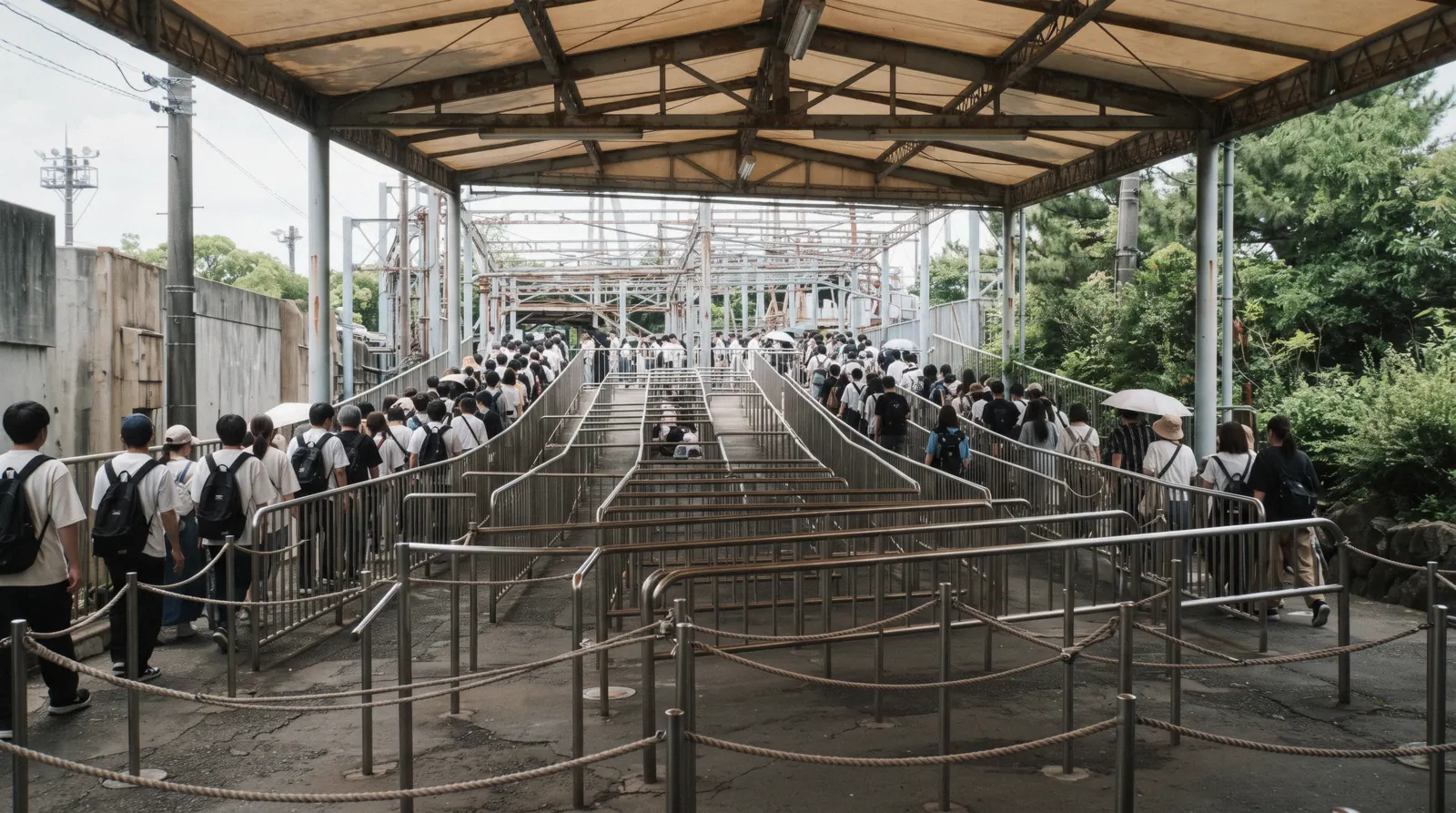
Quick answer What the pass does not include, the two official price lists, and the one thing money cannot buy
Buy an Express Pass if your visit is a fixed date in a busy season, you are here once, and the day is worth more to you than the money. Skip it if your date is quiet, you can be at the gate before opening, or you would rather ride six things calmly than eleven things in a hurry. Nobody can tell you how many minutes it saves, because the park publishes no queue times — treat any blog that quotes you a figure as guessing.
Key takeaways
- It is not a ticket. Entry is a separate Studio Pass from $52.70 (¥8,400), so a $136.70 (¥21,800) Express set means about $189.40 (¥30,200) a head before you have eaten — the full entry line-up sits on the tickets page
- The park runs two official price lists that do not match: named sets at $74.00 (¥11,800) to $136.70 (¥21,800), numbered tiers from $42.60 (¥6,800) to $173.10 (¥27,600)
- Per attraction the sets work out at roughly $18.50 (¥2,950) to $19.52 (¥3,114) each — the arithmetic in full, and how it compares with a whole day's ordinary spending on the costs page
- The Nintendo area cannot be bought into at all except inside certain Express sets: everyone else draws a timed or lottery area ticket in the app, inside the park
- The Express-only card on this site is rated 3.9 from 311 reviews, the lowest rating we carry, and the reviews explain why
First, the Thing That Ruins Days: It Is Not a Ticket
Universal Studios Japan states it at the top of its own Express Pass page: entry to the park requires a Studio Pass or an annual pass, bought separately. An Express Pass buys shorter queues on named attractions and nothing else. People do turn up holding only an Express Pass, and they do not get in.
So the real price of the decision is always two numbers added together. A 1-Day Studio Pass starts at ¥8,400 for an adult, ¥5,500 for a child aged 4 to 11 and ¥7,600 for a visitor of 65 or over — all "from" figures, because the park prices entry by the date of the visit. Put the cheapest widely available Express set on top of that and you are at about $126.70 (¥20,200) a person; put the ¥21,800 set on top and you are at about $189.40 (¥30,200).
For a family of four with the ¥14,800 sets, entry included, that is about ¥92,800 — roughly $582 — for one day, before food, before travel, before anything anyone brings home. That is not an argument against buying it. It is an argument for knowing what you are buying before the checkout page tells you.
What you get in exchange is described by the park in exactly one way: a shorter wait at the named attractions on your pass. Not a guaranteed wait. Not a maximum wait. Shorter.
Both Official Price Lists, Because the Park Publishes Two
The same product appears at two sets of prices on two of Universal Studios Japan's own pages. Both were read on in Q3 2026, both carry the park's caveat that the sale price moves with stock, and the last column names the page each figure came from.
| Express Pass | From | What it covers | Which official list |
|---|---|---|---|
| Express Pass 4 | $42.60 (¥6,800) | Four named attractions | Ticket line-up page |
| Express Pass 5 | $76.50 (¥12,200) | Five named attractions | Ticket line-up page |
| Express Pass 7 | $88.40 (¥14,100) | Seven named attractions | Ticket line-up page |
| Express Pass 8 | $97.20 (¥15,500) | Eight named attractions | Ticket line-up page |
| Express Pass Premium | $173.10 (¥27,600) | Everything the Express system covers | Ticket line-up page |
| Express Pass 4, Halloween sets | $74.00 (¥11,800) | Four horror-season attractions, adult only | Express Pass page, seasonal |
| Express Pass 4 ~Trolley & Jurassic Park~ | $92.80 (¥14,800) | Four, Donkey Kong and Jurassic Park among them | Express Pass page |
| Express Pass 5 ~Race & Trolley Special~ | $105.30 (¥16,800) | Five, including Mario Kart and the Flying Dinosaur | Express Pass page |
| Express Pass 7 ~Trolley & Selection~ | $136.70 (¥21,800) | Seven, plus a guaranteed Nintendo-area entry | Express Pass page |
The tiers are the floor and the named sets are what is actually merchandised on a given date; in practice the ¥11,800 to ¥21,800 band is what a visitor books, and ¥6,800 is a number you will rarely see attached to a date you want. Neither list is wrong — they are two views of a dated-pricing system, which is why this page prints both instead of picking the flattering one.
The Arithmetic You Can Actually Do
Divide the price by the attractions and the passes are startlingly consistent. The $74.00 (¥11,800) four-attraction set is about $18.50 (¥2,950) per queue skipped. The ¥21,800 seven-attraction set is about ¥3,114 each, and it includes the area guarantee, which is why it costs more per ride than the cheaper sets. The ¥6,800 tier, when a date offers it, is about ¥1,700 per attraction — half the price of everything else, and the reason it is so rarely available.
Now the half nobody can complete. To convert those figures into value you need to know how long you would otherwise have queued, and Universal Studios Japan publishes no queue times: not a historical average, not a live feed on its public pages, not a busy-date forecast expressed in minutes. There is no official number anywhere to divide by. What circulates instead are visitors' own stopwatch counts from single days, which are real experiences and terrible data — one person's Tuesday in February tells you nothing about your Saturday in October.
So the honest form of the calculation is the one you run on yourself. A one-day park visit is roughly eleven hours on a typical published schedule. If an Express set removes, say, three hours of standing from that day — a figure we are choosing as an illustration and cannot source — the ¥11,800 set is buying an hour of your holiday for about ¥3,900, or roughly $25. If it removes an hour, you paid about ¥11,800 for it. Both outcomes happen, and which one you get is decided by the date, not by the pass.
That is why the useful question is never "is the Express Pass worth it" in the abstract. It is: on my specific date, how much of my day am I willing to buy back, at a price I will only be able to judge afterwards?
The Lever That Costs Nothing: the Date
Before spending anything on an Express Pass, spend ten minutes on the date, because the park's own systems make the date the strongest variable in the whole day.
Entry is priced by date — every published entry figure ends in a tilde for that reason — and the operating day is set by date too, published only as a calendar. Park hours vary substantially between dates, and the page warns that they change without notice and that the park may open earlier than the published time. A date with a fourteen-hour operating day and a date with a nine-hour one are not the same product, and the longer day is not automatically the dearer one.
Express Passes themselves go on sale about two months before the visit date and are capped in number. If your date is fixed, that means checking the store the week the sale opens rather than the week before you fly — the sets that vanish first are the mid-priced ones, which is how people end up choosing between ¥27,600 and nothing.
Two cheaper structural options are worth weighing against a pass. A Twilight Pass from ¥5,900 gets you in from 15:00, which on a 22:00 date is still seven hours. A 1.5-Day Studio Pass from ¥13,600 buys an evening plus a full day for roughly ¥5,200 more than a single day — often better value than adding a queue-cut to one day, if your trip has the time. The tickets page compares all five entry passes side by side.
The One Thing Money Mostly Cannot Buy
Entry to the Super Nintendo World area does not work like a queue at all. It runs on an electronic area ticket — either a timed entry ticket or a lottery ticket — issued in the park's official app after you are inside, with every Studio Pass in your group registered first. It cannot be bought in advance at any price on its own, and the rules bite in a specific order:
- Register and draw as a group. If lottery tickets are issued separately, only the people named on a winning ticket get in
- One draw per person per day, and one type only — take a timed entry ticket and you can no longer take a lottery ticket
- A lottery ticket must be drawn at least an hour before the time you want, issuing stops three hours before the park closes, and the park states that winning is not in order of issue
- A lottery ticket guarantees nothing. Only winners enter, and only at the stated time
The exceptions are the point of this section. The only way to buy certainty of area entry is an Express set that carries the guarantee — on the list we read, the ¥21,800 seven-attraction set — or the entry-and-Kansai-Enjoy-Pass bundle, whose area slot is assigned at random between 12:00 and 15:00 with no way to request a time.
If the Nintendo side is the reason your family is going at all, this changes the arithmetic completely: you are no longer buying queue minutes, you are buying the removal of a lottery. That is a different purchase, and for some trips it is the only one on this page that is genuinely defensible. The full rule set, including what happens if the gate does not read your ticket properly on the way in, is on the park page.
Why the Express-Only Listing Is the Lowest-Rated Thing on This Site
Of all the tours and tickets this site carries, the Express-Pass-only card is rated the worst: 3.9 from 311 reviews, against 4.5 from 1,497 for the plain entry ticket beside it. We print that rather than quietly leaving the card out, because the gap is informative.
Most of the disappointment is not about the product working badly. It is about the product being misunderstood — people book a queue-cut believing it includes entry, or buy a set that does not cover the specific ride they came for. Both mistakes are made at checkout, not in the park, and both are avoidable by reading which attractions a set names before paying.
The practical lesson is small and boring: check the covered attraction list against your own must-ride list first, and check whether entry is included second. Every Express set is sold on the assumption that you have already done both.
The Honest Decision Rule
If your date is a weekend, a Japanese holiday or the Halloween season
Buy a set, and buy it the week the sale opens two months out. This is the case where the pass most reliably earns its price.
If Super Nintendo World is the reason for the visit
Either buy the set carrying the area guarantee, or accept that you are entering a lottery — the rules are above and there is no third option.
If your date is a quiet weekday outside the holidays
Skip it. Be at the gate before the published opening, ride the two attractions you care about most first, and spend the money on a second day in the city instead.
If you are choosing between a pass and a longer visit
Take the longer visit. A 1.5-Day Studio Pass from ¥13,600 buys more of the park than a queue-cut on one day does — the entry passes compared.
If you are a family of four and the total has become frightening
Price the whole day before deciding: entry plus the mid-priced sets lands near ¥92,800, which buys several days of everything else Osaka charges for. The costs page shows what that money does elsewhere, and the family guide has the cheaper alternatives.
If anyone promises you a specific number of minutes saved
Ignore them. The park publishes no queue times, so that number came from somebody's single visit, not from a source.
The Three Cards, and What Each One Actually Is
Entry, the Express Pass on its own, and the bundle that carries a randomly timed area slot. Each card opens the operator's own page and live calendar; the dollar figures are the platform's listings, and the park's own store may beat or lose to them depending on your date.
 from $61.80
Official ticket
from $61.80
Official ticket
Osaka: Universal Studios Japan Entry Ticket
The park's own 1-day Studio Pass, delivered as a QR code so you walk past the ticket booth. USJ prices by date from ¥8,400, and the platform's A–F categories mirror those tiers — check your date before assuming it beats the counter.
Check Availability from $113.66
Osaka: Universal Studios Japan Express Pass
Queue-skipping only: the park ticket is bought separately, so budget both. USJ's own Express Passes run ¥11,800–¥21,800 by date. At 3.9 from 311 reviews this is the lowest-rated listing on the site, mostly over which rides a given pass covers.
Check Availability from $211.69
Universal Studios Japan Ticket & Kansai Enjoy Pass
A USJ day ticket bundled with a Super Nintendo World entry slot and a Kansai Enjoy Pass good for three attractions across Osaka, Kyoto and Kobe. The area slot is assigned at random between 12:00 and 15:00 and cannot be requested.
Check AvailabilityPrices, ratings and details are the platform's own. Dollar figures are the listed prices. The platform bills in your account's currency.
USJ Express Pass: the Questions People Ask at Checkout
Does the Express Pass include entry to the park?
No, and this is the single most expensive misunderstanding at Universal Studios Japan. The park states on its own Express page that a Studio Pass or annual pass is still required. Budget the two together: entry from ¥8,400 plus the set you choose, which on the ¥21,800 set means about $189.40 (¥30,200) a person. The entry passes are compared here.
How many minutes does an Express Pass actually save?
Nobody can tell you, because the park publishes no queue times — no averages, no forecasts, no public live figures. Any specific claim you read comes from one visitor's one day. What can be priced is the pass itself: roughly ¥2,950 to ¥3,114 per attraction on the named sets, and about ¥1,700 on the ¥6,800 tier when a date offers it. The arithmetic is set out above.
Why do I see two different sets of Express Pass prices?
Because the park publishes two lists. Its ticket line-up page prices numbered tiers at ¥6,800, ¥12,200, ¥14,100, ¥15,500 and ¥27,600; its Express Pass page merchandises named sets from ¥11,800 to ¥21,800. Both carry the same caveat that the sale price moves with stock. Both lists are printed above with the page each came from.
Which Express Pass guarantees entry to Super Nintendo World?
Only the sets that state the guarantee — on the list that was the seven-attraction set at ¥21,800. Everyone else draws a timed or lottery area ticket in the app after entering the park, once per person per day, with no guarantee of winning. The one non-Express route to a slot is the entry-and-Kansai-Enjoy-Pass bundle, whose time is assigned at random between 12:00 and 15:00.
When do Express Passes go on sale, and do they sell out?
They go on sale about two months before the visit date and are capped in number, so mid-priced sets on popular dates do disappear. If your date is fixed, check the park's own store as soon as the window opens rather than shortly before the trip — late shoppers are the ones left choosing between the most expensive set and nothing.
Is it cheaper to buy the Express Pass from a reseller?
Sometimes, and only your date can tell you. Because entry and Express are both priced by date, a fixed platform price beats the park's store on a peak date and loses to it on a quiet one. The Express-only listing on this site is also the lowest-rated card we carry, at 3.9 from 311 reviews — we explain why above. Open the park's store, read the figure for your date, then compare.
People Who Tested It, on Camera
Three videos from visitors who put the pass to work rather than described it — each id checked against YouTube's own record. None is a source for queue times; all three show what the day feels like either way. They load only when you press play.
Is Express Pass Worth It at Universal Studios Japan in 2026? (We Timed Every Ride)
One party's timed comparison across a single day — an experience, not a statistic.
Video: Chris Explorer🎢 Universal Studios Japan 🇯🇵 | Is the Express Pass Worth It? Full Park Review & Top Tips!
The same question asked across a whole park day, with the covered rides shown on screen.
Video: Quad Pod TravelsUniversal Studios Japan First Timer Guide 🎢 | Express Pass, App & Must-Know Hacks EXPLAINED (2026)
The first-timer version: how the pass, the app and the ride reservations fit together.
Video: PhatLife ProjectVideos load from YouTube only when you press play.