 Osaka City Guide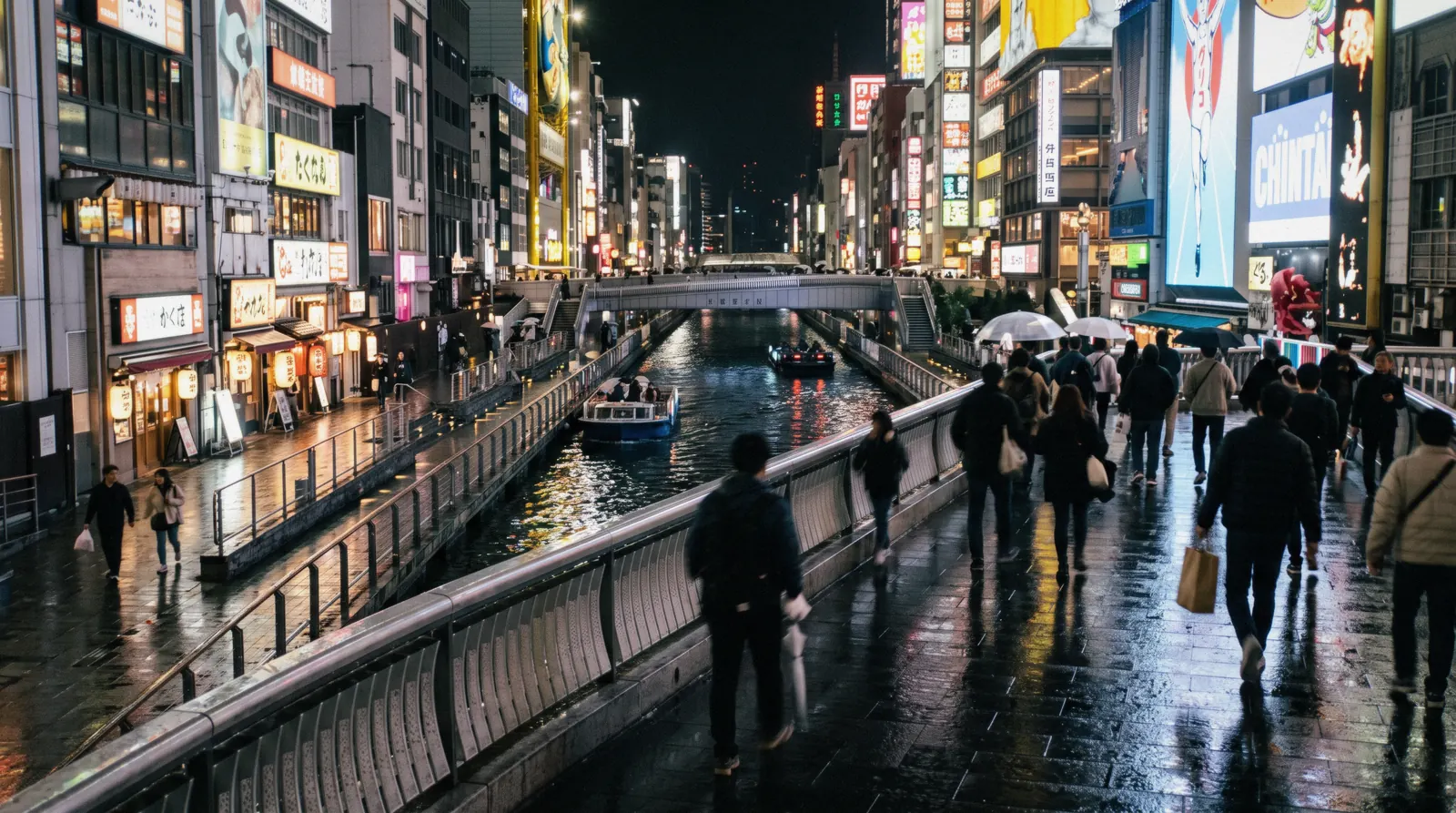
Dotonbori
Dotonbori is a canal, the street beside it and the wall of illuminated signs above both, in the Minami half of central Osaka. The canal was dug from 1612, the entertainment district was zoned into place in 1621, and the running-man sign that everybody photographs has stood at the same spot since 1935. What no city authority publishes is anything about that sign — the tourism bureau names it in a list and stops. Glico does publish it, on its own corporate site, and this page prints those figures with the source attached. For the rest of the city — the castle, the aquarium, the passes — see things to do in Osaka. Dollar figures here are conversions at 1,000 yen to about $6.27 (European Central Bank reference rate); tour prices are GetYourGuide's own listings in dollars.
Quick answer Free to walk, the sign's real figures, and which boat is which
Dotonbori is free. It is a canal excavated from 1612, a street of restaurants either side of it, and a bank of illuminated signs — of which the Glico running man is the one people come for. Nothing here is ticketed except the boats. The tourism bureau publishes no hours for the area beyond "varies by store", and it publishes nothing at all about the Glico sign; Glico's own site does, and those figures are below.
Key takeaways
- There are two different river boats and they are constantly confused. The official Tombori River Cruise leaves the Tazaemonbashi pier at 2,000 yen (about $12.54) and is free on the Osaka Amazing Pass; the 20-minute cruise listed at $12.49 is a different operator boarding at Minatomachi Pier, and no pass covers it
- The sign is 20.00 m by 10.38 m, it is the sixth generation, it went up in October 2014 and it lights from after sunset to 24:00 — Glico's own published figures, not a blog's, and every other number you will read is somebody's guess
- Street smoking has been a 1,000-yen fine (about $6.27) across the whole city since 27 January 2025, heated tobacco included — and Dotonbori is exactly where visitors get caught. The full city rule
- For the food itself the useful page is what to eat in Osaka; if you want one dish judged properly, the six-shop takoyaki comparison does exactly that and nothing else
Key facts
Opening hours
| The street, the bridges and the Tombori River Walk | Open, no closing time published |
|---|---|
| Shops and restaurants — the tourism bureau publishes only "Varies by store" | Not stated–Not stated |
| Glico sign lighting, from Glico's own page | After sunset–24:00 |
Closed None published for the street itself; individual shops set their own closing days and the bureau does not collect them
Admission
- Adult
- Free to walk
- Reduced
- Official Tombori River Cruise 2,000 yen adult, 1,000 yen student, 500 yen primary-school child (about $12.54 / $6.27 / $3.14)
- Free
- The canal walk, both bridges and every sign; the official cruise is also free to Osaka Amazing Pass holders
Planning it
- Time needed
- Not stated by any authority; our routing: 45 minutes for the canal, the bridge and the signs, about two hours if you stop to eat
- Book ahead
- Optional — walk-up usually fine
- Address
- Dotonbori, Chuo-ku, Osaka 542-0071
Walking Dotonbori costs nothing, so the only real decision is the water. Two boats run the same canal under names that look identical in search results, and one of them is on the Osaka Amazing Pass while the other is not.
Walking costs nothing, so the only question is the water. The official Tombori River Cruise takes ¥2,000 (about $12.54) and is free to Osaka Amazing Pass holders; the other boat is a different operator from a different pier at $12.49, and the last two rows are food, not a cruise.
| Option | Price | What it is | Cancel | Book |
|---|---|---|---|---|
| Tombori River Cruise (the official boat)The boat to take if you hold the Osaka Amazing Pass — it costs you nothing | 2,000 yen adult, 1,000 yen student, 500 yen child (about $12.54 / $6.27 / $3.14) | About 20 minutes from the Tazaemonbashi pier, departures on the hour and the half hour between 11:00 and 21:00; tickets issued on the day only. Free with the Osaka Amazing Pass | Not stated as refundable | Official site |
| Dotonbori river cruise from Minatomachi PierVisitors without the pass who want a bookable, cancellable seat past the Glico sign | Listed at $12.49 | A different operator and a different pier, also about 20 minutes, past the Glico sign; you may bring your own drinks and pets are allowed | Free up to 24 hours before | Check Availability |
| Six-shop takoyaki tasting, 2 hoursPeople who came for takoyaki and want five shops compared side by side | Listed at $49.94 | About ten pieces of takoyaki across five Dotonbori shops with a comparison booklet, capped at ten guests | Free up to 24 hours before | Check Availability |
| Dotonbori street-food tour with tastings, 2 hoursA guided run of the whole street rather than one dish | Listed at $53.37 | A guided run of the street rather than one dish, rated 4.6 from 138 reviews | Free up to 24 hours before | Check Availability |
Official fares were read from the operator's own site in Q3 2026 and platform prices are GetYourGuide's listings of the same date. The official cruise is the better deal if you already hold an Osaka Amazing Pass, because the boat is on the pass's list of 41 free entries and the ride then costs nothing. If you do not hold the pass, the two boats are within five cents of each other and the difference is where you board: Tazaemonbashi is in the middle of the neon, Minatomachi is a ten-minute walk west of it.
Dotonbori cruises and food walks, compared
Every card links to the operator's own page, where the calendar shows what is still open for your dates. Prices are the platform's listings in US dollars.
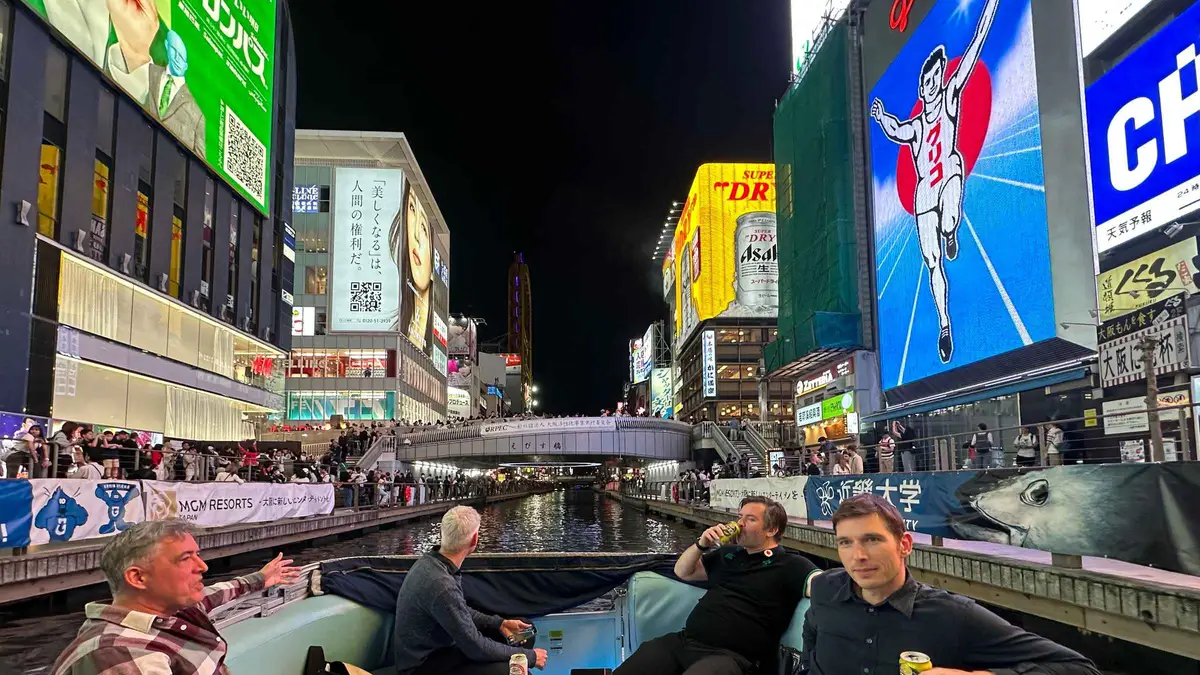 from $12.49
Osaka: Dotonbori River Cruise with Glico Sign & Neon Views
Twenty minutes on the water past the Glico sign, boarding at Minatomachi Pier rather than the Tombori River Walk, and you may bring your own drinks. The rival Tombori River Cruise is free with the Osaka Amazing Pass; this boat is not.
Check Availability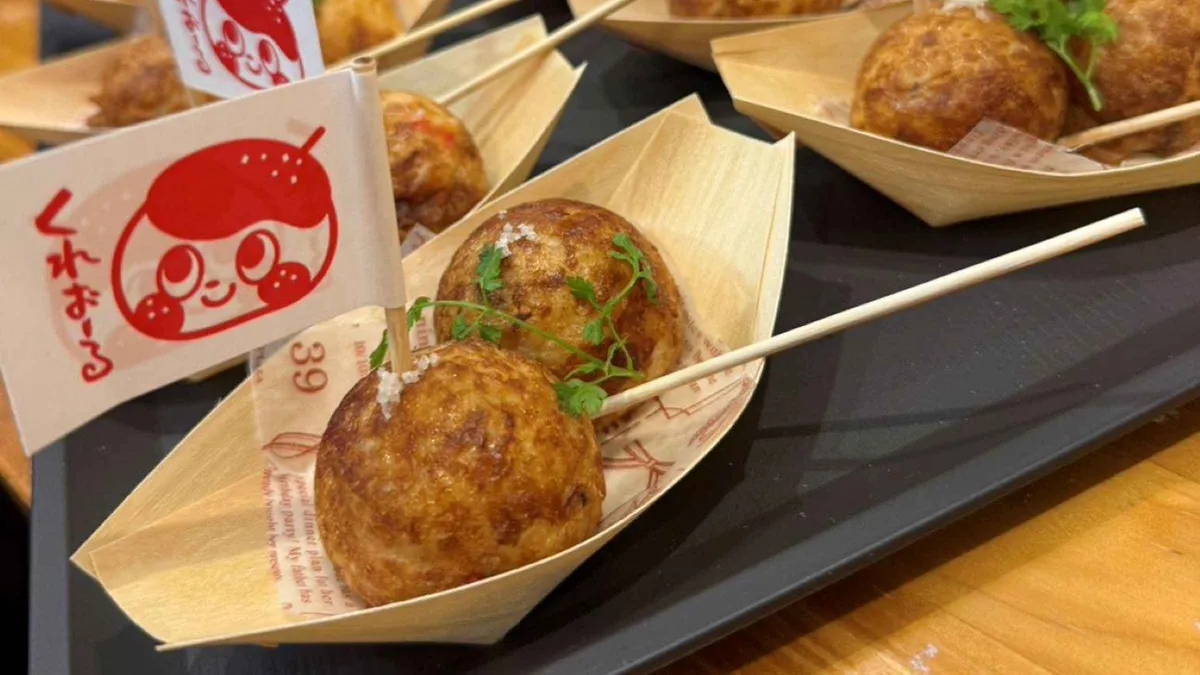 from $49.94
Osaka Dotonbori: 6-shop Takoyaki Tasting Tour
Two hours comparing takoyaki across five Dotonbori shops — about ten pieces in all — with a tasting booklet and a local guide, capped at ten people. Narrow by design: one dish judged batter by batter, not a general food tour.
Check Availability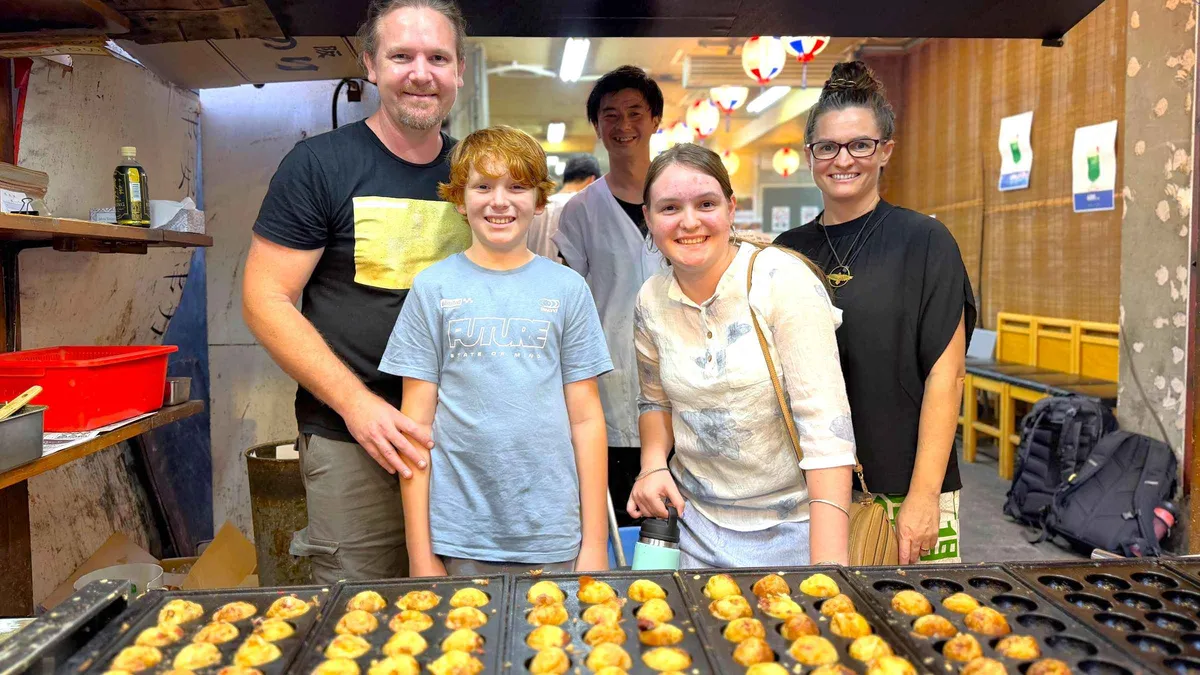 from $53.37
Osaka: Dotonbori Street Food Tour with Tastings
Two hours of street food along Dotonbori with a temple stop and the Glico sign, guide included. The listing never says how many tastings you get, which the 12- and 15-dish tours in this group do.
Check Availability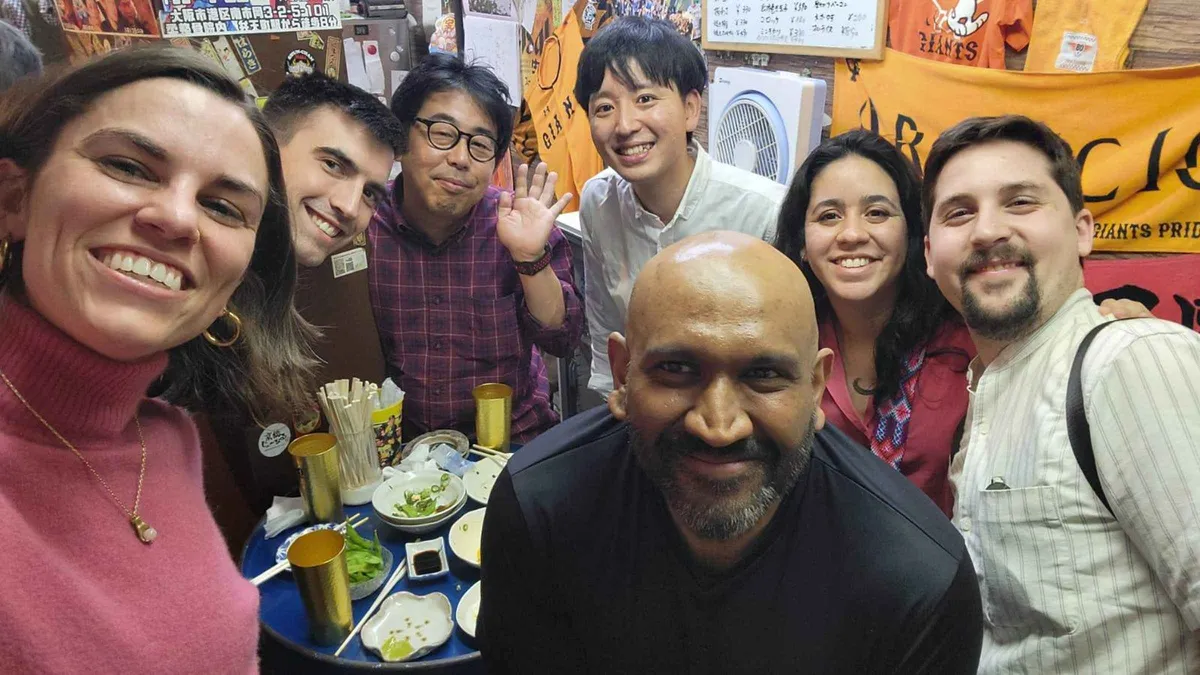 from $74.91
Osaka, Dotonbori: Backstreet Food Tour with Local Guide
Three hours off the main strip in a group of no more than eight: yakitori, ochazuke, oden and a fourth stop the guide picks. Drinks are not included, which is the difference from the cheaper 15-dish evening tours.
Check Availability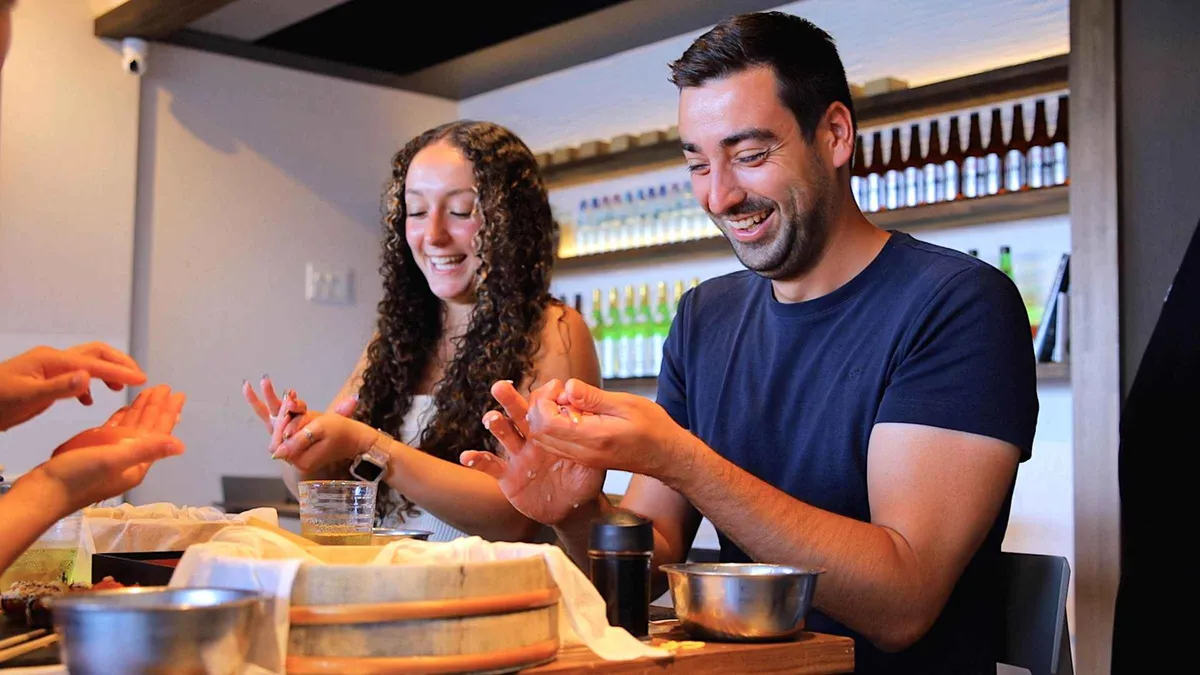 from $43.70
Osaka: Roll and Authentic Sushi Making Class in Dotonbori
A hundred minutes making rolled and hand-formed sushi in central Dotonbori, then eating it — ingredients, English instruction and the meal included. The most reviewed cooking class in this list and the cheapest of them.
Check AvailabilityPrices, ratings and details are the platform's own. Dollar figures are the listed prices. The platform bills in your account's currency.
Nobody Publishes Dotonbori — and That Explains the Guidebooks
Before any of the facts, the thing that shapes every other page you will read about this street: there is no Dotonbori authority.
Attractions have owners who publish hours, prices and rules. Dotonbori does not. It is a public street beside a public canal in Chuo ward, and the body that most nearly looks like its authority is the Ebisubashi-suji shopping street association, which trades on the domain dotonbori.or.jp. That association covers the arcade running north from the bridge, not the canal frontage, and its own site dates the modern association to 1913. Its HTTPS certificate has expired, which tells you roughly how much maintenance the domain gets.
The Osaka Convention and Tourism Bureau publishes a Dotonbori page, and that page is the closest thing to an official description of the area. It gives the origin of the name, lists the signs collectively, and answers the hours question with two words: "Varies by store". It does not mention Hozenji Yokocho, the alley one block south, at all.
So when a guide tells you the Glico sign is a particular number of metres tall, or that the neon goes off at a particular minute, or that the street holds a particular number of restaurants, ask where that came from. In almost every case the answer is another guide.
- No opening hours for the area — the bureau states "Varies by store" and nothing more
- No closed days, no footfall count, no restaurant count from any public body
- No published rule about eating while walking, here or in any other Osaka district
- One city-wide rule that does bite: the street-smoking fine, which we cover below
The Glico Sign: The Figures, and Who Actually Publishes Them
The tourism bureau publishes nothing about the sign. The advertiser does — Glico keeps a page for it on its own corporate site, and that is the source for every figure in this section.
What Glico publishes about its own sign
The running man has stood at the same spot on the south bank, just west of Ebisubashi, since 1935. What is up there now is the sixth version. Glico installed it in October 2014, unveiling it on 23 October after work that began on 17 August that year, and it was the first of the six to use LEDs rather than neon — which is why it now shows moving backdrops rather than a static picture. The fifth version, the last of the neon ones, had been in place since July 1998.
Glico's page gives the panel as 20.00 metres high by 10.38 metres wide and the display as roughly 140,000 LED chips. Lighting runs from after sunset until 24:00, with the company noting that conditions can shorten that. The sign was designated a landscape formation object by the city in 2003.
The practical value of knowing where the figures come from is this: when the sign is under repair, Glico announces it on the same corporate newsroom. During the 2021 repair the panel was covered with a printed banner of the sign's own design and the nightly lighting stopped for the duration, resuming the day after completion, thirty minutes after sunset. That has happened before and will happen again, and the announcement will be on glico.com rather than on any tourism page.
| What | Published figure | Who publishes it |
|---|---|---|
| First installed | 1935 | Glico, corporate site |
| Current generation | The sixth, installed October 2014, unveiled 23 October | Glico press release |
| Panel size | 20.00 m high by 10.38 m wide | Glico, corporate site |
| Display | About 140,000 LED chips, replacing neon | Glico, corporate site |
| Lighting hours | After sunset to 24:00, shortened if conditions require | Glico, corporate site |
| City status | Designated a landscape formation object in 2003 | Glico press release |
| Height above the pavement, best photo spot, crowd rules | Not stated anywhere | Nobody |
Where to stand, and how to check before you fly
The photograph everyone takes is from the middle of Ebisubashi, looking south-west. That is also the narrowest pinch point in the area, which is why a police officer is often standing on it after 20:00 asking people to keep moving. Take the shot from the Tombori River Walk on the north bank instead: you get the sign and its reflection in the canal, and you are not standing in a crossing used by tens of thousands of people an evening.
The Canal: 1612, a Fictional Founder and a Court Case
The name has a story, the story has a correction, and the correction is more interesting than the story.
The tourism bureau's version is short: Dotonbori is named for Doton Yasui, "who devoted his wealth to have this river excavated in 1612". That is the account on every plaque and in most guidebooks, and a stone monument to Yasui Doton was put up at the north end of Nipponbashi in 1915.
The longer account, set out with citations on Wikipedia, is that construction began in 1612 under Nariyasu Doton, an administrator of local canals, joined by Yasui Jihe, Yasui Kuhe and Hirano Tojiro. Nariyasu Doton died during the Siege of Osaka in the summer of 1615, on the losing side; Yasui Kuhe and Hirano Tojiro finished the cut, and it was complete by September 1615. Matsudaira Tadaaki, the new lord of Osaka Castle, named the canal and the avenue beside it anyway. The Yasui Doton of the plaques was established to be a fictional character during the 1965 Dotonbori Trial, a dispute over ownership of the land along the canal brought by descendants of Yasui Kuhe.
What made the street was the zoning that followed. In 1621 the Tokugawa shogunate designated Dotonbori the entertainment district of Osaka, and by 1662 the avenue held six kabuki theatres, five bunraku theatres and the Takeda mechanical puppet theatre. One theatre from that lineage is still on the street: the Shochikuza, near Ebisubashi. The restaurants came for the theatre audiences and never left.
The Named Signs, and What Is Published About Each
The tourism bureau lists the signs collectively and publishes no detail on any of them. What follows comes from the companies themselves and from Wikipedia's cited article.
| Sign | Where | What is published | Source |
|---|---|---|---|
| Glico running man | South bank, just west of Ebisubashi | 1935; sixth version from October 2014; 20.00 m by 10.38 m; about 140,000 LEDs; lit after sunset to 24:00 | Glico's own site |
| Kani Doraku moving crab | Dotonbori street, south of the canal near Ebisubashi | The restaurant opened in 1962; the current moving crab sign was installed in 1996 | Wikipedia, cited |
| Kuidaore Taro, the drumming clown | In front of the former Cui-daore building, now the Nakaza Cui-daore Building | Unveiled in 1950; the restaurant behind it closed on 8 July 2008 and the puppet was moved slightly east | Wikipedia, cited |
| Ebisu Tower ferris wheel | Built into the front of the Don Quijote store, north bank west of Tazaemonbashi | 77 metres; shut from June 2008 after cracks were found in a rail and reopened on 19 January 2018 | Wikipedia, cited |
| The rotating Daruma figure | Roof of the Kushikatsu Daruma building | The bureau calls it a newly erected landmark with a rotating gimmick and gives no dimensions or date | Tourism bureau |
Where a figure has no source we say so rather than repeat a number in circulation. Kuidaore, the word attached to all of it, is not marketing invented for tourists: it is half of a proverb — ruin yourself on clothes in Kyoto, ruin yourself on food in Osaka — and it is why the street sells food rather than souvenirs.
Day or Night, and How Long It Actually Takes
The most-asked question about Dotonbori in Google's own People Also Ask box is whether to come by day or after dark. They are two different places.
By day the canal is a pleasant fifteen-minute walk and the signs are just large plastic objects; the crab moves, the ferris wheel turns, and you can photograph the street without other people's heads in it. By night it is what the photographs promised — every sign lit, the canal carrying the reflections, and a crowd on Ebisubashi thick enough that crossing the bridge takes a few minutes. If you came to Osaka to see Dotonbori, come after dark. If you are photographing it, come at both: the useful hour is the twenty minutes after sunset, when the signs are on and the sky still has colour in it.
Allow forty-five minutes to walk the canal from Dotonboribashi to Nipponbashi, cross at Ebisubashi and come back the other bank. Add the boat and you are at an hour and a quarter. Add dinner and it is an evening. Nobody publishes a visit duration, and the number above is our own routing rather than an official figure.
- Before 10:00 — the canal walk is nearly empty, most shutters are down, good for photographs of the street itself
- Late afternoon — the restaurants open, the queues start, the light is flat
- Twenty minutes after sunset — signs lit, sky still blue; the one hour that repays planning
- 19:00 to 22:00 — the bridge at its fullest; expect to be asked to keep moving
- After 23:00 — thinning, though the Glico sign goes dark at 24:00
On safety, which is the other question people ask: Dotonbori at night is a busy, well-lit entertainment street with a heavy staffed presence, and the risks are the ordinary ones of any nightlife district — touts outside upstairs bars, drink prices that were never on a menu, and the crush on the bridge. The rule that catches visitors is not crime but tobacco. Osaka City extended its street-smoking ban to the entire city on 27 January 2025, covering roads, squares, parks and other public places it manages, and heated tobacco is included.
The penalty is a 1,000-yen non-criminal fine (about $6.27). There is no smoking area on the canal walk. The safety and scams page covers the rest.
Eating on the Street, and the Shops We Will Not Name
Dotonbori is a food street, and this site has a rule about naming food businesses that is worth stating out loud here.
We name a restaurant only when a citable list stands behind it — the MICHELIN Guide, Slow Food, or the venue's own published information. For Osaka the list that covers this kind of eating is the MICHELIN Guide Kyoto Osaka 2026 Bib Gourmand selection, 67 addresses in and around the city. It contains kushiage houses, tonkatsu counters, udon, soba, ramen and sushi. It contains no takoyaki venue and no okonomiyaki venue at all.
So the two dishes Dotonbori is famous for cannot be attached here to a named shop, and the queues you will see are not evidence of anything except other people having read the same blog. What we can tell you is what the tourism bureau publishes about the dish itself: takoyaki shops only began appearing in Osaka in the 1950s, the dish descended from choboyaki and radioyaki — sweet-shop snacks of the Taisho and early Showa years — by swapping dashi for water and adding octopus from Osaka Bay, and the sauce, mayonnaise, aonori and katsuobushi finish came later, borrowed from okonomiyaki after the war. The bureau flatly calls the claim that every Osaka household owns a takoyaki pan an urban legend.
If you want the comparison done properly rather than by queue length, the six-shop takoyaki tasting is two hours on that one dish across five shops with a booklet to score them in. It is the narrowest tour on this page and the most useful if takoyaki is what you came for. The Osaka food page has the wider picture, including the named Bib Gourmand venues. Takoyaki aside, the wider run of Osaka guided tours on the Osaka tours page is where the rest of the city's eating streets and markets get covered.
Getting to Dotonbori, and Where the Boats Board
The area sits directly on top of two major stations, so the fare from anywhere in the city is a single Metro ride.
Namba station puts you at the west end: Osaka Metro Midosuji, Sennichimae and Yotsubashi lines, plus Nankai and Kintetsu. Nippombashi station on the Sennichimae and Sakaisuji lines puts you at the east end, next to Kuromon Ichiba. Metro single fares run in five zone bands from 190 yen to 390 yen (about $1.19 to $2.45), and if you are making four or more rides in a day the Enjoy Eco Card at 820 yen on weekdays or 620 yen at weekends and on public holidays (about $5.14 or $3.89) is already cheaper. Getting around Osaka sets out the passes properly.
The two piers are not the same place and this is where people lose their booking. The official Tombori River Cruise boards at the Tazaemonbashi pier, in the middle of the canal walk, roughly two hundred metres east of the Glico sign. The GetYourGuide boat boards at Minatomachi Pier, on the west side of the Namba interchange, which is a ten-minute walk from Ebisubashi. Both rides are about twenty minutes and both pass the sign.
- Free with the Osaka Amazing Pass: the official Tombori River Cruise, one entry, from the pass's own list of 41 free attractions
- The pass is 3,800 yen for one day and 5,400 yen for two (about $23.83 and $33.86), and a pass day runs 03:00 to 02:59 rather than 24 hours from activation
- Not covered by the pass: the GetYourGuide cruise, any food tour, and travel to or from Kansai Airport
- The official boat issues tickets on the day only, so a wet evening in high season can sell out the useful departures
Dotonbori Map: The Sign, Both Piers and the Two Stations
The canal runs east to west between Dotonboribashi and Nipponbashi. The two boat piers are marked separately, because they are ten minutes apart and are routinely mistaken for each other.
Pin positions are from OpenStreetMap and Wikidata; the Glico sign pin is our own placement from its published position on the south bank west of Ebisubashi.
Next Stop From Dotonbori
Everything here is within ten minutes on foot. Walk times are our estimates from the mapped distances.
Hozenji Yokocho
Eighty metres of flagstone alley and a Fudo statue buried under moss, one block from the neon and about forty decibels quieter. The tourism bureau's Dotonbori page does not mention it at all.
3 minutes southKuromon Market
The 580-metre food arcade, best in the morning while Dotonbori is still shuttered — which makes the two of them a natural pair across one day.
9 minutes east, or one stop to NippombashiShinsaibashi
The roofed shopping arcade that starts at the far end of the bridge: about 580 metres of it, and the obvious wet-weather move from the canal.
4 minutes north across EbisubashiDotonbori Questions
Why is Dotonbori so famous?
Because of a zoning decision in 1621. The Tokugawa shogunate designated the street beside the new canal as Osaka's entertainment district, and by 1662 it held six kabuki theatres, five bunraku theatres and a mechanical puppet theatre. The restaurants followed the audiences, the illuminated signs followed the restaurants, and the Glico running man has been on the south bank since 1935. The theatre lineage survives in the Shochikuza near Ebisubashi.
How tall is the Glico sign and when is it lit?
Glico's own site gives the panel as 20.00 metres high by 10.38 metres wide, built from about 140,000 LED chips, lit from after sunset until 24:00 with the note that conditions can shorten that. The sign in place now is the sixth generation, installed in October 2014. No tourism authority publishes any of this, so a figure without Glico attached to it is a guess.
Is Dotonbori better during the day or at night?
At night, if you are only going once — that is when every sign is lit and the canal carries the reflections. The best twenty minutes are just after sunset, when the signs are on and the sky is still blue. By day the same walk is quieter and better for photographing the street itself, and the river cruise runs from 11:00 either way.
Is Dotonbori safe at night?
It is a busy, brightly lit entertainment street and the ordinary nightlife cautions apply: touts outside upstairs bars, drink prices that were never on a menu, and a genuine crush on Ebisubashi between about 19:00 and 22:00. The rule that actually catches visitors is the city-wide street-smoking ban, in force since 27 January 2025 with a 1,000-yen fine and no smoking area on the canal walk. More on safety and scams in Osaka.
Which Dotonbori river cruise should you book?
If you hold an Osaka Amazing Pass, the official Tombori River Cruise from the Tazaemonbashi pier — it is one of the pass's 41 free entries, so the ride costs nothing; otherwise it is 2,000 yen (about $12.54) and tickets are issued on the day only. Without the pass, the $12.49 cruise from Minatomachi Pier is effectively the same twenty minutes, books ahead, cancels free up to 24 hours before, and lets you bring your own drinks.
How long do you need in Dotonbori?
Forty-five minutes to walk the canal from end to end, cross at Ebisubashi and come back the other bank; an hour and a quarter with the boat; a whole evening if you eat. No authority publishes a visit duration for the area — that routing is ours.
Is Dotonbori worth visiting?
Yes, and it takes less time than its reputation suggests. It is free, it is directly on top of two stations, and forty-five minutes covers it. What it is not is a food destination in itself: the MICHELIN Bib Gourmand selection for Osaka contains no takoyaki or okonomiyaki venue at all, so the queues here are ranked by fame rather than by any list. Where to eat in Osaka is the page for that.
Are Dotonbori's shops and restaurants open at set hours?
No, and nobody collects them. The tourism bureau's own entry answers the hours question with "Varies by store", and there is no district association publishing anything wider — the domain that looks official, dotonbori.or.jp, belongs to the Ebisubashi-suji shopping street association north of the bridge. In practice the restaurants are an evening trade and much of the street is shuttered before 10:00.
Where Dotonbori Fits in an Osaka Day
It is an evening, and it costs nothing, which makes it the easiest block to place in a plan.
The natural shape of a Minami day runs east to west and morning to night: Kuromon Market while the stalls are trading, the arcades at Shinsaibashi through the flat middle of the afternoon, Hozenji Yokocho at dusk when the lanterns come on, and Dotonbori after dark for the signs and dinner. That sequence is walkable end to end and needs no ticket at any point except the boat.
If you are fitting Osaka into a short trip, the one-day itinerary puts the castle in the morning and this street in the evening, which is the right way round — the castle keep closes at 18:00 and Dotonbori does not really start until then. Things to do in Osaka has the rest of the city ranked by what it costs and how long it takes.
Dotonbori on Film: The Canal After Dark
Three walk-throughs we checked ourselves — each video id verified against YouTube's own record and its thumbnail, so none of these is a dead player. They show the crowd density on Ebisubashi better than any description does.
OSAKA, JAPAN 4K WALKING TOUR - Dotonbori District Sunset & Night Life City Walk
Sunset into full dark along the canal — the hour this page recommends, filmed end to end.
Video: World Wanderings: 4K Walking ToursJAPAN OSAKA NIGHT WALK - DOTONBORI FOOD STREET 4K HDR
The food street itself at night, past the stalls and the queues described above.
Video: World Wanderings: 4K Walking ToursOsaka Night Walk - BEST Dotonbori Nightlife & Street Food
A recent pass over the same route, useful for seeing which signs are currently lit.
Video: THE JAPAN WALKVideos load from YouTube only when you press play.
Prices, hours and terms are set by the venue or operator and confirmed at checkout.
We may earn a commission if you book through one of our links, at no extra cost to you. Full affiliate disclosure