 Osaka City Guide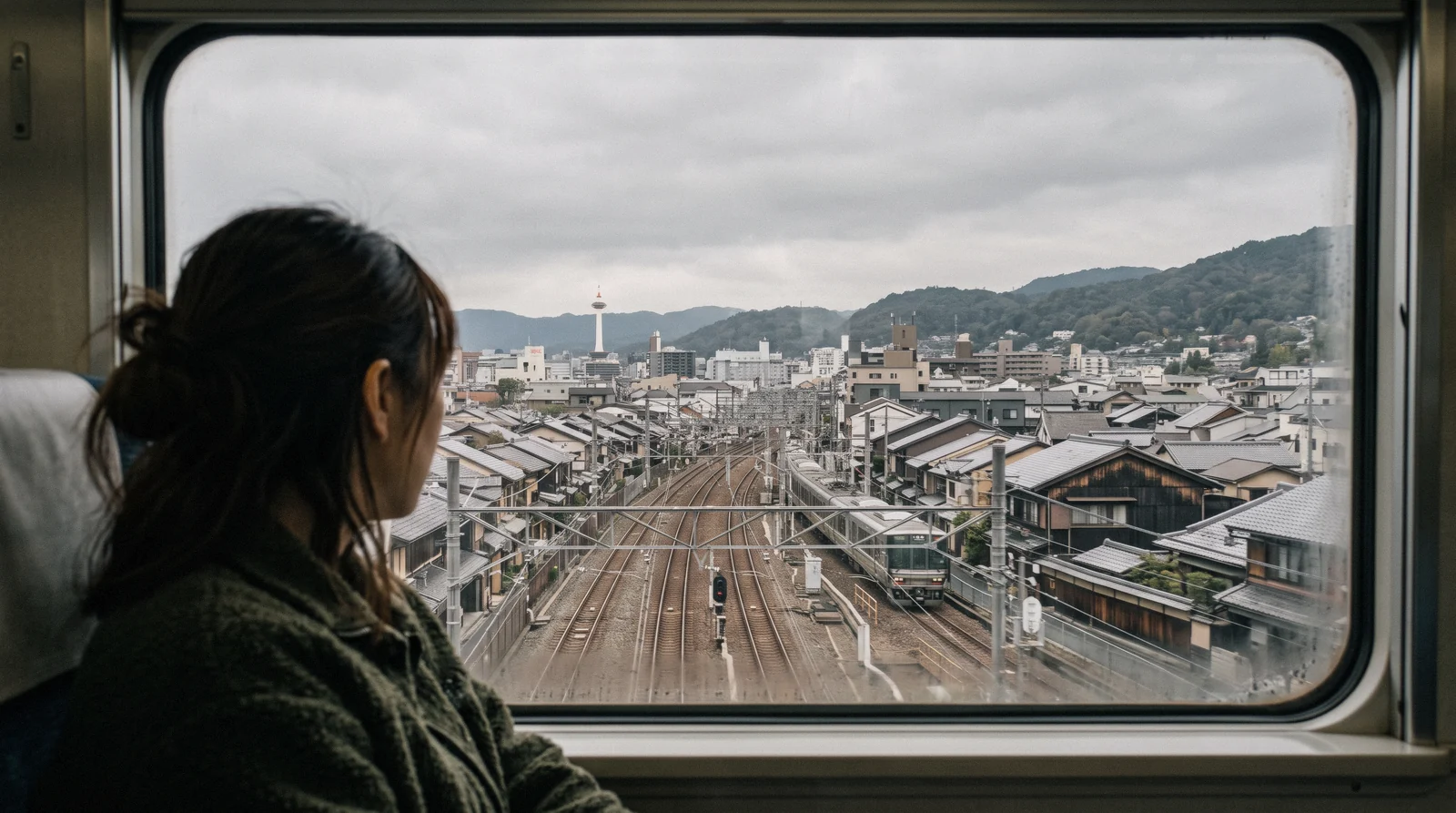
Kyoto Day Trip From Osaka: 29 Minutes Out, and the Pass That No Longer Helps
Kyoto is 42.8 kilometres from Osaka Station and the JR Special Rapid covers them in 29 minutes for $3.64 (¥580) — closer, in time and in money, than a good many Osaka suburbs. That is why a Kyoto day trip from Osaka is the most-taken excursion in Kansai, and why it disappoints so many people: the journey is trivial, so nobody plans the day, and the day is where it goes wrong. Kyoto's sights are scattered across a basin fifteen kilometres wide, its buses charge a flat fare and crawl, and the regional pass most visitors buy for exactly this trip — the Kansai Railway Pass Lite, which replaced the Kansai Thru Pass on 1 April 2026 — covers neither JR, nor the Kyoto municipal subway, nor, since that same date, any bus at all. This page does the arithmetic on all three railways, prints what a single day can honestly hold, and names the ¥1,100 ticket that actually moves you around once you arrive. Yen figures are the operators' own; dollar glosses are approximations at ¥1,000 ≈ $6.27 (European Central Bank reference rate via frankfurter.dev).
Quick answer The fastest train, the cheapest train, and the pass that stopped covering buses
Yes, and easily: the JR Special Rapid runs Osaka Station to Kyoto Station in 29 minutes for $3.64 (¥580) with no change and no reservation, and Hankyu does it for $2.57 (¥410) in 43 minutes. A day trip works. What does not work is treating Kyoto as one place — the city's sights sit in three separate clusters, and a single day holds two of them. Fares read from JR West's own My Dia engine, Keihan's Yodoyabashi fare table and Hankyu's fare-zone table.
Key takeaways
- Take JR if you are going to Fushimi Inari or Arashiyama, Hankyu if you are heading for the Gion and Kawaramachi end. The fare gap is $1.07 (¥170); the walking gap at the far end is twenty minutes — the full route comparison is below
- The Kansai Railway Pass Lite is the wrong ticket for this trip. It excludes JR, excludes the Kyoto municipal subway, and since 1 April 2026 excludes every bus — which is how most people get around Kyoto. Buy Kyoto's own Subway & Bus 1-Day Pass at $6.90 (¥1,100) instead
- Two clusters is the honest ceiling for one day: Fushimi Inari plus Higashiyama, or Arashiyama plus one other. Trying all three is the mistake every returning visitor describes
- Going with a guide instead of a timetable? The nine-hour coach loop picks up in Osaka and does the driving, and admissions are still yours to pay at each gate
Key facts
Opening hours
| Kiyomizu-dera, gates open to closed | 06:00–18:00 |
|---|---|
| Kiyomizu-dera in July and August | 06:00–18:30 |
| Fushimi Inari Taisha precinct | Not published by the shrine–— |
| Kyoto City buses, uniform-fare zone | First service–Roughly 22:00 on most routes |
| Last useful JR Special Rapid back to Osaka | —–After 23:00 on weekdays |
Closed Neither Kiyomizu-dera nor Fushimi Inari publishes a closed day, and the trains run every day of the year. What does close is Kyoto's museums and some temple sub-halls on Mondays — check the individual site before building a day around one
Admission
- Adult
- The travel is the cheap part: $2.57 to $3.64 each way (¥410 to ¥580). Kyoto's Subway & Bus 1-Day Pass is $6.90 (¥1,100) and Kiyomizu-dera does not publish its admission fee on the pages we could read
- Reduced
- Kyoto City bus child fare $0.75 (¥120); Subway & Bus 1-Day Pass child $3.45 (¥550)
- Free
- Fushimi Inari Taisha publishes no admission fee at all, and neither does the Arashiyama bamboo path — the two headline sights of a Kyoto day cost nothing to enter
Planning it
- Time needed
- A full day, 10 to 12 hours door to door. Out of Osaka by 08:00, two sight clusters, back for a late Osaka dinner
- Book ahead
- Optional — walk-up usually fine
- Address
- Kyoto Station, Shimogyo-ku, Kyoto — the arrival point of the JR Special Rapid from Osaka Station
Osaka to Kyoto: three railways, three different Kyotos
Adult one-way fares for weekday midday departures, read from JR West's My Dia engine, Keihan's Yodoyabashi fare table applicable from 1 October 2025 and Hankyu's fare-zone table, all in Q3 2026. The last column decides the day.
| Route | Fare | Time | Where it leaves you |
|---|---|---|---|
| JR Osaka → Kyoto, Special Rapid | $3.64 (¥580) | 29 min, no change | Kyoto Station, in the south — two stops from Fushimi Inari, direct bus and rail to Arashiyama |
| Hankyu Osaka-umeda → Kyoto-kawaramachi, Limited Express | $2.57 (¥410) | 43 min, no change | Kawaramachi, the middle of the city — Nishiki market and Gion on foot |
| Keihan Yodoyabashi → Gion-shijo, Limited Express | $3.07 (¥490) | 48 min | The Gion end of Shijo bridge — Higashiyama begins at the ticket gate |
| Keihan Yodoyabashi → Fushimi-inari (local or semi-express) | $3.07 (¥490) | About 50 min | Five minutes' walk from the Fushimi Inari torii, without going into Kyoto at all |
| Private car, Osaka hotel to Kyoto hotel | $76.52 on the platform listing | About 1 hour | Your accommodation door — the transfer is for luggage and small children, not for speed |
These three lines do not put you down in the same part of Kyoto. Read the last column twice. The cheapest ticket, Hankyu at ¥410, is also the one that lands you furthest from Fushimi Inari, the single most-visited sight in the city — from Kawaramachi you are looking at a bus or a change of railway to reach it. If Fushimi Inari and Arashiyama are the plan, JR at ¥580 is worth the extra $1.07 (¥170) and saves 14 minutes each way besides. If the day is Gion, Kawaramachi and the Higashiyama lanes, Hankyu or Keihan drop you inside it.
There is no ticket for Kyoto — only tickets for the railways that reach it and for the network that moves you once there, and the wrong choice is the most expensive mistake on this trip. Every row is from the operator's own page. Converted at ¥1,000 ≈ $6.27.
Kyoto's headline sights charge nothing to enter, so the only ticket question is transport: a pass for the city, a pass for the journey, or neither. The Subway & Bus 1-Day Pass at $6.90 (¥1,100) pays for itself in five bus rides.
| Ticket | Price | What it covers | Worth it when | Book |
|---|---|---|---|---|
| Kyoto Subway & Bus 1-Day PassAlmost every visitor moving around Kyoto for the day | $6.90 adult, $3.45 child (¥1,100 / ¥550) | Both subway lines, every Kyoto City bus, most Kyoto Bus and Keihan Bus routes, and the JR bus in the Kyoto Station–Togano zone; discounts at over 50 city attractions | Almost always. Five bus rides at ¥230 is ¥1,150 — the pass pays for itself before lunch | Official site |
| Keihan Kyoto-Osaka Sightseeing PassA day built on the Keihan line, with enough hopping to beat ¥980 in singles | $10.35 for one day, $11.60 for 24 hours (¥1,650 / ¥1,850) | The Keihan line between Osaka and Kyoto plus its Kyoto section, including the Fushimi Inari stop | A Keihan-shaped day only. Two ordinary Keihan singles are ¥980, so this needs real hopping to pay | Official site |
| Kansai Railway Pass Lite (the old Kansai Thru Pass)Multi-city Kansai trips only; it cannot carry you around Kyoto at all | $32.60 for 2 days, $40.80 for 3 days (¥5,200 / ¥6,500) | Metro and private railways across Kansai — but not JR, not the Kyoto municipal subway, and not any bus since 1 April 2026 | Rarely, for a Kyoto day. It is a multi-city pass, and it cannot carry you around Kyoto | Official site |
| JR Kansai Area Pass, 1 dayThe day you land at Kansai Airport, or one that also reaches Himeji | $17.56 adult, $8.78 child (¥2,800 / ¥1,400) | Unlimited JR in the Osaka–Kyoto–Kobe–Nara–Himeji area, plus a reserved HARUKA seat from the airport; ships with vouchers for the Kyoto subway, Keihan and Hankyu | The day you land at Kansai Airport and go straight on, or a day that also reaches Himeji | Official site |
| Guided coach loop from OsakaAnyone who wants the driving and the navigation handled on a fixed timetable | $50.72 on the platform listing | Nine to ten hours by air-conditioned coach with an English- and Chinese-speaking guide; no admissions, no lunch | You want the driving and the navigation handled and do not mind a fixed timetable | Check Availability |
| The budget version of the same loopCoach travellers for whom the price decides it; admissions and lunch are extra | $27.91 on the platform listing | The same three stops with lunch as a paid option; larger group, 4.4 from 1,067 reviews | Price is the deciding factor and ten hours on a coach does not put you off | Check Availability |
One product that is not on this table because it no longer exists: the Hankyu Tourist Pass has gone from Hankyu's English ticket index. What Hankyu publishes for the 2026 financial year instead is the Hankyu One-Day Pass at $8.15 (¥1,300), digital and credit-card only, valid on all Hankyu lines except Kobe Kosoku, and the Hankyu-Hanshin One-Day Pass at $10.03 (¥1,600). The Hankyu Kyoto Line 1-Day Pass survives only as a coupon inside the JR Kansai Area Pass, with no price of its own.
Guided day trips to Kyoto from Osaka
Three ways to hand the day to somebody else, all picking up in Osaka. Two are coach loops that pair Kyoto's headline stops with the deer park over the prefectural border; one is a private car that simply drives you. Ratings and prices are the platform's own — and note that none of the three includes a single admission fee.
 from $50.72
Most booked
from $50.72
Most booked
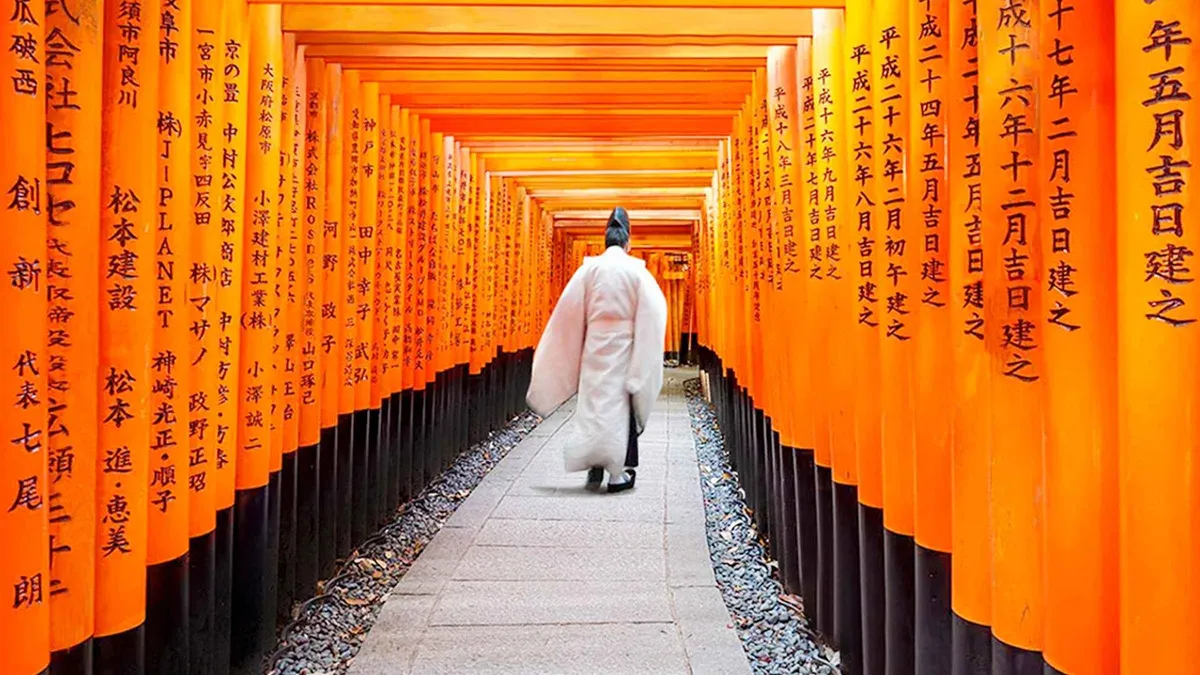
Kyoto/Osaka: Nara, Fushimi Inari Taisha, Arashiyama Bus Tour
A nine- to ten-hour coach loop to Nara's deer, the Fushimi Inari torii and the Arashiyama bamboo, with an English- and Chinese-speaking guide. No admissions and no lunch are included, and deer crackers are cash on the day.
Check Availability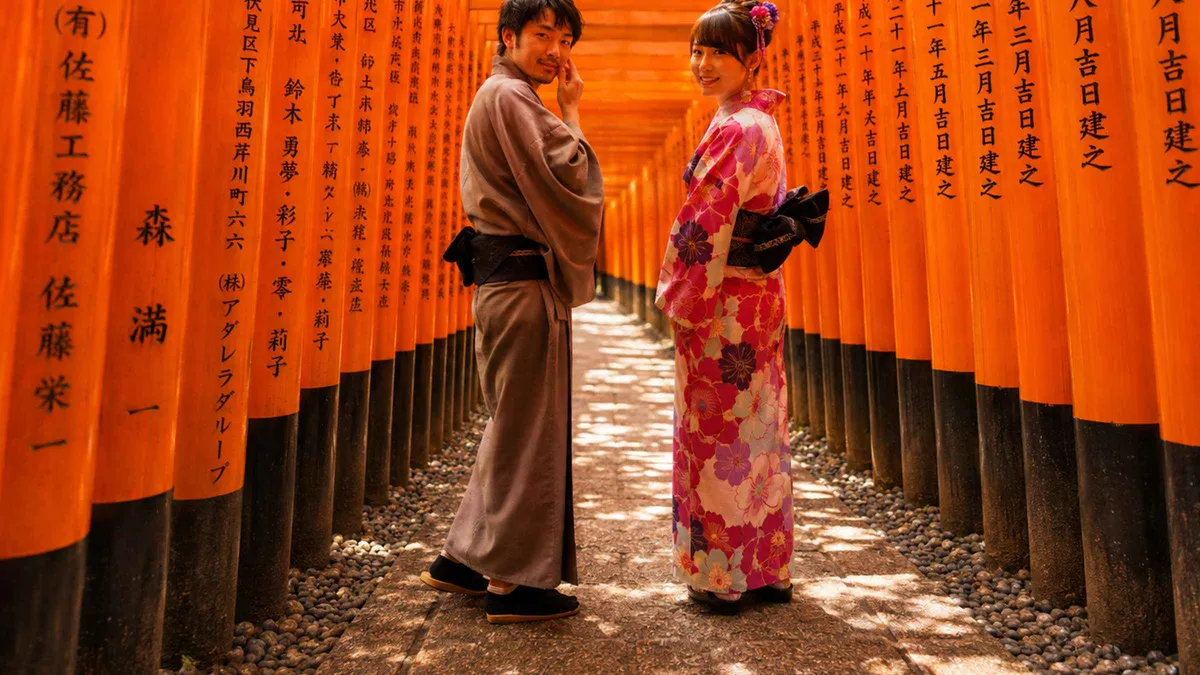 from $27.91
Osaka/Kyoto: Arashiyama, Nara Park & Fushimi Inari Bus Tour
The cheapest way to string those same three stops together, with lunch as a paid option. The trade is a larger group, a lower rating and long stretches on the bus across a day that runs ten hours.
Check Availability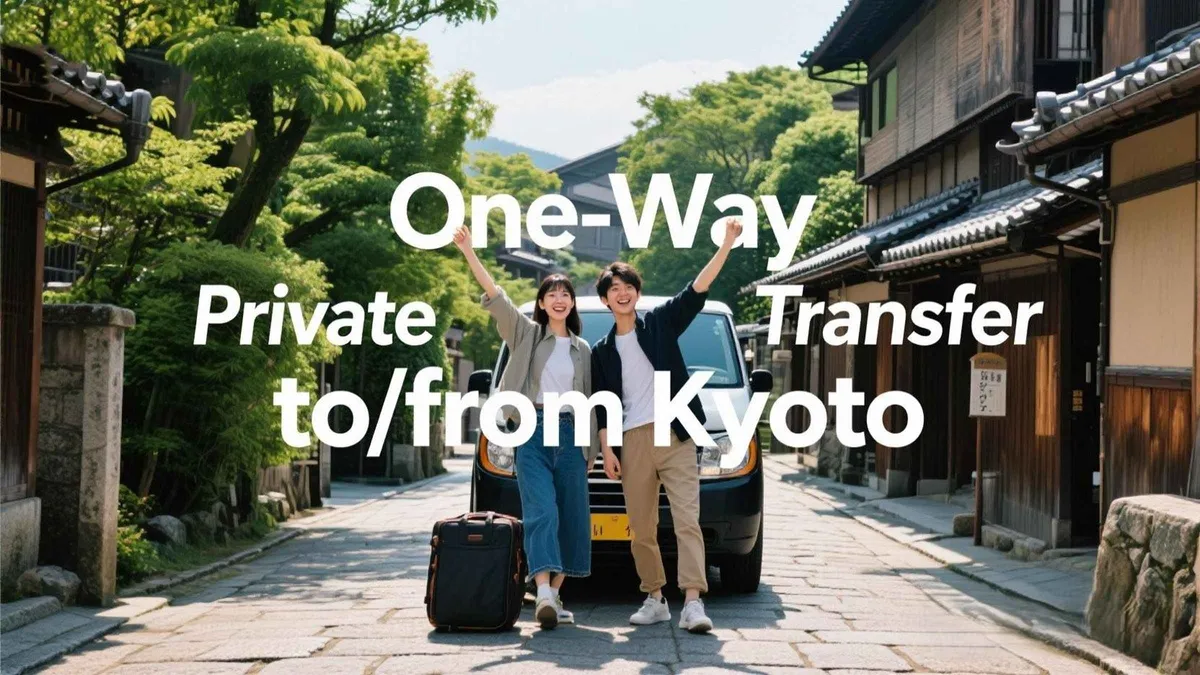 from $76.52
Osaka: One-Way Private Transfer to/from Kyoto
A private car between Osaka and Kyoto, door to door in about an hour. The train covers the same ground for a few hundred yen, so this is for heavy bags, small children or an early start, not for saving time.
Check AvailabilityPrices, ratings and details are the platform's own. Dollar figures are the listed prices. The platform bills in your account's currency.
Which Osaka station you leave from decides which Kyoto you get
Three railways, three different arrival points, and no way to change your mind halfway. This is the choice to make before you buy anything — and the one question about things to do in Osaka that gets asked most.
The three lines run roughly parallel between the cities and end up in completely different places, so the question is not "which train is best" but "where does my day start".
JR, from Osaka Station, ¥580. The Special Rapid is the fast one: 29 minutes over 42.8 kilometres, no change, several an hour. It arrives at Kyoto Station, which is the transport hub of the city — the Nara line takes you two stops south to Inari for Fushimi Inari, the San-in line runs west to Saga-Arashiyama, and the subway heads north into the centre. If your day contains Fushimi Inari or Arashiyama, this is the train, and the extra ¥170 over Hankyu buys back 14 minutes each way plus a much better onward network.
Hankyu, from Osaka-umeda, ¥410. The cheapest way into Kyoto, 43 minutes on the Limited Express, ending at Kyoto-kawaramachi in the commercial middle of the city. Nishiki market is a five-minute walk, the Gion side of the river is ten, and the Higashiyama lanes climb away from there. It is the wrong end of town for Fushimi Inari.
Keihan, from Yodoyabashi, ¥490. Forty-eight minutes over 48.6 kilometres to Gion-shijo, which is exactly what its name says — you come up the stairs at the Gion end of Shijo bridge. Keihan's other virtue is Fushimi-inari station, on the same line before the centre, so a Keihan day can start at the torii and work north without ever entering Kyoto Station. Its Premium Car is a separate ¥400 to ¥500 supplement and is a comfort purchase, not a time one.
The timing that makes the day work
Leave Osaka by 08:00. That is not an early-riser flourish, it is arithmetic: the two best hours at Fushimi Inari are before 09:30, when the lower torii tunnels are still walkable, and the queue at Kiyomizu-dera's gate builds through the morning. A 08:00 departure from Osaka Station puts you at the base of the Fushimi Inari path by about 08:50 with the JR change, and that is the single decision that separates the people who enjoyed their Kyoto day from the people who describe it as a crowd.
Coming back is the easy half. The Special Rapid runs late — after 23:00 on weekdays — so an Osaka dinner after a Kyoto day is entirely realistic, and it is one argument for basing yourself in Osaka in the first place: you eat where the eating is better and pay Osaka's lodging rates.
The pass trap: what the Kansai Railway Pass Lite will not do
The most common ticket mistake in Kansai, and it got worse on 1 April 2026.
For years the standard advice for a Kyoto day out of Osaka was the Kansai Thru Pass: two or three days of unlimited private railway and bus across the region. That product no longer exists. From 1 April 2026 it is the digital KANSAI RAILWAY PASS LITE, $32.60 for two days and $40.80 for three (¥5,200 / ¥6,500), and the change is not only the name.
What the Lite excludes, in the operator's own words: JR, the Kyoto Municipal Subway, Keihan's Otsu lines, the Randen tram — and every bus. The buses were the old pass's headline feature. For a city where the flat-fare bus is how most visitors reach Kiyomizu-dera, Ginkaku-ji and the Kinkaku-ji side of town, dropping buses turns a Kyoto pass into a pass that gets you to Kyoto and then stops.
The sales window matters too: sales run 25 March to 30 September 2026, with validity to 1 October (two-day) or 2 October (three-day), and a screenshot of the QR code is not accepted at the gate. Read on surutto.com's own English page.
| Ticket | Price | Covers JR? | Covers Kyoto buses? |
|---|---|---|---|
| Kansai Railway Pass Lite, 2 day | $32.60 (¥5,200) | No | No — buses dropped 1 April 2026 |
| Kansai Railway Pass Lite, 3 day | $40.80 (¥6,500) | No | No |
| Kyoto Subway & Bus 1-Day Pass | $6.90 (¥1,100) | No | Yes — city buses, most Kyoto Bus and Keihan Bus routes |
| JR Kansai Area Pass, 1 day | $17.56 (¥2,800) | Yes, within the area | No — JR buses in the area only |
| Keihan Kyoto-Osaka Sightseeing Pass, 1 day | $10.35 (¥1,650) | No | No — Keihan rail only |
What to buy instead
For a single day out of Osaka the answer is almost always: an ordinary single each way, plus Kyoto's own ¥1,100 Subway & Bus 1-Day Pass. Two Hankyu singles and the day pass come to $12.04 (¥1,920); two JR singles and the day pass, $14.17 (¥2,260). Either total is a third of what the two-day regional pass costs, and it is the combination that actually covers the vehicles you will use.
The city pass is sold at the subway station windows, the bus and subway information centres, the bus depots and on board buses while stocks last, and it carries discounts at more than fifty Kyoto attractions on top. Its one limitation is worth stating: it is a Kyoto ticket, so it does nothing on the ride from Osaka.
And if your trip covers more than this one day, compare against Osaka's own products first — the pass page sets out what the Amazing Pass and the e-Pass do and do not include, and neither of them crosses the prefectural boundary either.
What one day in Kyoto honestly holds
Kyoto is not a compact city and the map lies about it. Here is the version that survives contact with a timetable.
The city's sights fall into three clusters, and the travel between clusters is 30 to 50 minutes each time. That is the whole planning problem: every cluster you add costs an hour of the day in movement, and a day trip has about nine hours of daylight usable time in it after the trains at each end.
Two clusters is the ceiling. Not two and a half, not "two plus a quick stop at" — two. The pairing that works best from Osaka is Fushimi Inari first thing, then north into Higashiyama for Kiyomizu-dera and the lanes below it, because the two are on the same side of the city and a single Keihan or JR hop apart. Arashiyama is the alternative half, and it is worth it, but it sits 40 minutes west of everything else and pairing it with Fushimi Inari means crossing the whole basin at the busiest hour of the day.
| Cluster | What is in it | From Kyoto Station | Hours it wants |
|---|---|---|---|
| Fushimi Inari | The torii tunnels and the mountain path above them; no admission fee published by the shrine | 2 stops on the JR Nara line to Inari, about 5 minutes | 1.5 to 3, depending how far up you climb |
| Higashiyama | Kiyomizu-dera, the Sannenzaka lanes, Yasaka shrine and Gion | Bus or Keihan to Gion-shijo, then uphill on foot | 3 to 4, and it is all walking |
| Arashiyama | The bamboo path, Togetsukyo bridge, the riverside temples | San-in line to Saga-Arashiyama, about 15 minutes | 3, plus 40 minutes of travel each way |
| Central Kyoto | Nishiki market, Nijo castle, the Kawaramachi shopping streets | Subway or a 15-minute walk from Kyoto-kawaramachi | 2, and it fits around the others |
The two shapes that work
Shape one, the classic. JR out of Osaka at 08:00, change at Kyoto for Inari, at the torii by about 08:50. Climb as far as the Yotsutsuji viewpoint and come back down — the full circuit to the summit is two hours and most people do not need it. Late morning, cross to Higashiyama and walk up to Kiyomizu-dera, whose gates open at 06:00 and close at 18:00, 18:30 in July and August. Spend the afternoon walking down through Sannenzaka to Yasaka shrine and Gion, and take Keihan or Hankyu back from the river. Total travel inside Kyoto: about 50 minutes.
Shape two, the west. Out to Arashiyama first, for the bamboo path before the coaches arrive — it is at its best before 09:30 and genuinely unpleasant at midday — then back into the centre for Nishiki market, lunch and the Kawaramachi streets, finishing in Gion in the early evening. This one is kinder on the legs and much better in bad weather, because the centre has arcades.
What neither shape contains is Kinkaku-ji, the golden pavilion: it sits in the north-west, 40 minutes by bus from the centre, and adding it means giving up a cluster.
What a Kyoto day trip actually costs
Two people, the classic shape, no tour. Every figure is an operator's or authority's published number.
The striking thing about the arithmetic is how little of it is the train. Getting to Kyoto and back is under a fifth of the day's spend for most people; local movement, entry fees and lunch are the rest.
One number stays stubbornly unpublished. Kiyomizu-dera's own site publishes its gate times but not its admission fee on any page we could read — it lists 06:00 to 18:00, 18:30 in July and August, and 21:00 closes during the special evening viewings, and then sends you to the temple by telephone for the price. Fushimi Inari Taisha publishes neither a fee nor an opening hour, which in its case means what everyone assumes it means: the mountain is open and free, but the shrine will not put that in writing. We print the absence rather than a number we cannot source.
| Item | Per person | Source |
|---|---|---|
| JR Special Rapid, Osaka → Kyoto → Osaka | $7.27 (¥1,160) | JR West My Dia |
| Kyoto Subway & Bus 1-Day Pass | $6.90 (¥1,100) | Kyoto City Transportation Bureau |
| Fushimi Inari Taisha | No fee published | inari.jp |
| Kiyomizu-dera | Fee not published on the pages we could read | kiyomizudera.or.jp |
| Lunch and a coffee, no restaurant booking | $9.41–$15.68 (¥1,500–¥2,500) | Our own estimate, not an operator figure |
| Day total, transport and food | About $23.80–$30.10 (¥3,800–¥4,800) | Sum of the sourced rows above plus the estimate |
Where the tour maths lands
Set that against the coaches. The budget loop is $27.91 and the better-rated one is $50.72, and both cover Kyoto's two furthest-apart clusters plus a stop over the prefectural border in a single day — a route you cannot replicate by train inside nine hours. Neither includes admissions or lunch, so add the same food line to both.
So the comparison is roughly $27 of trains and city pass against $28 to $51 of coach. If your day is the classic Fushimi Inari and Higashiyama shape, the train wins on price and on freedom. If you want three widely separated places and are content to be moved between them on somebody else's clock, the coach is doing something the railway cannot — but it is not a saving. Budget context for the rest of your trip sits on the costs page.
Getting around Kyoto once you are there
The part every Osaka-based visitor underestimates, and the reason day trips run out of hours.
Kyoto's city bus is a flat ¥230 for adults and ¥120 for children anywhere in the uniform-fare zone — the fare the transport bureau has published since 1 June 2024. Flat fares are generous over distance and brutal over time: the buses that serve Kiyomizu-dera and Ginkaku-ji are the ones every visitor uses, they run in ordinary traffic, and at midday in high season a two-kilometre hop can take twenty minutes standing.
The two subway lines, Karasuma running north–south and Tozai east–west, are quick and mostly miss the sights. The honest rule is: use rail where rail goes, and treat the bus as the last kilometre. Fushimi Inari, Arashiyama and Gion are all rail-served; Kiyomizu-dera and the golden pavilion are not, and that is what the ¥1,100 day pass is for.
Walking beats the map within Higashiyama: Kiyomizu-dera down through Sannenzaka to Yasaka shrine and into Gion is about 25 minutes of gentle downhill and the best walk in the city.
Six things worth knowing before you go
- Your ICOCA or Suica works on Kyoto's buses, the subway and all three railways from Osaka — see the transport page for where to buy and top up
- The Kyoto day pass does not cover the ride from Osaka; buy your singles separately, or the pass is money burned
- Kyoto City buses are boarded at the rear door and paid at the front on exit in the uniform zone — the opposite of what many visitors expect
- Leave luggage in Osaka: Kyoto Station's lockers fill by mid-morning in season, and the locker options are on the transport page
- Wednesday and Thursday are noticeably quieter than a weekend in Higashiyama, and the difference is bigger than any time-of-day trick
Tour or train: which one you should actually book
The decision, stated plainly, because the answer is not the same for everyone.
Take the train if you are two adults, you can leave Osaka by 08:00, and your day is Fushimi Inari plus Higashiyama. The railway is 29 minutes, the walking is the point, and the whole day costs about ¥2,260 each in transport. Nothing a guide adds is worth surrendering the freedom to stay an extra hour on the mountain.
Take a coach if you want three separated places in one day, or if working out a bus system on holiday makes you tired. The nine- to ten-hour loop is the better-rated one at 4.7 from more than three thousand reviews and runs with an English- and Chinese-speaking guide; the cheaper version does the same stops for $27.91 with a lower rating and a larger group. Neither includes a single admission.
Take the private car — the one-way transfer at $76.52, rated 4.8 — only when the train is the wrong tool: heavy luggage on a moving day, small children, or a group of four where the per-head figure stops looking silly. It is about an hour door to door, it is not faster than the Special Rapid, and it is thirteen times the fare.
And there is a fourth answer: go to Kyoto and stay. If two clusters are not enough, the day-trips hub compares this trip against the shorter ones — Nara at 38 minutes and Kobe at 21.
Kyoto day trip map: the three arrival stations and what is near each
Osaka's three departure points end at three different Kyoto stations, marked here with the sights each one serves. Coordinates are Wikidata's; the travel times are the operators' own.
The distance between the two gold pins on the east and the one on the west is the whole argument of this page: Fushimi Inari to Arashiyama is a 40-to-50-minute crossing of the city, and doing it in the middle of a day trip costs you an hour you do not have.
The other day trips, and how Kyoto compares
Kyoto is the longest of the short excursions from Osaka and the only one that cannot be finished. These are the pages that put it in context.
Nara day trip
¥680 on Kintetsu or ¥580 from JR-Namba, and unlike Kyoto it genuinely fits in half a day — the deer park, Todai-ji and the lantern shrine are all walkable from one station.
About 45 minutes from OsakaDay trips from Osaka
Where Kyoto sits against Kobe, Himeji, the waterfall trail at Minoh and the mountain temples of Koyasan, with each fare and the honest verdict on which deserve a whole day.
All six, comparedGetting around Osaka
ICOCA, the metro fare bands and every Osaka pass — including which ones stop dead at the city boundary, which is all of them.
Before you leaveKyoto day trip from Osaka: questions
Can you day trip to Kyoto from Osaka?
Yes, and the journey is the easy part: 29 minutes and $3.64 (¥580) on the JR Special Rapid from Osaka Station, or 43 minutes and $2.57 (¥410) on the Hankyu Limited Express from Osaka-umeda, both without a change or a reservation. What limits the day is Kyoto itself — the sights sit in clusters 30 to 50 minutes apart, so one day holds two of them. The two shapes that work are set out above.
What is the cheapest way to get from Osaka to Kyoto?
The Hankyu Limited Express from Osaka-umeda to Kyoto-kawaramachi at $2.57 (¥410), fourteen minutes slower than JR and ¥170 cheaper. It is only the cheapest option overall if your day stays in central Kyoto and Gion; if you are heading to Fushimi Inari or Arashiyama, the ¥580 JR ticket saves you a bus or a second railway at the far end. Figures from Hankyu's published fare-zone table and JR West's My Dia engine.
Is one day in Kyoto enough coming from Osaka?
Enough for two of the city's four clusters, which is a genuinely good day — Fushimi Inari before 09:30 and Higashiyama through the afternoon is the pairing we would book. It is not enough for Kinkaku-ji as well, and it is not enough for a first visit to Japan in which Kyoto is the main reason you came. In that case give Kyoto a night and use the day trips hub to fill the Osaka days with the shorter excursions.
Does the Kansai Railway Pass Lite cover Kyoto's buses?
No. Since 1 April 2026, when the Kansai Thru Pass was replaced by the digital Kansai Railway Pass Lite (¥5,200 for two days, ¥6,500 for three), buses are not covered at all — and neither are JR or the Kyoto Municipal Subway. Buses were the old pass's headline feature, so this is a real downgrade for a Kyoto day. Buy Kyoto's own Subway & Bus 1-Day Pass at ¥1,100 instead; the comparison table is above.
Which Kyoto station should you get off at?
Kyoto Station if your day includes Fushimi Inari or Arashiyama, because both are short rail hops from it. Kyoto-kawaramachi (Hankyu) or Gion-shijo (Keihan) if the day is Nishiki market, Gion and the Higashiyama lanes, because you arrive inside that area rather than 25 minutes south of it. Keihan has a third answer worth knowing: its own Fushimi-inari station sits five minutes from the torii, before the line reaches the centre.
What time should you leave Osaka for a Kyoto day trip?
By 08:00. Fushimi Inari's lower torii tunnels are walkable before about 09:30 and photographed shoulder-to-shoulder after it, and Kiyomizu-dera's gate queue builds through the morning. An 08:00 JR departure has you at the base of the Fushimi Inari path by roughly 08:50. Coming home is unconstrained — the Special Rapid runs past 23:00 on weekdays, so a late Osaka dinner is part of the plan.
Does a guided coach tour beat doing Kyoto from Osaka yourself?
Only for a specific shape of day. A coach can string together three widely separated places in ten hours in a way no train timetable can, and the better-rated loop does it for $50.72 with a guide on board. But no coach in our catalogue includes a single admission fee, the days run nine to eleven hours, and for the classic Fushimi Inari and Higashiyama pairing the train costs about $14.17 (¥2,260) all in and leaves you free to linger. Take the train unless the coach is buying you geography.
Where a Kyoto day fits in an Osaka trip
It is a whole day, it is the most tiring of the excursions, and it should not be your first one.
Put Kyoto on day three or four, not day one. It is a walking day with 12,000 to 18,000 steps in it, most of them on stone lanes and a mountain path, and doing it jet-lagged on the first morning is how people end up remembering the crowds rather than the place.
It also pairs badly with anything else. Unlike Kobe, which is 21 minutes away and can be an afternoon, Kyoto consumes the day and a chunk of the evening. Plan an easy Osaka morning after it — the one-day itinerary shows what the city can absorb at low effort.
One structural point about basing yourself here at all: Osaka's rooms are cheaper than Kyoto's, its food is the best in the country by a margin most visitors are surprised by, and Kyoto is 29 minutes away for $3.64 (¥580). Sleeping in Osaka and commuting to Kyoto is not the compromise it sounds — the rest of the case is set out in where to stay in Osaka.
A Kyoto day trip on film
Three films we checked ourselves — each id verified against YouTube's own record and its thumbnail, so none is a dead player. Between them they cover the day-trip mistake most people make, the practical tips, and what a single Kyoto day can actually contain.
Day Trip to Kyoto from Osaka (just avoid our mistake)
The exact trip this page plans, including the routing error that costs an afternoon.
Video: Nicole and MicoThe COMPLETE Kyoto Travel Guide | Shrines, Food, and More All of Kyoto in 1 DAY
One day, compressed — useful for seeing how much movement a packed Kyoto day really involves.
Video: Hoang Pham38 Tips I Wish I Knew Before Visiting Kyoto, Japan
Practical ground rules on buses, timing and etiquette, which is where day-trippers stumble.
Video: Camden DavidVideos load from YouTube only when you press play.
Prices, hours and terms are set by the venue or operator and confirmed at checkout.
We may earn a commission if you book through one of our links, at no extra cost to you. Full affiliate disclosure